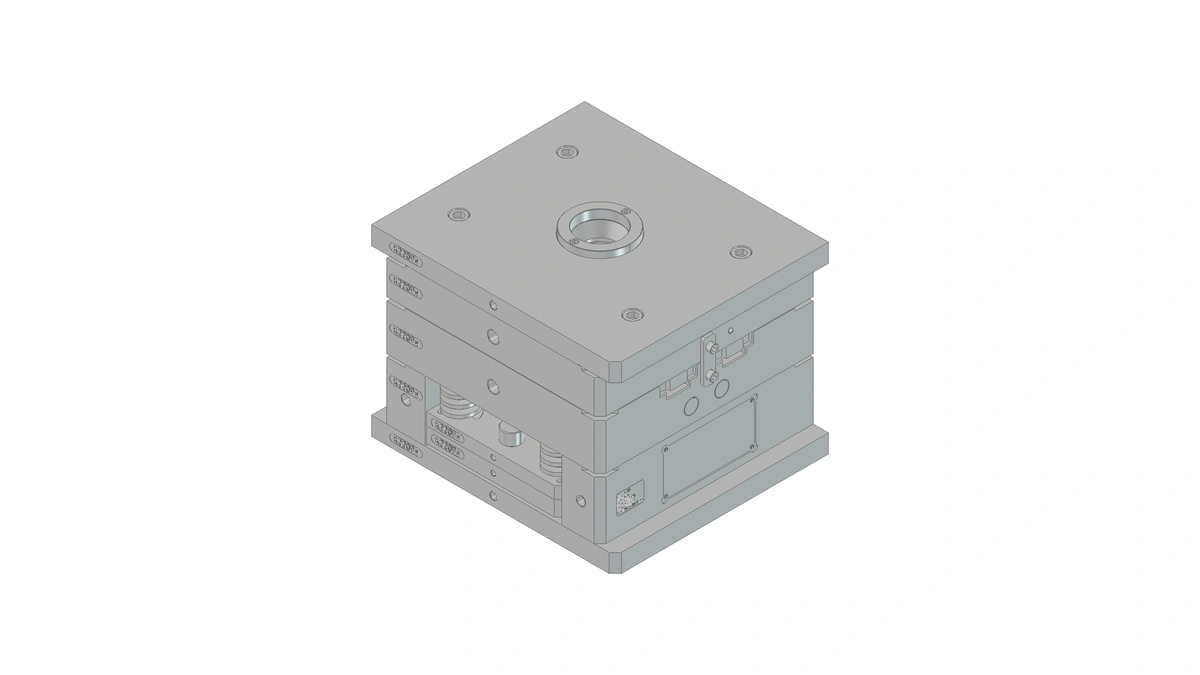
Today, moldsteells takes you inside an injection mold for an earbud charging-case lid. One feature along the lid edge explains why the mold needs sideways movement as well as opening and closing.
Demonstration model.
Identify the Slide Mechanism Inside the Mold
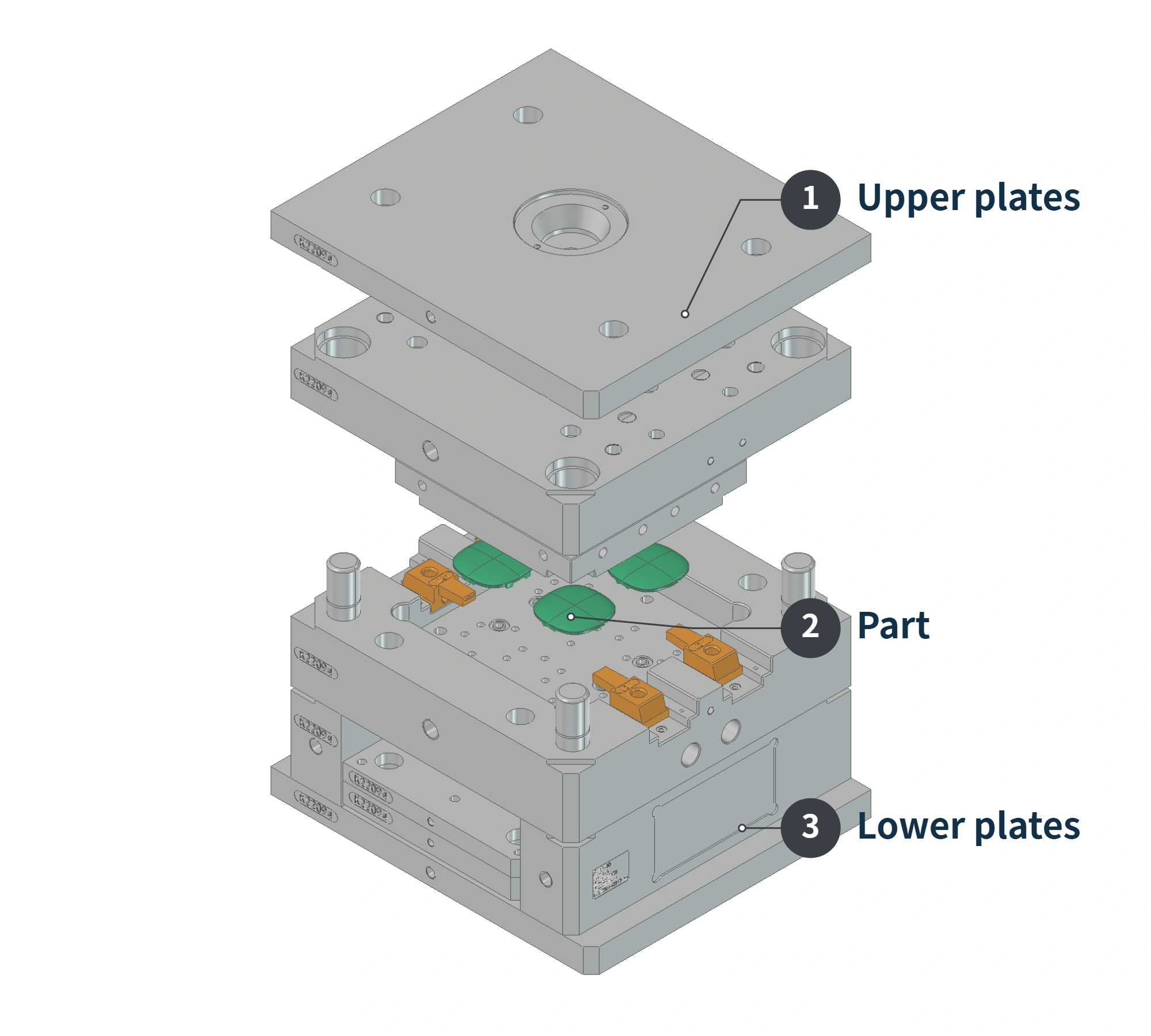
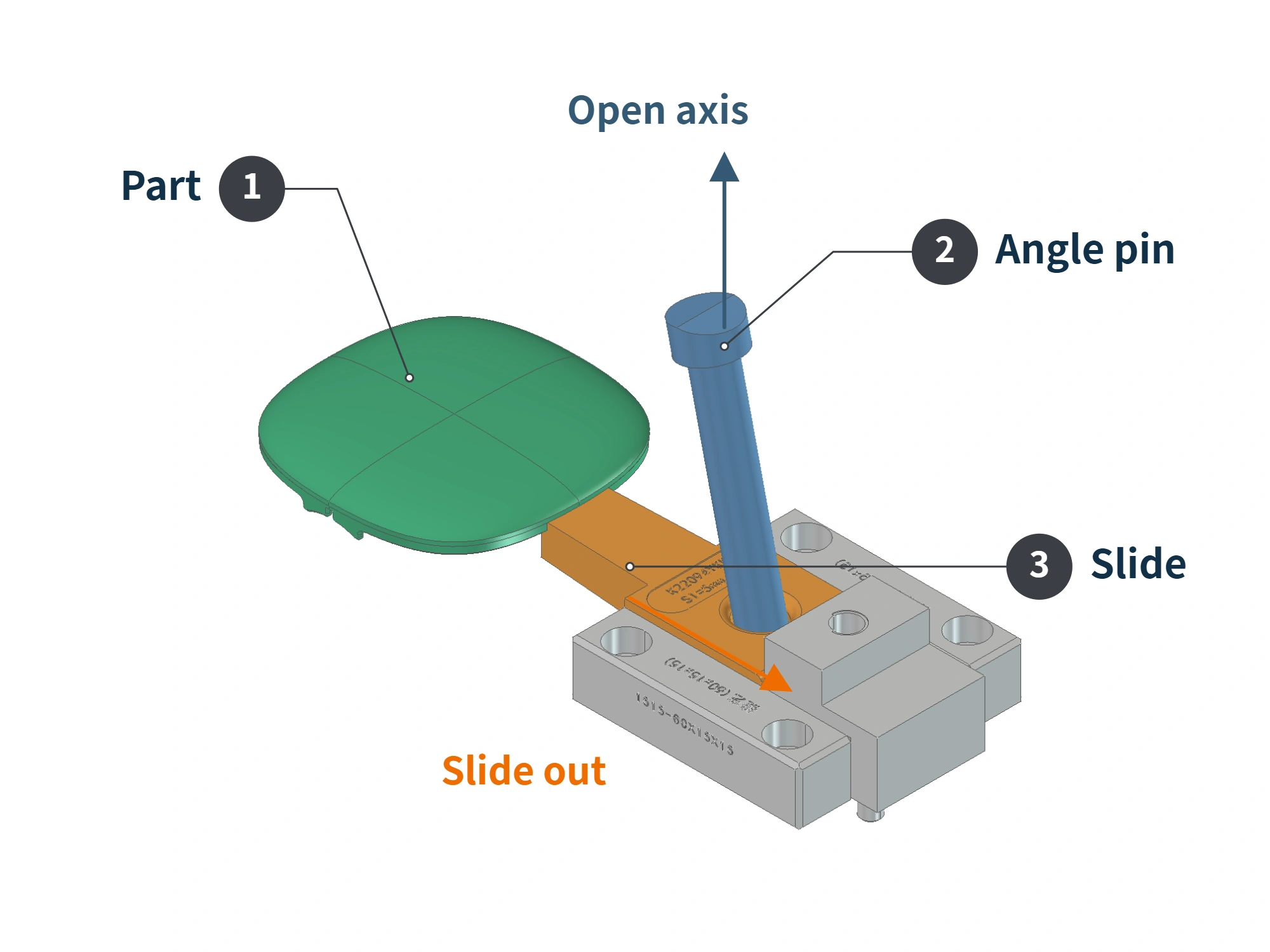
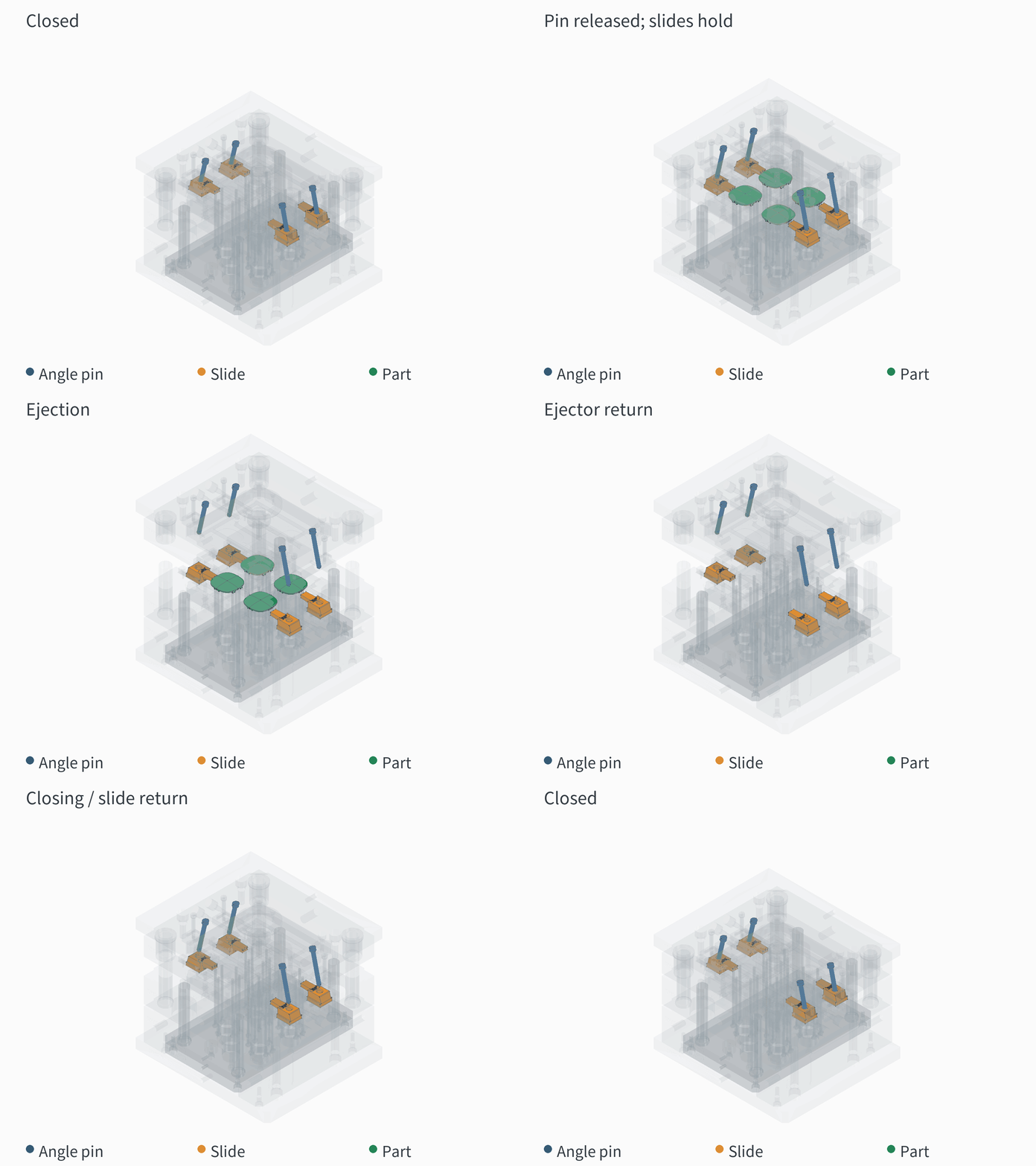
First, look at the exploded mold base, then focus on the angle-pin slide mechanism beside the plastic lid.
| Component in the image | Function |
|---|---|
| Orange slide | Its tip forms part of the lid edge and retracts sideways before part removal. |
| Blue angle pin | Passes through the angled hole in the slide and drives its lateral movement. |
| Long gray guide strips on either side of the slide | Constrain the slide to its intended path. |
The angle pin is mounted on the stationary half of the mold, while the slide sits on the moving half. As the mold halves separate, the long gray guide strips constrain the slide. The angle pin engages the angled hole and drives the slide sideways.
The green component is the plastic lid. The long orange tip is the steel component that forms part of its shape.
Watch the orange slide retract first, followed by ejection and removal of the green lid. The ejection system then resets before the mold closes.
Why Must the Slide Retract First?
In the enlarged section below, a small return along the green lid edge fits against the orange forming tip. The orange steel blocks this feature from moving in the main mold-opening direction. This feature is an undercut.
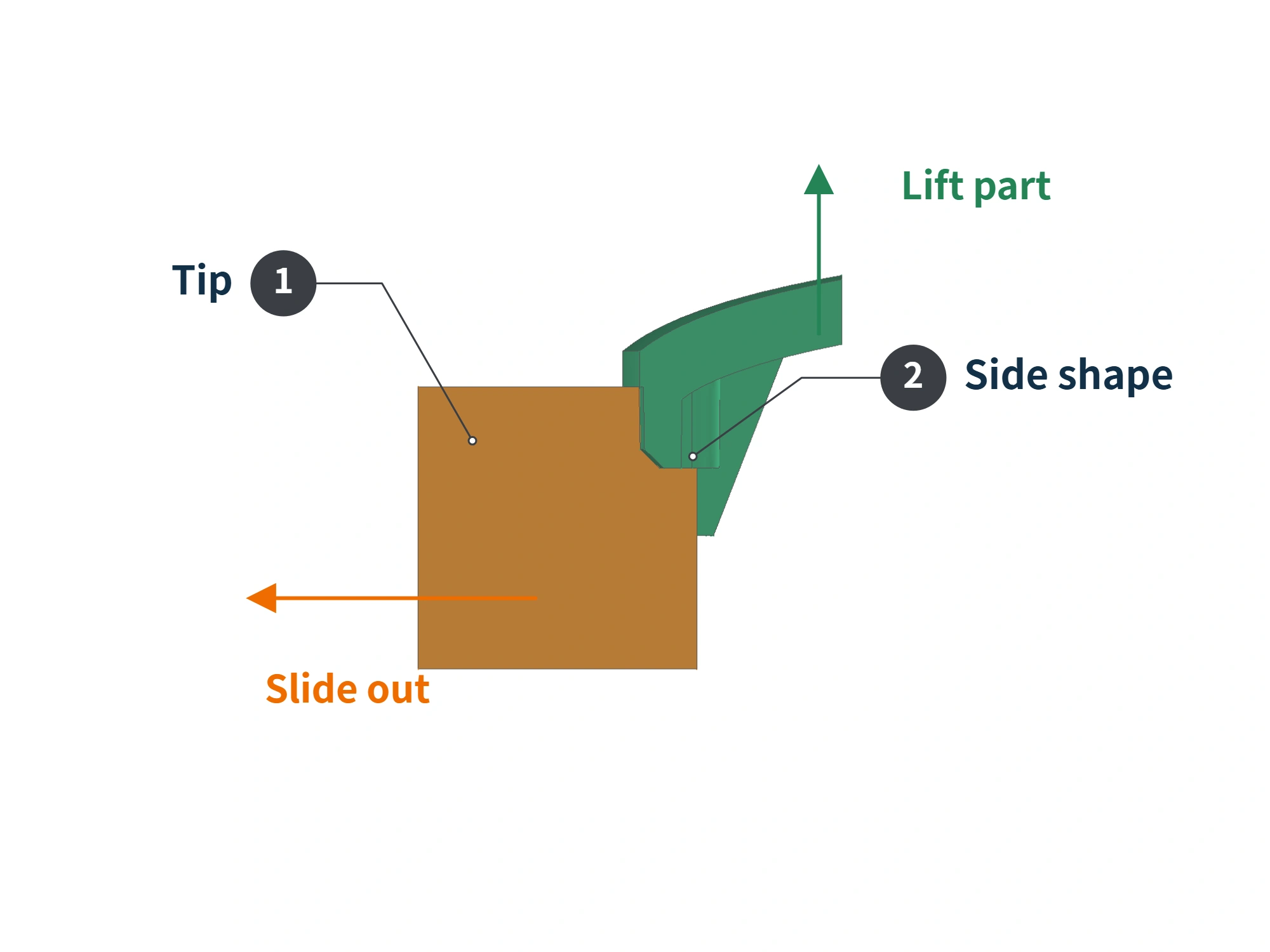
Once the slide retracts, the obstruction is removed and the ejection system can push the lid out. An open mold does not necessarily mean the part can be removed directly.
What Does Adding a Slide Achieve?
This mechanism preserves the lid-edge feature while giving the forming steel a path to withdraw. When the product needs this feature, the mold needs a way to release it.
There is a tradeoff: additional sliding and guiding components require more machining, fitting, and maintenance. A mold with a slide is therefore not automatically cheaper or more durable.
To eliminate the slide, first consider whether this part feature can be redesigned. If elastic deformation of the plastic is being considered to strip the undercut, assess the material, undercut profile, available space for deformation, and ejection forces. A small undercut alone is not a reason to remove the mechanism.