DFM is the cheapest insurance before tooling. We have been building molds for more than a decade, and that conclusion comes from real rework cases, not slogans. A DFM (Design for Manufacturing) review means sending the 3D part file to an Injection Mold Manufacturer for review before mold making starts. If a change is made at the drawing stage, it takes minutes and costs almost nothing. Once the mold steel is cut, any change starts at roughly 10 times the cost.
Where DFM Fits in the Injection Mold Making Process
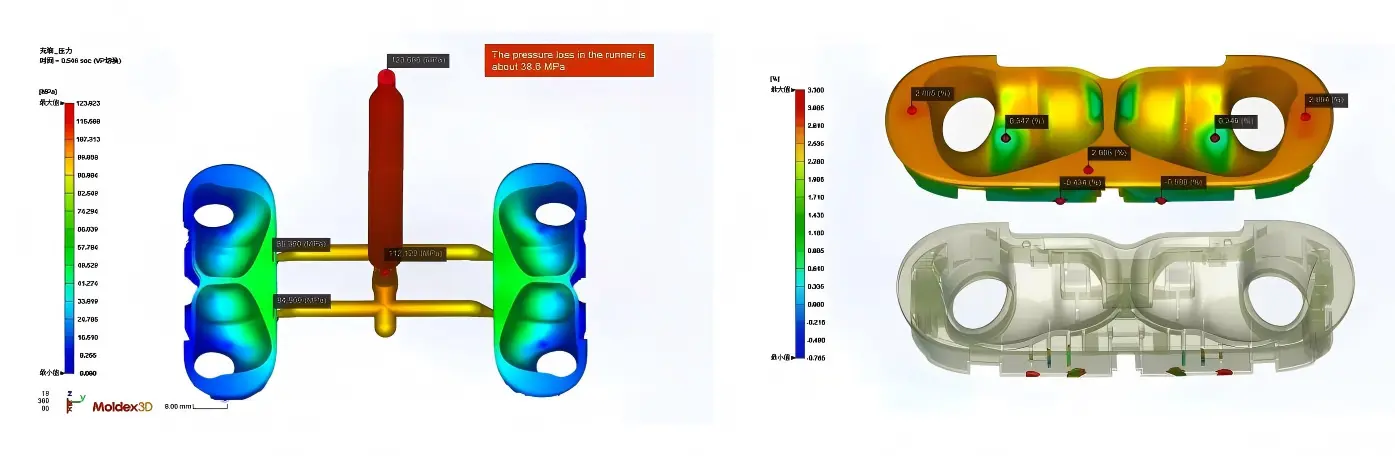
At our plant, the full process for one mold is: customer 3D file → DFM review (usually 3-5 days) → mold flow analysis → mold design (7-14 days) → mold steel purchasing → machining → trial molding. DFM sits in the second step, between the drawing and cutting the steel.
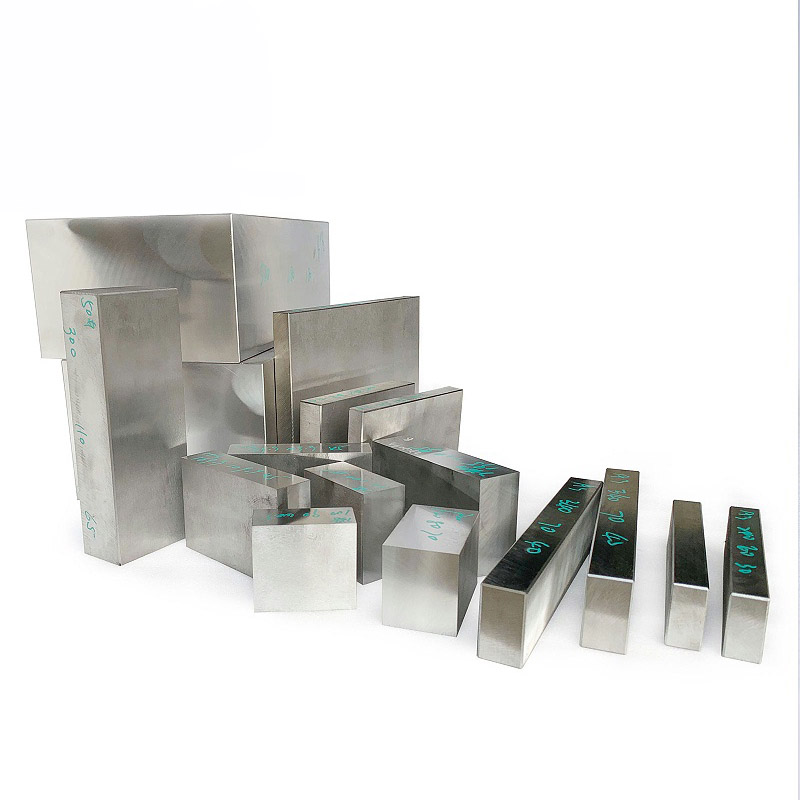
That is what “before tooling” actually means, and it is the only real cost-saving window. At the drawing stage, you change the design and the data. After the steel is cut, you are changing dozens of kilograms of steel and interrupting scheduled machine time. One takes minutes. The other starts at 10 times the cost. The difference is not craftsmanship. It is timing.
Within the full mold schedule, those 3-5 days are also the cheapest stage. If the DFM review finds a problem, at most the drawing needs revision. Once steel machining starts, every step after that costs money. That is why the industry keeps stressing that this step cannot be skipped. Most avoidable rework cost is buried in this window.
A qualified DFM report should at least cover the parting line, gate location, ejector pin position, slider and lifter layout, wall thickness, draft angle, and tolerance. If the report you receive is only two pages of general comments, that is a warning sign that the drawing was not reviewed carefully.
Three Cost Buckets in Mold Rework
Have you ever broken down where rework money actually goes? Start with a number that has been proven repeatedly in the industry: 70%–80% of product cost is locked in at design.
The first cost bucket is mold modification cost. The physical rule of mold making is simple: steel can be removed, but it cannot be put back easily. To modify a gate before Heat Treatment, the cost is typically a few hundred yuan to RMB 2,000, or about $30 to $296 at a 6.75 exchange rate. That is close to the normal machining cost. If the steel is already hardened, the change usually requires Wire Cutting / EDM (electrical discharge machining) plus weld repair. One round costs RMB 3,000-8,000, or about $444-$1,185 (2026 market pricing).
Weld repair also brings a hidden risk. Hardness in the heat-affected zone beside the weld can drop by 8%–12%. With high-pressure materials, a repaired gate may crack again within 20,000 shots. Adding one slider for a side-action mechanism on a small mold typically costs RMB 3,000-15,000, or about $444-$2,222. If the mold insert has to be changed, the cost starts in the five-figure yuan range.
The second cost bucket is lead time loss. A mold repair can easily delay the project by 4-6 weeks, and every mold trial milestone moves back with it. Mold projects are built around 100,000 shots and millions of parts. If production starts one month late, that delay becomes a cost on every part.
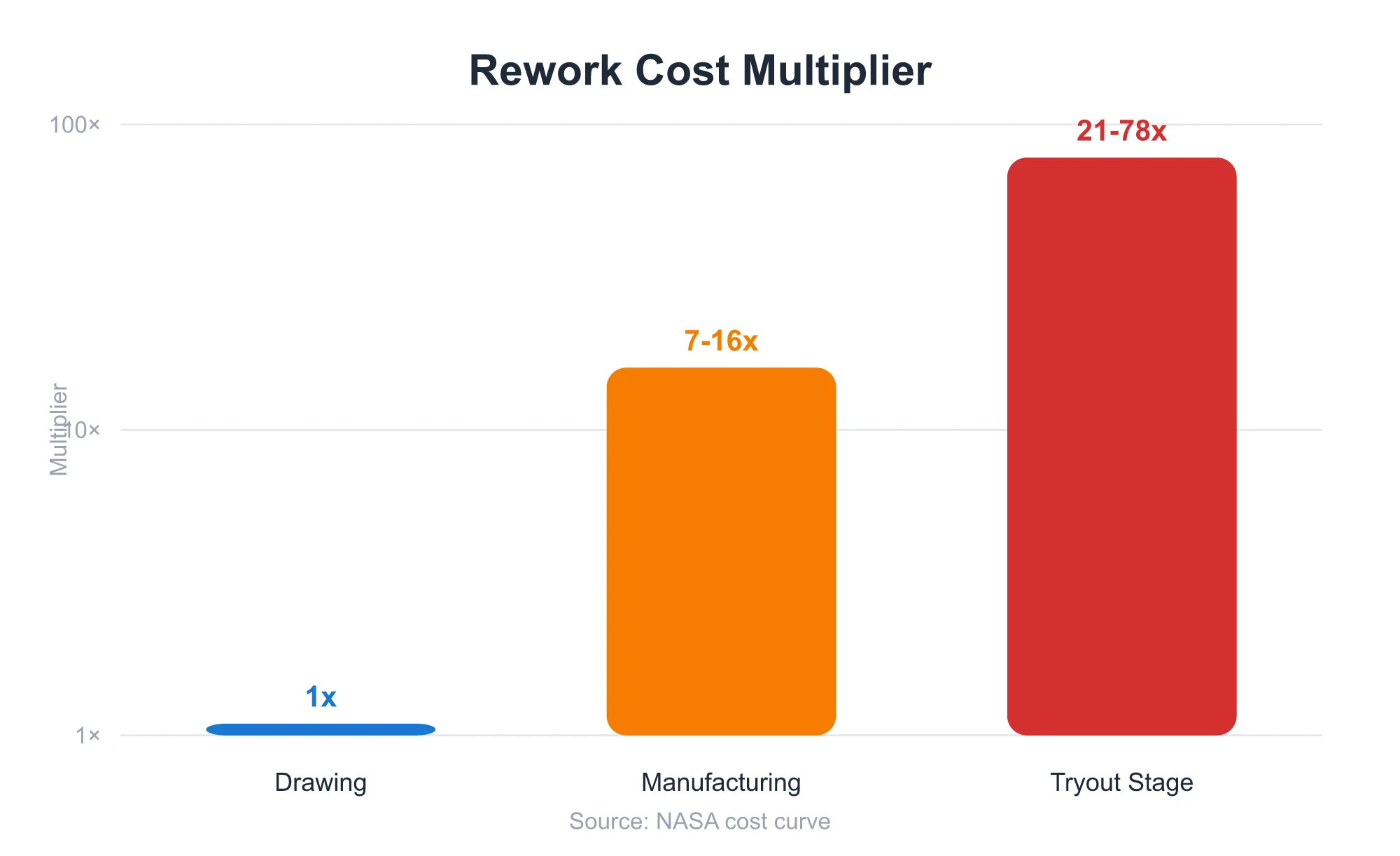
The third cost bucket is delayed mass production. NASA published a cost curve that is often cited: if the cost to fix an error at the drawing stage is 1, then the cost during manufacturing is 7-16 times higher, and the cost after entering trial and integration is 21-78 times higher. In mold making, the message is even simpler: once the steel is cut, the next change starts at about 10 times the cost.
Put those three buckets together, and you have the full logic behind DFM cost savings. There are real industry cases where identifying one false undercut at the DFM stage—a feature that could be avoided by adjusting the parting line—saved about RMB 8,000, or roughly $1,185, in slider cost alone. On a mold project without DFM, these three costs often hit at the same time: first the mold rework bill, then the lead time delay, then the missed production window. The expensive part is never revising the drawing. It is solving in steel what should have been solved on the drawing.
Three Real Rework Cases
In our records, more than 90% of injection molding quality problems fall into a few categories: flash, sink mark, short shot, warpage, and weld line. Most of them are not solved by machine adjustment. They are designed in from the start. Here are three common cases we see.
Case 1: Sink mark caused by wall thickness. We have received more than one design like this: a local area is thickened casually to add strength, then a sink mark shows up in that heavy section during the mold trial. Uneven cooling in the thick wall causes the surface to shrink and collapse, and the result is full-surface rework. How can this be avoided? Keep wall thickness variation between adjacent areas within 25%. More disciplined manufacturers hold it within 10%. Wall thickness is not stronger just because it is thicker. For common plastics such as ABS, once the section exceeds 3.5 mm, cooling time rises sharply, and cycle time becomes a direct cost on every part.
Case 2: Zero-degree demolding. One lesson is widely repeated in the industry: a consumer electronics housing insisted on zero draft on the appearance side wall. During the T0 trial, more than a dozen white drag marks appeared on the side surface, and the textured surface was ruined. The final fix required four sliders for the side-action mechanism, three weeks of mold rework, and more than RMB 100,000 in extra cost—over $14,815 at the 2022 case value. This issue had already been flagged during the DFM review, but the drawing was not changed. How can it be avoided? Use at least 1-2 degrees of draft angle on appearance surfaces. On textured surfaces, increase that to 3-8 degrees based on texture depth. In practice, zero draft is close to forcing the mold to scuff the part.
Case 3: Wrong gate location. The gate vestige lands on the cosmetic surface, and even paint cannot hide it. Or the weld line ends up right at the grip load point, and the part cracks when squeezed. This type of issue has a golden modification window: during the T0-T1 stage, before heat treatment, the gate can often be moved for a few hundred yuan to RMB 2,000, about $30-$296. Miss that window, and after heat treatment, the change needs EDM plus weld repair, starting at RMB 3,000-8,000, or about $444-$1,185. The best way to avoid this problem is to set the gate location correctly on the drawing before tooling starts. That is far cheaper than moving it later.
These three cases follow the same pattern: rework is not bad luck. The problem was already built into the design. A DFM review exists to remove those risks before the steel is cut. That is why, every time we receive a drawing, the first step is always design review, not quotation.
Which Issues Must Be Changed, and Which Can Be Negotiated
The decision standard is not complicated. It comes down to four situations:
| Design Condition | Recommended Action | Approximate Cost Impact |
|---|---|---|
| Zero draft on a cosmetic surface or textured surface | Must be changed; add draft angle | If left unchanged, it can mean about three weeks of mold rework and more than RMB 100,000, or over $14,815 |
| Gate placed on a cosmetic surface or load-bearing point | Change it within the T0-T1 golden window | Before heat treatment: a few hundred yuan to RMB 2,000 ($30-$296); after heat treatment: RMB 3,000-8,000 ($444-$1,185) |
| Wall thickness transition exceeds 25% | Must be changed to a more uniform section | If left unchanged, it usually means sink mark plus full-surface rework |
| False undercut that can be avoided by adjusting the parting line | Open for discussion; do not add a slider | One slider costs about RMB 3,000-15,000, or $444-$2,222 |
If the decision is not clear, send over the 3D drawing and moldsteells can review it from the mold engineering perspective. DFM does not make life easier for the mold manufacturer. It helps avoid rework costs that should never have happened in the first place.
How long does a DFM review usually take?
From receiving the customer 3D file to completing the DFM review, it usually takes 3-5 days. It is the second step in our mold-making process.
Is DFM analysis charged separately?
DFM review is a standard part of the mold-making process. Send the drawing first, and the review report will spell out whether the project can be done and what should be changed.
How fast can a design be changed after tooling starts?
That depends on the condition of the mold steel. Before heat treatment, changes are similar to normal machining adjustments and usually cost a few hundred yuan to RMB 2,000, or about $30-$296. If the steel is already hardened, the change requires EDM plus weld repair, starting at RMB 3,000-8,000, or about $444-$1,185 (2026 market pricing). After mass production has already run for 100,000 shots, the risk is no longer just about money.
Those few days at the drawing stage are the most valuable time in the entire mold project. Send us the 3D drawing before tooling starts and complete one round of DFM review first. In just a few days, you gain the last real chance to make changes before the steel is cut.
There is an old saying in the mold industry: save before tooling, profit after tooling. If a few days are spent on DFM, the next few months of mold trials can avoid a long stretch of unnecessary detours.