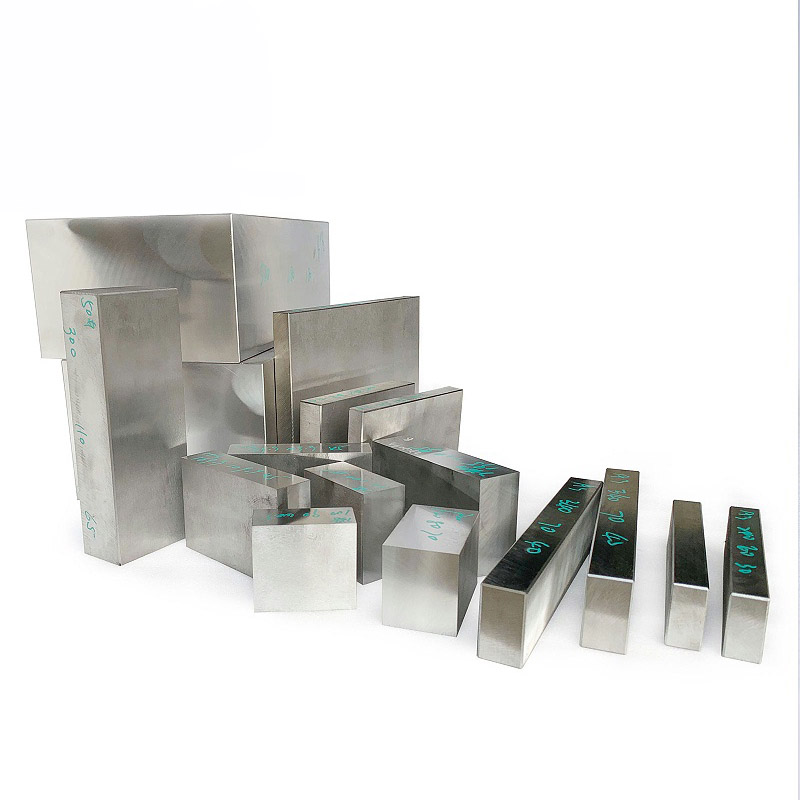
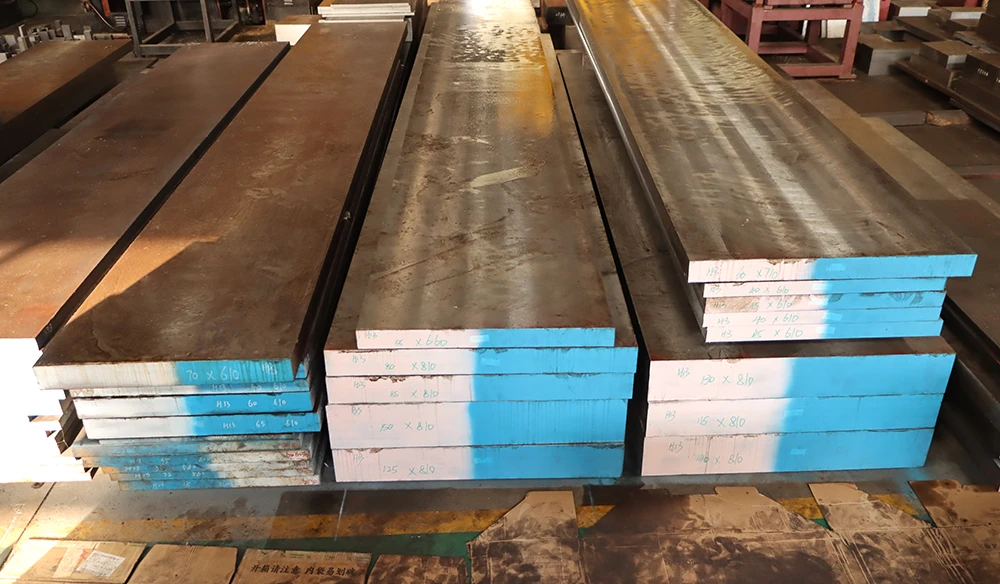
What is 1.2344 Mold Steel?
1.2344 Mold Steel is a hot work mold steel conforming to the German DIN standard, corresponding to American AISI H13 and Chinese 4Cr5MoSiV1. It is renowned for its excellent high-temperature strength, thermal stability and thermal fatigue resistance and is widely used in the manufacturing of high-end molds such as aluminum alloy Die Casting Mold Steel and hot extrusion molds.
Main Properties of 1.2344 Mold Steel
- Strong thermal stability: Excellent hardness retention at high temperatures, like a “heat-resistant armor”, more resistant to softening than ordinary H13.
- Outstanding thermal fatigue resistance: Difficult to crack under repeated cold and hot cycles, like an “indestructible spring”, with longer service life.
- High hardenability: Even large-size molds can be fully hardened inside and out, with small Heat Treatment deformation and stable cavity precision.
- Balanced toughness and wear resistance: Both impact-resistant and wear-resistant, like sturdy off-road tires, suitable for high-strength working conditions.
- Easy to machine and polish: Smooth cutting without damaging tools, can be polished to a mirror effect, suitable for complex cavities.
- Excellent thermal shock resistance: Stable when facing sudden temperature changes of molten metal, thermal cracks form slowly.
- High high-temperature hardness retention rate: Remains hard at 500℃, suitable for molds working under long-term high-temperature conditions.
- Good dimensional stability: No deformation after heat treatment, small subsequent machining allowance, saving processing costs.
- Wide comprehensive adaptability: Suitable for hot work and some cold work applications, a versatile material with strong crack resistance.
- High-impact toughness: Sufficient toughness at room temperature, more fracture-resistant than ordinary H13, durable.
1.2344 Mold Steel Performance Parameter Tables
1. Chemical Composition of 1.2344 Mold Steel
| Element | Standard Range (wt.%) | Typical Content (wt.%) | Core Function |
|---|---|---|---|
| C | 0.35 – 0.42 | 0.40 | Improve hardness and wear resistance |
| Si | 0.80 – 1.20 | 1.00 | Enhance strength and oxidation resistance |
| Mn | 0.25 – 0.50 | 0.40 | Improve hardenability and strength |
| P | ≤ 0.030 | 0.015 | Impurity, controlled at a low level to prevent brittleness |
| S | ≤ 0.020 | 0.010 | Impurity, controlled at a low level to ensure toughness |
| Cr | 4.80 – 5.50 | 5.30 | Improve corrosion resistance, wear resistance and high-temperature strength |
| Mo | 1.20 – 1.50 | 1.40 | Enhance high-temperature strength and hardenability |
| V | 0.85 – 1.15 | 1.00 | Refine grains, improve wear resistance and high-temperature strength |
2. Physical Properties of 1.2344 Mold Steel (Inherent Material Properties)
| Performance Index | Value Range | Unit | Remarks |
|---|---|---|---|
| Density | 7.83 – 7.85 | kg/dm³ (g/cm³) | Measured at room temperature (20°C) |
| Elastic Modulus | ≈ 210 | GPa | Typical value at room temperature (20°C) |
| Thermal Expansion Coefficient | 10.8 – 11.5 | 10⁻⁶/K | Measured in temperature range: 20 – 200°C |
| Thermal Conductivity | ≈ 33 | W/(m·K) | Typical value at room temperature (20°C) |
| Specific Heat Capacity | ≈ 460 | J/(kg·K) | Approximate value at room temperature (20°C) |
| Resistivity | 0.23 – 0.28 | Ω·mm²/m (μΩ·m) | Measured at room temperature (20°C), it varies with heat treatment state |
| Poisson’s Ratio | ≈ 0.30 | — | Typical approximate value of steel at room temperature |
| Magnetism | Magnetic | — | Ferromagnetic in both annealed and hardened states |
3. Mechanical Properties of 1.2344 Mold Steel (Force Response Characteristics)
| Performance Index | Value Range | Unit | Remarks |
|---|---|---|---|
| Annealed Hardness | Max 229 | HBW | Typical delivery state hardness after soft annealing at 830-870°C |
| Quenched and Tempered Hardness | 58 – 64 | HRC | Typical working hardness. Requires oil quenching at 780-820°C and low-temperature tempering at 150-250°C |
| Tensile Strength (Rm) | 1900 – 2300 | MPa | Typical value at room temperature when hardness is about 60-62 HRC |
| Yield Strength (Rp0.2) | Approx 1500 – 1800 | MPa | Estimated value at room temperature when hardness is about 60-62 HRC |
| Elongation at Break (A5) | Approx 5 – 10 | % | Quenched and tempered state at room temperature. Value decreases with increasing hardness |
| Reduction of Area (Z) | Approx 20 – 35 | % | Quenched and tempered state at room temperature |
| Impact Toughness (KU) | Approx 15 – 30 | J | Charpy V-notch impact energy at room temperature, quenched and tempered state. Value fluctuates greatly with specific heat treatment process |
| Elastic Modulus (E) | Approx 210000 | MPa | Typical elastic modulus of steel at room temperature |
Typical Applications of 1.2344 Mold Steel
| Application Field | Specific Use | Remarks |
|---|---|---|
| Die Casting Molds | Cavities, cores and inserts of die-casting molds for automotive aluminum/magnesium alloy parts (such as engine cylinder heads, cylinder blocks, and transmission housings) | Excellent thermal crack resistance, long mold life, suitable for mass production |
| Die Casting Molds | Die casting molds for aluminum alloy parts of motorcycles and small power equipment (such as hubs, engine cylinder blocks, and foot pedals) | Can withstand repeated thermal shocks, solves the problem of easy cracking of ordinary mold steel |
| Die Casting Molds | Die casting molds for home appliances, electronics, hardware parts (such as zinc alloy handles, heat sinks, toys, and mobile phone/laptop shells) | Suitable for various alloys such as aluminum, magnesium, zinc, good wear resistance, can achieve high surface quality (mirror effect) |
| Hot Extrusion Molds | Key components such as mold cores, die heads, and piercing needles of hot extrusion molds for aluminum profiles, copper materials (pipes, bars, and profiles) | High high-temperature strength, heat and wear resistance, strong deformation resistance, suitable for high-temperature and high-load working conditions |
| Hot Extrusion Molds | Auxiliary load-bearing components such as mold sleeves and die pads of hot extrusion molds | High high-temperature strength and toughness, can withstand huge extrusion force and thermal stress, difficult to crack and deform |
| Hot Forging Molds | Die cavities, upper/lower dies of hot forging molds for automotive and heavy machinery parts (such as connecting rods, crankshafts) | High toughness, impact resistance, and high hardness can be obtained through heat treatment, suitable for large tonnage forging |
| Hot Forging Molds | Hot upsetting and hot forging molds for standard parts (such as bolts, nuts) and small hardware forgings | Can withstand repeated impact loads and thermal cycles, reducing the risk of chipping |
| Plastic Molds | Cavities and cores of injection molds for high-temperature engineering plastics (such as glass fiber reinforced PA66, PPS, and PPSU) | Good thermal stability, no deformation when working at high temperatures (180-350℃) for a long time |
| Plastic Mold Steel | Hot runner system components (such as nozzles, sprue bushes, and heating sleeves) of plastic injection molds | Resistant to high-temperature plastic melt erosion, uniform heat conduction, good stability, long service life |
| Other Hot Work Molds | Hot shearing molds (shear blades) for metal bars, profiles, and billets | Good high-temperature hardness retention, heat and wear resistance, and service life are significantly improved compared with ordinary mold steel |
| Other Hot Work Molds | Hot bending molds for metal pipes and profiles; hot pressing and hot bending molds for high-temperature glass/ceramics | Can withstand bending stress at high temperatures, uniform heat conduction, and good thermal fatigue resistance |
| Other Hot Work Molds | Hot roll forming molds for metal parts (such as shafts, gears) | Can maintain stable dimensional accuracy, difficult to deform under high temperature and high pressure |
Not Recommended Application Scenarios for 1.2344 Mold Steel
| Not Recommended Field | Specific Situation | Working Condition | Alternative Material Suggestion |
|---|---|---|---|
| Low-Temperature Cold Work/Impact Molds | Cold heading molds, cold stamping molds that are easy to chip at low temperature | Ambient temperature ≤-20℃, subject to low-temperature impact load | Cr12MoV, A2, D2 |
| Molds in Corrosive Medium Environment | Molds in contact with acidic plastic additives, chlorine/fluorine-containing plastics (PVC/PTFE), acidic die-casting alloys or brine cooling systems | Long-term contact with acidic, chlorine or fluorine-containing corrosive media | 420 stainless steel, S136 |
| High Wear Resistance Cold Work Molds | Cold stamping dies, cold extrusion dies, precision cold stamping dies, and continuous progressive die punches for stamping high-hardness steel plates (≥45 HRC) | High wear, high load cold working conditions, stamping hard materials | SKD11, DC53, Cr12 series, ASP23 |
| Hot Work Molds in Ultra-High-Temperature Oxidation Environment | Large alloy steel hot forging dies, hot forging dies working in high-temperature air for a long time | Working temperature ≥950℃, long-term exposure to high–temperature oxidation environment | HD steel or other high- temperature oxidatio- resistant steel |
| High Silicon Aluminum Die Casting Molds | Molds for die casting high–silicon aluminum alloy (silicon content ≥12%) | Die casting high silicon aluminum alloy, easy to cause mold sticking | H13-type hot work mold steel |
| High-Speed/High-Frequency Cold Stamping Molds | High-high-temperaturespeed cold stamping dies with a stamping rate ≥500 times per minute, continuous high-speed stamping terminal dies | High-frequency alternating load, high-speed operation | ASP23 |
| High Mirror Precision Injection Molds | Injection molds for optical components, home appliance shells requiring surface roughness Ra ≤0.02μm | Need to achieve ultra-high mirror polishing grade | S136 and other mirror steels |
| Hot Work Molds under Unlubricated Dry Friction | Hot extrusion dies, hot forging dies under unlubricated conditions | Dry friction hot working conditions, no lubricant | 1.2367 |
| Cold Heading Molds for High-Strength Fasteners | Cold heading molds for processing high-strength bolts of grade 10.9 and above | Cold-heading high–strength bolts, subject to huge cold impact | D2 tool steel |
| Die Casting Molds with High Thermal Conductivity Requirements | Fast-cooling die-casting molds with extreme requirements for cooling speed | Require extremely high thermal conductivity to achieve rapid cooling | High thermal conductivity copper alloy (such as beryllium copper) or special high thermal conductivity mold steel |
| Low-Cost/Disposable Simple Molds | Large rough machining plastic turnover box molds, disposable simple molds | Low-cost projects, low requirements for life and performance | P20 and other low-cost mold steels |
Recommended Tools for 1.2344 Mold Steel Machining
| Machining Stage | Coating Selection Priority | Key Tool Parameters | Recommended Brands |
|---|---|---|---|
| Rough Machining (annealed/soft to medium hard state) | TiAlN coating > AlTiN coating > TiSiN coating | Cutting speed: 100-200 m/min (can be increased for soft state) Feed rate: 0.1-0.3 mm per tooth Cutting depth: 0.5-2 mm Edge passivation, impact resistance | Zhuzhou Diamond (YM101, GM series), Sandvik Coromant (GC4225), Kennametal (KCPK30), Mitsubishi |
| Semi-finishing (tempered/medium hard state) | TiCN coating > TiAlN coating | Cutting speed: 120-180 m/min Feed rate: 0.05-0.15 mm per tooth Cutting depth: 0.2-0.5 mm Balanced wear resistance and efficiency | Zhuzhou Diamond (YBG202, GC series), Sandvik (GC4325), Kennametal (KCK20), Seco |
| Finishing (quenched/hard state, HRC50+) | PCBN/CBN tools (uncoated) > ceramic tools | Cutting speed: 80-180 m/min (higher for PCBN) Feed rate: 0.05-0.1 mm per tooth Cutting depth: 0.1-0.3 mm Dry cutting or high-pressure cooling | Kyocera (ceramic), Element Six (PCBN), Huarui (PCBN), Sandvik (CBN), Sumitomo (CBN) |
1.2344 Mold Steel Machining Parameter Selection Logic
CNC machining parameters are selected based on the following core dimensions:
| Core Dimension | Selection Logic | Practical Parameters (Scenarios and Value Ranges) |
|---|---|---|
| Cutting Speed (Vc) | • Material hardness influence: Hardness is the primary determinant. For every HRC5 increase in hardness, cutting speed should be reduced by 10%-15%. Higher speed can be used for the annealed state (≤30 HRC); speed must be significantly reduced for the quenched state (≥45 HRC) to prevent tool chipping. • Tool material influence: Coated carbide tools (such as TiAlN) allow higher speeds than uncoated tools; PCBN (polycrystalline cubic boron nitride) tools are dedicated for high-efficiency machining of high-hardness materials; high-speed steel tools are only suitable for low-cost, small-batch machining of unheat treated materials, with the lowest speed. • Machining stage influence: Rough machining focuses on efficiency, use medium speed within the bearing range of tools and machine tools; finishing focuses on surface quality and precision, can appropriately increase speed (within the allowable range of hardness). | Scenario 1: Conventional milling of annealed state (≤30 HRC) • Rough machining: 100 – 150 m/min • Finishing: 150 – 200 m/min Scenario 2: Cavity machining of pre-hardened state (38-42HRC) • Rough machining: 80 – 120 m/min • Finishing: 80 – 120 m/min Scenario 3: Hard finishing of quenched state (48-52HRC) • Carbide tool finishing: 80 – 120 m/min • PCBN tool finishing: 180 – 250 m/min |
| Feed Rate (F) / Feed per Tooth (fz) | • Machining stage and surface quality: Use larger feed for rough machining to improve efficiency; use smaller feed for finishing to obtain better surface finish. • Tool rigidity & chatter control: For tools with poor rigidity (such as tools with large length-diameter ratios) or working conditions prone to chatter (such as thin-walled parts), feed should be reduced. Variable helix angle tools can suppress chatter, allowing relatively stable feed. • Material characteristics: 1.2344 is prone to built-up edge, especially during finishing, appropriately reducing feed and 配合 effective cooling/lubrication can improve this problem. | Scenario 1: Roughing and finishing of annealed state (carbide end mill) • Rough machining (fz): 0.15 – 0.25 mm per tooth • Finishing (fz): 0.08 – 0.12 mm per tooth Scenario 2: Hard milling of quenched state (coated carbide tool) • Semi-finishing/finishing (fz): 0.05 – 0.10 mm per tooth Scenario 3: Curved surface finishing (ball end mill) • Step/row spacing: 0.05 – 0.20 mm |
| Cutting Depth (ap) | • Core objective of machining stage: Rough machining pursues material removal rate, using large cutting depth (radial/axial) within the rigidity allowable range of machine tools and tools; finishing pursues dimensional and shape accuracy, must use small cutting depth. • Material hardness and tool strength: The higher the material hardness, the smaller the single cutting depth should be to reduce cutting force and tool chipping risk. Cutting depth for quenched state machining is significantly smaller than that for annealed state. • Tool type: Corn milling cutters (multi-tooth) are designed for large cutting depth rough machining; cutting depth for ball end mill finishing usually refers to residual height or step spacing. | Scenario 1: Roughing of annealed state • Axial cutting depth (ap): 2.0 – 4.0 mm (end mill) or 5-8 mm (corn milling cutter) Scenario 2: Layered machining of pre-hardened/quenched state • Rough machining axial cutting depth (ap): 0.5 – 2.0 mm • Semi-finishing axial cutting depth (ap): 0.3 – 1.0 mm • Finishing axial cutting depth (ap): 0.1 – 0.3 mm |
| Spindle Speed (S) | • Calculated, not independently set: Spindle speed is calculated by the formula 【S = (Vc * 1000) / (π * D)】 from cutting speed (Vc) and used tool diameter (D). • Inverse influence of tool diameter: At the same cutting speed, the smaller the tool diameter, the higher the required spindle speed. When programming, the speed must be calculated or adjusted in real time according to the currently used tool diameter. • Machine tool capacity limit: The calculation result must not exceed the rated maximum speed of the machine tool, especially when using small-diameter tools. | Scenario example: Rotational speed of different tools when Vc=150m/min • Φ10 end mill: ≈ 4800 rpm • Φ20 end mill: ≈ 2400 rpm • R5 ball end mill: ≈ 4800 rpm (calculated based on effective diameter approximately 10mm) Note: The actual programming S value needs to be accurately calculated according to the above formula and Vc value of the specific scenario. |
| Cooling Method | • Core of machining state and heat dissipation: Hard state machining and high-efficiency cutting generate giant heat, the primary goal of cooling is to reduce temperature to prevent workpiece thermal deformation and tool thermal wear. • Chip removal and lubrication: For working conditions with difficult chip removal such as deep cavities and drilling, high-pressure cooling is required to wash away chips; during finishing, good lubrication helps improve surface quality and suppress built-up edge. • Method selection hierarchy: High-pressure internal cooling (>50 bar) > sufficient external cooling > minimum quantity lubrication (MQL) > dry cutting. Quenched state, deep cavity, high efficiency machining must adopt high-pressure internal cooling. | Scenario 1: Conventional machining of annealed/pre-hardened state • Rough machining: Sufficient emulsion external cooling • Finishing: Cutting oil or emulsion Scenario 2: Hard Milling of quenched state & Deep Hole Drilling • First choice: High-pressure internal cooling (50-100 bar), extreme-pressure emulsion or special cutting oil Scenario 3: High-speed finishing & environmental protection requirements • Optional: Minimum quantity lubrication (MQL) |
| Path Strategy | • Tool force and life: Prioritize climb milling so that the cutting force presses the workpiece to the worktable, obtaining a more stable cutting process, longer tool life and better bottom surface finish. • Efficiency and stability: Rough machining adopts layered cutting to avoid excessive one-time cutting depth; surrounding tool path reduces tool lifting and improves efficiency. • Special working conditions: Deep hole drilling must use the peck drilling cycle (G83) to ensure chip removal; finishing of complex curved surfaces adopts a surrounding equidistant or parallel scanning strategy to ensure consistent surface quality. | Scenario 1: Cavity/face milling • Rough machining: Climb milling + layered cutting • Finishing: Climb milling + surrounding or one-way tool path Scenario 2: Curved surface machining • Semi-finishing/finishing: Climb milling + surrounding tool path / spiral tool path Scenario 3: Drilling • Through hole/shallow hole: G81/G82 cycle • Deep hole (hole depth >5D): G83 peck drilling cycle |
Frequently Asked Questions about 1.2344 Mold Steel
Q1: How to solve quenching cracking or insufficient hardness during heat treatment?
1.2344 contains Cr (4.8-5.5%), Mo, and V elements, with excellent hardenability but extreme sensitivity to temperature:
— Quenching cracking: Mostly caused by quenching temperature exceeding 1050℃ or too fast cooling (just like throwing red-hot iron directly into cold water will definitely crack), need to control temperature at 1020-1040℃, adopt stepped quenching (first oil cooling then air cooling) to reduce internal stress;
— Insufficient hardness: 90% is caused by insufficient tempering times, must do 3 times of tempering (cool to room temperature each time); tempering temperature is divided by scenario: 580-620℃ for hot work molds, 520-560℃ for injection molds.
Q2: How to control easy deformation during machining?
1.2344 has high alloy element content, the internal stress accumulated after rough machining is like a squeezed spring, which will rebound when released:
— Must carry out stress relief annealing after rough machining: Keep temperature at 600-650℃ for 2-3 hours, cool with the furnace;
— Carry out low-temperature tempering before wire cutting: Keep the temperature at 180-200℃ for 1-2 hours;
— Adopt a layered cutting process, reduce single cutting amount to avoid excessive stress accumulation.
Q3: How to prevent thermal fatigue cracking under alternating cold and hot working conditions?
1.2344 has better thermal fatigue resistance than H13 due to Cr and Mo, but when the cold and hot temperature difference exceeds 200°C, it will break like a repeatedly bent iron wire:
— Install circulating cooling water channels in heat-prone areas such as gates and cores, and control the cavity surface temperature difference ≤150℃;
— Preheat the mold to 150-200℃ before use to avoid sudden cooling and heating;
— Regularly nitriding the mold surface to improve the surface thermal fatigue resistance.
Q4: How to deal with pitting or carbide falling off during polishing?
1.2344 contains V-type carbides (high hardness but high brittleness), too fast polishing will cause slag falling like hard scraping of wall skin:
— Strictly follow the progressive process of 「rough grinding → fine grinding → diamond abrasive paste polishing」, no skipping steps allowed;
— Must use coolant during polishing to prevent overheating of the workpiece surface leading to carbide precipitation;
— If a mirror effect is required, electropolishing or chemical polishing can be carried out first, then manual fine polishing.
Q5: How to avoid easy cracking after repair welding?
1.2344 contains a high content of Cr, Mo, and V elements, with poor weldability like bonding hard plastics of different materials, and will definitely crack without preheating:
— Preheat the mold to 300-400℃ before repair welding;
— Select electrodes matching the composition of 1.2344 (such as SKD61 special electrodes);
— Carry out tempering treatment immediately after repair welding: Keep the temperature at 550-600℃ for 1 hour to eliminate welding stress; for small area defects, laser cladding repair is preferred, with a smaller heat-affected zone.
Q6: How to deal with pitting corrosion when contacting corrosive media?
1.2344 is a medium chromium steel (Cr content 4.8-5.5%, about 5%), its corrosion resistance is like a person without thick protective clothing, easy to be attacked by acid or corrosive plastics:
— Carry out hard chromium plating or PVD coating (such as TiN, CrN) on the mold surface, putting a 「protective layer」 on the mold;
— Clean the mold in time after use to avoid residual corrosive materials;
— If the corrosion risk is extremely high, consider replacing it with high-chromium mold steel (such as 1.2367).
1.2344 gedetailleerde prestatieparameters PDF-download
| Item | Details |
|---|---|
| File | 1.2344-Mold-Steel-Full-Introduction.pdf |
| Type | application/pdf |
| Size | 267 KB |
| Link | https://moldsteells.com/wp-content/uploads/2026/03/1.2344-Mold-Steel-Full-Introduction.pdf |