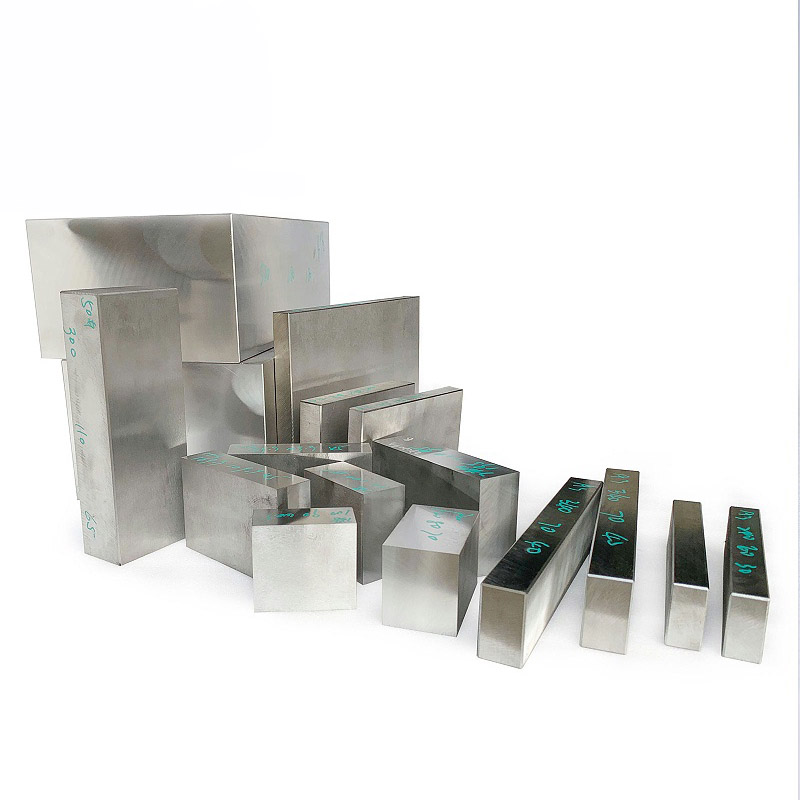
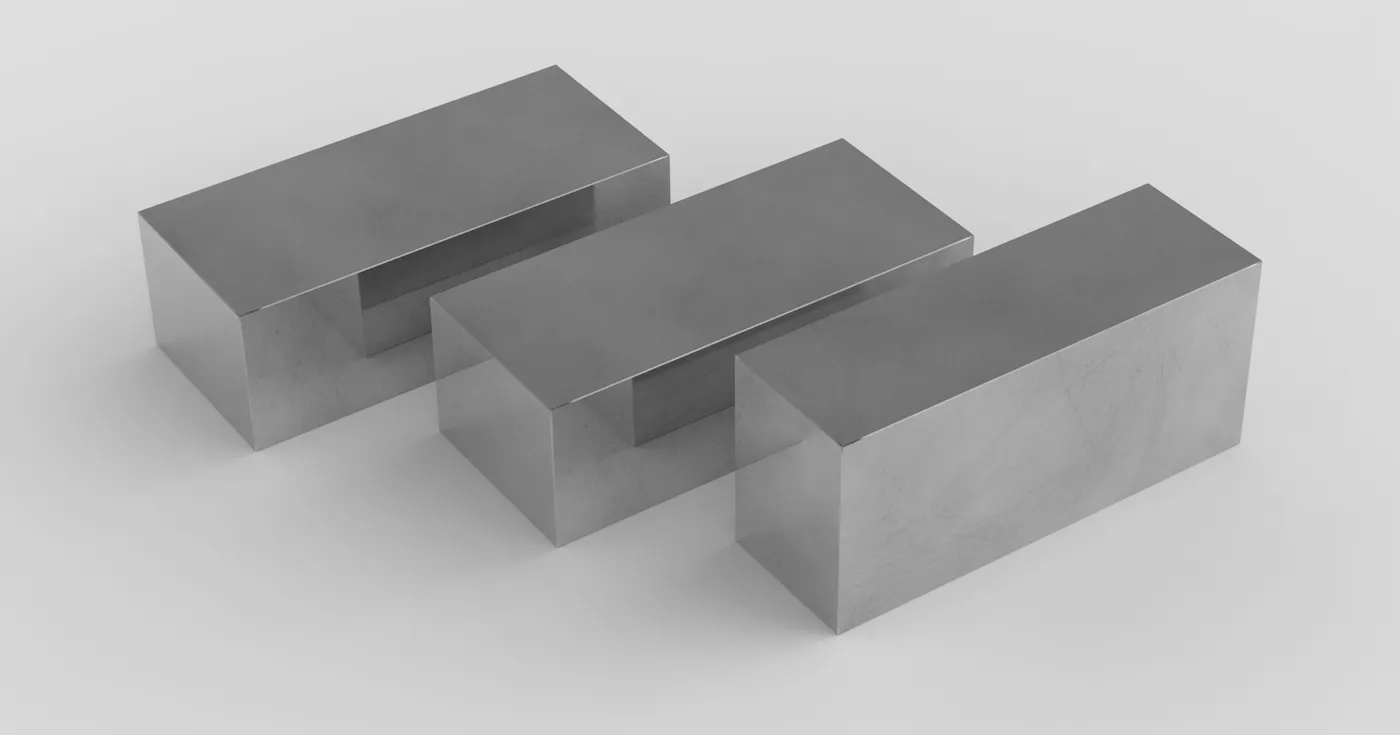
What is SKD61 Tool Steel?
SKD61 is a hot-work tool steel under the Japanese JIS standard. It belongs to the medium-carbon, high-chromium, molybdenum-vanadium alloy steel series. It possesses excellent high-temperature hardness (maintaining HRC 38-42 even at 600°C), outstanding thermal fatigue resistance, and a superior combination of toughness. It is the preferred material for aluminum alloy die-casting molds and is widely used in high-temperature operating molds such as hot extrusion dies and hot forging dies. Its performance exceeds that of standard H13 and is equivalent to the American H13 modified version.
Key Characteristics of SKD61 Steel
- Excellent Thermal Stability: Maintains a high-temperature hardness of HRC 38-42 at 600°C with a hardness retention rate of 80%. Suitable for long-term high-temperature applications, such as aluminum alloy die-casting and hot extrusion dies.
- Strong Thermal Fatigue Resistance: Thermal fatigue life reaches 80,000 to 100,000 cycles. Resistance to heat checking is 30% stronger than H13, significantly extending the service life of die-casting molds.
- High Toughness Synergy: Impact toughness is 18-25 J/cm², 20% higher than H13. It can withstand rapid cooling and heating cycles without cracking, making it ideal for molds with complex geometries.
- Superior Wear Resistance: A vanadium content of 0.8-1.2% forms high-hardness VC carbides. Wear resistance is improved by 25-30% compared to H13, suitable for severe wear conditions.
- Good Hardenability: The effective hardening depth in oil quenching is 100mm. Large cross-section molds exhibit a uniform hardness distribution, with the core hardness being only HRC 3-5 lower than the surface hardness.
- Excellent Polishing Performance: Can be polished to a mirror finish of Ra 0.025μm. Suitable for high-gloss plastic molds and transparent component molds requiring high surface quality.
- Effective Nitriding Reinforcement: Surface nitriding hardness reaches HV 850, increasing wear resistance by 3-5 times and significantly extending mold life.
- Great Dimensional Stability: Residual austenite is fully transformed after triple tempering. Heat treatment deformation is <0.05mm, ensuring the dimensional precision of precision molds.
SKD61 Performance Parameter Tables
1. SKD61 Chemical Composition
| Element Symbol | Typical Content (%) | Standard Range (%) | Core Role |
|---|---|---|---|
| C | 0.39 | 0.35-0.42 | Provides hardness and wear resistance; forms carbides; determines quenching hardness. |
| Si | 1.0 | 0.80-1.20 | Improves strength and oxidation resistance; enhances thermal stability; acts as a deoxidizer. |
| Mn | 0.4 | 0.25-0.50 | Increases hardenability; improves hot-working performance and strength. |
| P | ≤0.025 | ≤0.030 | Impurity element; strictly controlled to prevent reduction in toughness and plasticity. |
| S | ≤0.020 | ≤0.030 | Impurity element; strictly controlled to prevent reduction in toughness and plasticity. |
| Cr | 5.15 | 4.80-5.50 | Improves hardenability, wear resistance, and high-temperature strength; forms carbides; improves corrosion resistance. |
| Mo | 1.3 | 1.00-1.50 | Improves hardenability and high-temp strength; enhances tempering resistance and thermal fatigue performance. |
| V | 0.95 | 0.80-1.15 | Refines grains; forms hard vanadium carbides; improves wear resistance and toughness. |
2. SKD61 Physical Properties (Intrinsic Material Attributes)
| Performance Indicator | Value Range | Unit | Remarks |
|---|---|---|---|
| Density | 7.80-7.85 | g/cm³ | At 20°C room temperature |
| Modulus of Elasticity | 210-215 | GPa | At 20°C room temperature |
| Poisson’s Ratio | 0.27-0.30 | – | At 20°C room temperature |
| Melting Point | 1427 | °C | – |
| Coefficient of Linear Expansion (20-100°C) | 9.1-10.9 | ×10⁻⁶/°C | Temperature range 20-100°C |
| Coefficient of Linear Expansion (20-300°C) | 11.5-12.3 | ×10⁻⁶/°C | Temperature range 20-300°C |
| Coefficient of Linear Expansion (20-500°C) | 12.8-13.0 | ×10⁻⁶/°C | Temperature range 20-500°C |
| Thermal Conductivity (20°C) | 20.1-32.2 | W/(m·K) | At 20°C room temperature |
| Thermal Conductivity (350°C) | 23.1-28.6 | W/(m·K) | 350°C working temperature |
| Thermal Conductivity (700°C) | 26.3-30.3 | W/(m·K) | At 700°C high temperature |
| Specific Heat Capacity (20°C) | 460 | J/(kg·K) | At 20°C room temperature |
| Specific Heat Capacity (500°C) | 548 | J/(kg·K) | 500°C working temperature |
| Hardness (Annealed) | ≤229-235 | HB | Delivery in annealed state |
| Hardness (After Quenching) | 52-58 | HRC | Quenching temp 1020-1050°C |
| Hardness (After Tempering) | 38-53 | HRC | Tempering temp 530-680°C |
| Critical Temp Ac1 | 845-860 | °C | Start of austenite transformation |
| Critical Temp Ms | 270-340 | °C | Start of martensite transformation |
3. SKD61 Mechanical Properties (Loading Response)
| Performance Indicator | Value Range | Unit | Remarks |
|---|---|---|---|
| Hardness (After Quenching) | 52-58 | HRC | Quenching at 1020-1050°C, oil cooling |
| Hardness (After Tempering) | 38-53 | HRC | Tempering at 530-680°C, typically 42-48 HRC |
| Tensile Strength (Room Temp) | 1200-1600 | MPa | After heat treatment, hardness 42-52 HRC |
| Tensile Strength (600°C) | 800-850 | MPa | High-temperature operating state |
| Compressive Strength | 2000-2500 | MPa | Hardness 45-48 HRC |
| Impact Toughness αk | 20-40 | J/cm² | Charpy V-notch, related to tempering temp |
| Fatigue Strength (10⁷ cycles) | 550 | MPa | Cycle life 10⁷ |
Typical Applications of SKD61 Tool Steel
| Application Field | Specific Use | Working Temp | Remarks |
|---|---|---|---|
| Die-Casting Molds | Aluminum, Zinc, and Copper alloy die-casting molds | 600-700°C | Primary application area |
| Hot Extrusion Dies | Aluminum profile, copper, and steel extrusion dies | 500-600°C | Requires high-temp strength |
| Hot Forging Dies | Automotive parts and hardware tool forging dies | 800-1100°C | Withstands impact loads |
| Plastic Molds | High-volume injection molds, reinforced plastic molds | 200-300°C | High wear resistance requirements |
Non-Recommended Application Scenarios for SKD61
| Non-Recommended Type | Specific Scenario | Reason | Recommended Substitute |
|---|---|---|---|
| Cold-Work Molds | Cold stamping, cold extrusion, cold heading dies | Insufficient hardness (HRC45-52); wear resistance is only 1/3-1/4 of cold-work steel. | Cr12MoV, DC53, D2, High-speed steel |
| High-Polish Molds | Mirror injection molds, Class A surface molds | Susceptible to pinholes and pitting; difficult to reach Ra 0.02μm. | S136, NAK80, STAVAX |
| Large Molds | Molds >100mm thickness requiring full hardening | Limited hardenability; core hardness is insufficient and inconsistent. | Modified H13, Pre-hardened large mold steel |
| Corrosive Environment | PVC plastic molds, acid/alkali resistant molds | Limited corrosion resistance; prone to surface pitting. | S136, 420 Stainless Steel |
| Cost-Sensitive Molds | Small batch simple molds | Higher cost; overkill for low-end requirements. | #45 Steel, P20 |
Tooling Selection for SKD61 Machining
| Phase / Hardness | Tool Type | Coating Priority | Recommended Brands |
|---|---|---|---|
| Roughing / HRC < 40 | Standard Carbide | TiN, TiCN, TiAlN | Imported: Sandvik, Kennametal; China: ZCC·CT, Xiamen Tungsten |
| Roughing / HRC 40-50 | Ultra-fine Grain Carbide | AlTiN, TiAlSiN, AlCrN | Imported: Sandvik, Walter, Kyocera; China: ZCC·CT, Xiamen Tungsten |
| Finishing / HRC 45-52 | CBN Tools | Uncoated CBN, TiAlSiN | Imported: Sumitomo, Kyocera, Element Six; China: ZCC·CT CBN Series |
| Drilling / HRC 40-50 | Carbide Drill | AlTiN, TiAlN | Imported: Sandvik, OSG, Guhring; China: Chengliang, Harbin Tools |
Machining Parameter Selection Logic for SKD61
| Parameter | Hardness: HRC 40-45 | Hardness: HRC 45-52 | Cooling / Strategy |
|---|---|---|---|
| Cutting Speed (Vc) | 80-150 m/min | 50-90 m/min | Reduce speed by 20-30% for every HRC 5-10 increase. |
| Feed Rate (f) | 0.08-0.25 mm/r | 0.03-0.15 mm/r | Lower feed for higher hardness to avoid chipping. |
| Cutting Depth (ap) | 0.5-5.0 mm | 0.1-1.5 mm | Use layer-by-layer milling (2-3mm per layer) for deep cavities. |
| Cooling Method | Extreme pressure emulsion (8-12%) | MQL or High-pressure internal cooling | High pressure ≥10 bar required for deep cavities. |
Frequently Asked Questions (FAQ)
Can SKD61 and H13 heat treatment processes be used interchangeably?
No. SKD61 has a higher vanadium content. The quenching temperature must be 20-30°C higher (1020-1050°C), and the tempering temperature must also be 20-50°C higher to achieve the same hardness. Using H13 specs will result in substandard hardness and toughness.
How much harder is SKD61 to machine than H13?
Cutting speed should be reduced by 15-20%, and tool wear is typically 30-40% faster. This is due to the higher vanadium content forming harder carbides. CBN or ultra-fine grain carbide tools with TiAlN or AlCrN coatings are recommended.
Can SKD61 be used for molds operating above 600°C?
Not recommended. 600°C is the upper limit for SKD61; beyond this, hardness and strength drop rapidly. For copper alloy die-casting (850-1100°C), use H11, H10, or Tungsten-Molybdenum hot-work steels.
How to identify authentic SKD61?
Check the vanadium content. Authentic SKD61 contains 0.8-1.2% V. Counterfeits often have less. Request a material certificate verifying C (0.35-0.42%), Cr (4.8-5.5%), Mo (1.0-1.5%), and V (0.8-1.2%). Choose reputable brands like Hitachi, Daido, or Fushun Special Steel.
What should I do if the core hardness of an SKD61 mold thicker than 100mm is insufficient?
SKD61 has limited hardenability; the core hardness can be HRC 5-8 lower than the surface in thick sections. Solutions: Extend soaking time (1 hour per 25mm), apply cryogenic treatment, or switch to a modified H13 or pre-hardened mold steel. Avoid solid structures >100mm in the design where possible.
SKD61 Steel Detailed Performance Parameters PDF Download
| Item | Details |
|---|---|
| File | skd61-tool-steel-properties-composition-machining-guide.pdf |
| Type | application/pdf |
| Size | 199 KB |
| Link | https://moldsteells.com/wp-content/uploads/2026/03/skd61-tool-steel-properties-composition-machining-guide.pdf |