What Is S136 Mold Steel
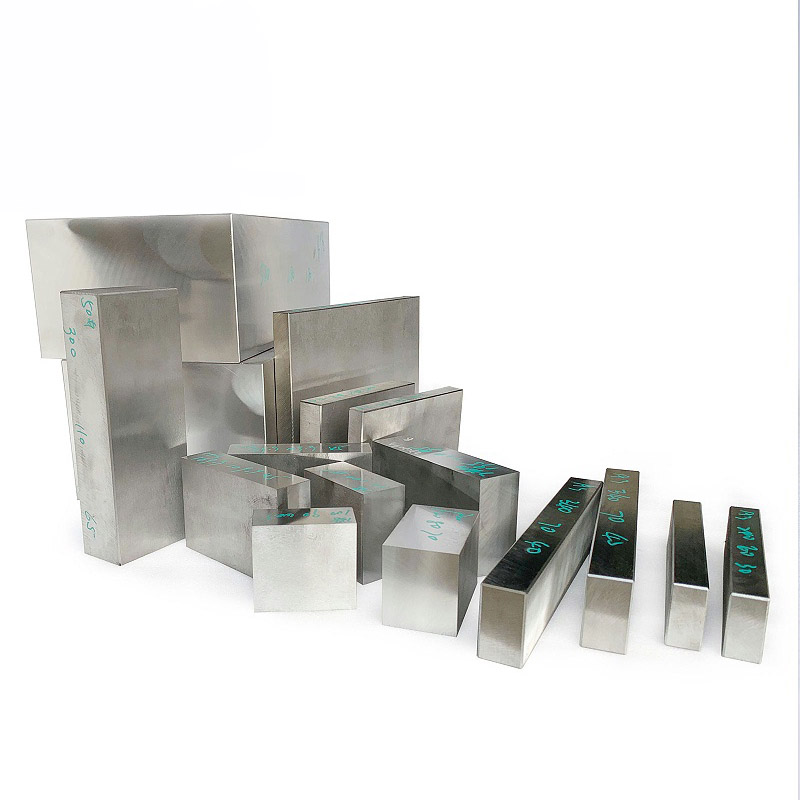
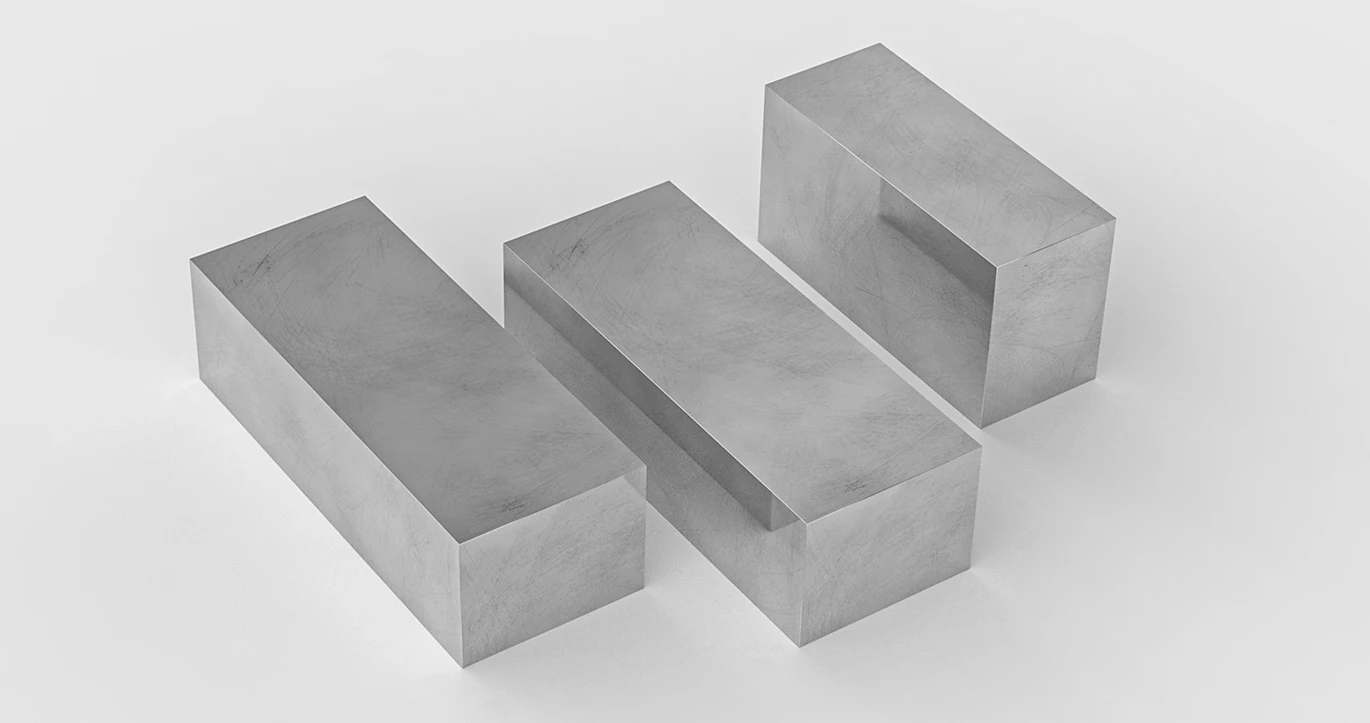
S136 is a high-chromium martensitic stainless mold steel, benchmarked against ASSAB (Uddeholm) S-136 from Sweden.
Produced using the Electro-Slag Remelting (ESR) process for ultra-high purity, it is preferred for high-end precision molds.
It offers SPI A-1 mirror polishing, long-term corrosion resistance, and micron-level dimensional stability.
With balanced hardness and toughness, its mold service life is 2–3 times longer than conventional steels.
Main Characteristics of S136
Mirror-Grade Surface: SPI A-1 polishing performance, ideal for optical lenses and high-gloss components.
Corrosion-Resistant & Maintenance-Free: Excellent rust resistance for corrosive plastics, reducing maintenance frequency.
Long-Term High Hardness: HRC 48–54 with good toughness, increasing productivity, and mold lifespan.
High Dimensional Stability: Very low deformation, guaranteeing precise part dimensions.
Excellent Machinability: Superior machining and EDM performance, reducing manufacturing cycles.
S136 Performance Specifications
1. Chemical Composition
| Element | Typical % | Range % | Function |
|---|---|---|---|
| C | 0.38 | 0.36–0.42 | Determines hardness and wear resistance |
| Si | 0.9 | 0.60–1.00 | Improves polishability and deoxidation |
| Mn | 0.5 | 0.30–0.80 | Enhances hardenability and strength |
| Cr | 13.6 | 12.50–14.00 | Provides corrosion resistance |
| V | 0.3 | 0.20–0.50 | Refines grain structure, improves toughness |
| P | <0.025 | ≤0.030 | Harmful impurity (must be controlled) |
| S | <0.001 | ≤0.003 | Affects polishing (extremely low in ESR steel) |
2. Physical Properties
| Property | Metric | Imperial | Condition |
|---|---|---|---|
| Density | 7.85 g/cm³ | 0.284 lb/in³ | 20°C |
| Elastic Modulus | 215,000 N/mm² | 31.2×10⁶ psi | 20°C |
| Thermal Conductivity | 25.0 W/m·K | 173.5 BTU·in/ft²·h·°F | 20°C |
| Specific Heat | 460 J/kg·K | 0.11 BTU/lb·°F | 20°C |
| Melting Point | 1425°C | 2597°F | Approximate |
| Magnetism | Magnetic | Magnetic | Martensitic stainless steel |
3. Mechanical Properties
| Property | Value | Remarks |
|---|---|---|
| Quenched & Tempered Hardness | 50–55 HRC | Recommended: 50–52 HRC |
| Annealed Hardness | ≤235 HB | Supply condition |
| Tensile Strength | 1750–1900 MPa | Depends on tempering temperature |
| Yield Strength | 1550–1700 MPa | High load capacity |
| Compressive Strength | ≈2200 MPa | High-pressure molding |
| Impact Toughness | 25–35 J/cm² | Measured at 20°C |
| Elongation | 7–9% | Plastic deformation index |
| Reduction of Area | ≈45% | Uniform microstructure |
| Elastic Modulus | 208–215 GPa | 20°C |
| Poisson’s Ratio | 0.28–0.29 | – |
Typical Applications of S136 Mold Steel
- Optical Components: Lenses and high-gloss housings (SPI A-1).
- Transparent Products: High light transmission and impurity-free parts.
- Medical & Food Packaging: Resistant to sterilization and corrosion.
- Micro-Structured Parts: Accurate micron-level textures.
- Complex EDM Cavities: Improved deep cavity finishing.
- Acid Resistance: Suitable for PVC and flame-retardant plastics.
- Large High-Gloss Parts: Uniform surface brightness.
Applications Not Recommended for S136
- High-Impact Loads: Insufficient toughness, prone to cracking.
- 30%+ Glass-Fiber Plastics: Low wear resistance.
- Long-Term >200°C Environment: Performance degradation.
- High-Chlorine Plastics: Poor corrosion resistance.
- Low-Precision Products: Overperformance and cost waste.
- Small Batch & Urgent Projects: Long machining cycles.
- Frequent Welding: Poor weldability.
- No Professional Heat Treatment: Inconsistent hardness.
S136 CNC Cutting Tool Selection
| Stage | Tool Type | Coating Priority | Parameters | Recommended Brands |
|---|---|---|---|---|
| Roughing | Ultra-fine WC-Co Carbide End Mill | AlCrN > TiAlN > TiN | 8–12% Co, 0.5–1μm grain | Zhuzhou Diamond, Zigong Carbide (China); Sandvik GC1025 |
| Semi-Finishing | Solid Carbide / Ball Nose | TiAlN > AlCrN | Helix 30–45° | Sumitomo, Kennametal, Sandvik |
| Finishing | CBN / PCD Tools | TiSiN > None | Polished edge, relief 12–15° | Element Six, Sumitomo, Sandvik |
| Deep Cavity | Long-Neck End Mill | TiAlN | L/D ≤10:1 | Sandvik, OSG |
| Deep Hole | Internal Cooling Drill | TiCN | ≥70 bar coolant | Guhring, Nachi |
Common Problems and Solutions
Why Does S136 Rust?
As a martensitic stainless steel, its passive layer is easily damaged during machining.
Chloride coolant or PVC decomposition gas accelerates pitting corrosion.
Solution: Passivation after polishing; avoid chloride exposure.
Why Is There a Thick White Layer After EDM?
High chromium forms a thick, brittle Cr₂O₃ layer, three times as thick as in normal steel.
Solution: Reduce current, increase pulse interval; acid pickling or electro-polishing.
Why Does ESR Grade Achieve Better Polishing?
Ordinary S136 contains inclusions that fall off during polishing.
ESR grade has purity below grade 0.5 and inclusions ≤ 10 μm, enabling a Ra 0.012 μm mirror finish.
Solution: Use ESR grade only; stress relief before polishing.
Why Is Welding Prone to Cracking?
High chromium and carbon content cause strong hardening and high residual stress.
Solution: Preheat at 300°C, low-current segmented welding, post-annealing.
Why Is Tool Wear So Fast?
Thermal conductivity is only one-third of that of 45 steel, concentrating heat on cutting edges.
Solution: Use ultra-fine carbide tools; reduce speed by 20%; ≥70 bar cooling.
Why Does Quenching Cause Large Deformation?
Poor heat conduction leads to temperature differences over 300°C, plus 3% martensitic expansion.
Solution: Stress relief, step heating, reserve finishing allowance.
Why Does Size Change Over Time?
Trace amounts of vanadium and molybdenum cause aging, hardening, and carbide precipitation.
Solution: 180°C×8h aging; 7-day stabilization at 40°C.
Why Does Thermal Fatigue Occur?
Thermal expansion is 15% higher than that of normal steel, causing repeated stress.
Solution: Optimize cooling; nitriding/TD treatment; tempering at 550°C.
S136 Datasheet Download
| Item | Details |
|---|---|
| File | S136 Datasheet |
| Type | |
| Size | 1 MB |
| Link | https://moldsteells.com/wp-content/uploads/2026/02/Comprehensive-Guide-to-S136-Mold-Steel-Properties-Machining-and-Precautions-Checklist.pdf |