What is PDS5
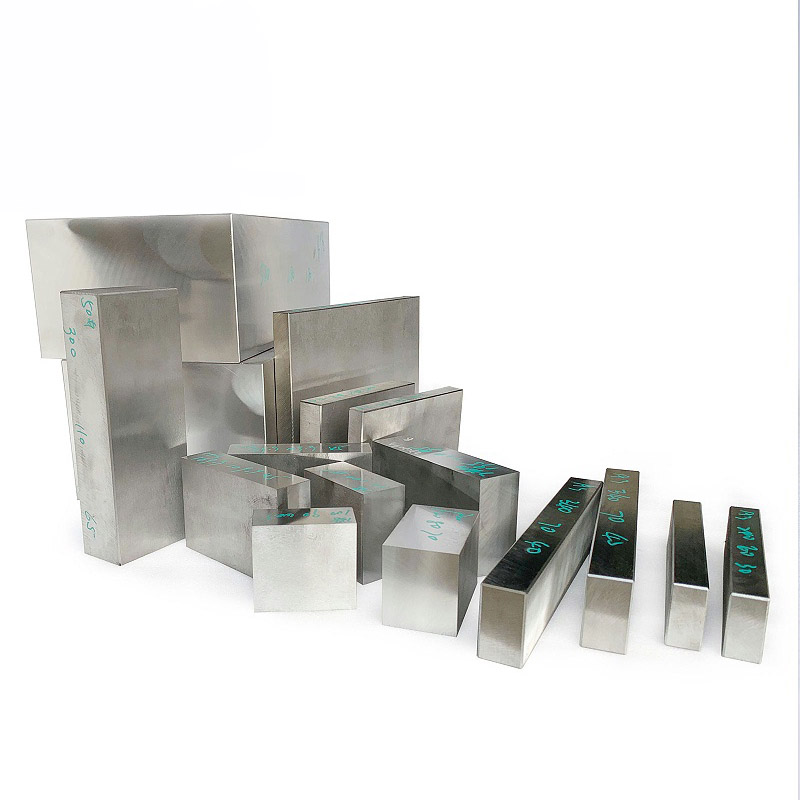
PDS5 mold steel is a pre-hardened Plastic Mold Steel based on Fe, with C 0.35–0.45%, Cr 1.80–2.10%, Mn 1.30–1.60%, and a small addition of Mo. It is typically supplied at about 33 HRC, offering good machinability, polishability, wear resistance, and a balanced combination of strength and toughness. It can be put directly into mold manufacturing without further heat treatment, balancing efficiency and cost. It is suitable for medium- to low-temperature plastics such as PP and ABS in medium- to small-volume precision molds for appliance housings, electronic parts, and automotive interiors.
Main Characteristics of PDS5 Steel
- Pre-hardened steel: ex-works hardness around HRC 29–33; a true “ready-to-use” grade.
- Uniform hardness: minimal difference between large and small sections; overall performance is consistent.
- Good machinability: cutting, drilling, and milling are relatively easy; complex cavities are not difficult to execute.
- Good polishability: surfaces can be finished fine with stable gloss levels.
- Balanced strength and toughness: tensile strength about 1010 MPa, yield strength about 883 MPa; neither overly brittle nor soft.
- Decent ductility: elongation about 20%, reduction of area about 50%; not a brittle steel.
- Above-average wear resistance: better than plain carbon steels like 45# steel, though not in the “high-wear” class.
- Good hardenability: thicker sections maintain more consistent properties.
- Good dimensional stability: sizes are less prone to drift after machining; lower deformation risk.
- Good fatigue resistance: more stable under cyclic loading with reduced risk of early microcracking.
- Moderate corrosion resistance: stronger than ordinary tool steel, but not at stainless level.
- Average high-temperature performance: well-balanced at room temperature; sustained high-temperature loading is not its forte.
PDS5 Performance Data
1. Chemical Composition of PDS5
| Element | Standard Range (wt.%) | Typical Content (wt.%) | Core Role |
|---|---|---|---|
| Fe | Balance | Balance | Matrix element that defines the fundamental microstructure and carries the combined mechanical properties after quench and temper. |
| C | 0.35–0.45 | 0.40 | Key element determining hardenability, strength, and wear resistance; a moderate content balances toughness and machinability. |
| Si | 0.20–0.40 | 0.30 | Mainly for deoxidation; also moderately enhances strength, tempering stability, and structural uniformity. |
| Mn | 1.30–1.60 | 1.50 | Improves hardenability and strength; helps achieve a uniform pre-hardened structure, beneficial for large sections. |
| Cr | 1.80–2.10 | 1.90 | Enhances hardenability, wear resistance, and resistance to tempering softening; also aids polishability and surface quality stability. |
| Mo | 0.15–0.25 | 0.20 | Improves tempering stability and core strength, reduces temper embrittlement, and enhances overall performance in thick-section molds. |
| P | ≤0.030 | Typically ≤0.020 | Impurities should be kept as low as possible; excessive levels reduce toughness and compromise mold service reliability. |
| S | ≤0.030 | Typically ≤0.020 | Impurity is to be controlled at a low level; higher levels may aid machinability but harm polishability and toughness. |
2. Physical Properties of PDS5 (Intrinsic Material Attributes)
| Property | Value | Unit | Notes |
|---|---|---|---|
| Supply hardness | 33 | HRC | Pre-hardened condition |
| Yield strength | 90 | kgf/mm² | Room temperature |
| Tensile strength | 102 | kgf/mm² | Room temperature |
| Reduction of area | 48 | % | Room temperature |
| Elongation | 21 | % | Room temperature |
3. Mechanical Properties of PDS5 (Load Response)
| Property | Value | Unit | Remarks |
|---|---|---|---|
| Hardness | ~33 | HRC | Pre-hardened supply state |
| Yield strength | ~883 | MPa | Corresponds to 90 kgf/mm² |
| Tensile strength | ~1010 | MPa | Corresponds to 103 kgf/mm² |
| Reduction of area | ~50 | % | Typical in pre-hardened state |
| Elongation | ~20 | % | Typical in pre-hardened state |
Typical Applications of PDS5 Mold Steel
PDS5 at ~33 HRC is easy to machine, offers fast turnaround, and stable polishing performance. It is a “hassle-free” material suitable for medium loads and appearance parts; it is not intended for heavy-duty, high-wear work.
| Application Domain | Specific Uses | Brief Notes |
|---|---|---|
| Plastic injection molds | Medium- to small-batch plastic injection molds, precision plastic molds, and pre-hardened molds requiring fast machining and delivery | Supplied at ~33 HRC, usually no need for further hardening; short mold lead times with low distortion risk from heat treatment. |
| High-surface-finish plastic part molds | Cosmetic packaging box molds, cosmetic container molds, appearance-grade plastic molds | Good polishability; suitable for mirror finishes and high surface-quality requirements. |
| Transparent and high-gloss plastic part molds | Transparent cases, transparent covers, transparent frames, and high-gloss appearance parts | Suitable for high surface quality scenarios; for optical parts, better used in non-core, non-extreme load areas. |
| Consumer electronics molds | Mobile phone shell molds, tablet housings, earbud cases, small electronic device housings | Good machinability and dimensional stability; suitable for thin walls, complex cavities, and high-appearance small to medium molds. |
| Connectors and small precision-part molds | Connector housings, small electronic component molds, precision multi-cavity plastic molds | Good for multi-cavity replication and high consistency in small to medium precision molds. |
| Home appliance plastic molds | Appliance housings, refrigerator drawer molds, washing machine panel molds, internal structural parts | Suitable for medium batches, balancing cost-performance and machining efficiency. |
| Automotive plastic molds | Interior molds, instrument panels, door panels, general interior structural parts | Better suited for medium batches with higher surface requirements on interior parts; not for extreme heavy-duty scenarios. |
| Medical device plastic molds | Syringes, infusion set molds, disposable medical plastic part molds | Suitable for parts with higher cleanliness, polishability, and surface defect control requirements. |
| Thermoset and compression molds | Thermoset plastic molds, compression molds, phenolic part molds | Suitable where wear requirements are moderate and machining efficiency and surface quality are emphasized. |
| Rubber molds | Rubber product molds, seal molds, general rubber compression molds | Suitable for small to medium rubber molds, balancing machinability and surface quality. |
| Molds for mildly corrosive plastics | Molds for PVC, PP, water pipe fittings, and general chemical container plastic parts | With Cr and Mo, it offers some corrosion resistance and tempering resistance but is not a stainless mold steel. |
| Plastic transmission part molds | Plastic gear molds, toy gears, small mechanical plastic transmission parts | After surface nitriding, wear resistance can be further improved for medium-load transmission parts. |
| Low-stress cold-work molds | Thin aluminum sheet stamping dies, thin copper sheet stamping dies, small low-load cold punching dies | Only suitable for thin stock, low-strength, low-load scenarios; not for thick plates, high impact, severe wear, or heavy-load cold work. |
| Export and appearance-part molds | Toy molds, small appliance appearance-part molds, and export plastic parts with high appearance consistency | Suitable for tight schedules, high surface requirements, and projects emphasizing total manufacturing cost. |
Applications Not Recommended for PDS5
PDS5 is a handy all-rounder for conventional plastic molds, but for high wear, high temperature, and strong corrosion “heavy” jobs, it’s better to switch to a more suitable grade.
| Not Recommended | Specific Situation | Working Conditions | Alternative Materials |
|---|---|---|---|
| High-wear, filled plastic molds | PDS5 is a pre-hardened plastic mold steel at ~33 HRC; with hard fillers, cavities, gates, sliders, and parting lines wear faster, not suitable for high-lifetime, high-wear cases. | Injection materials with glass/mineral/FR fillers typically 20–30% or more; e.g., PA66+GF, PBT+GF, PPO+GF; continuous mass production requiring low wear and stable dimensions. | S136, HPM38, 1.2083; for a balance of polishability and general wear resistance, consider NAK80. |
| High-temperature plastics and hot-work molds | PDS5 is not a typical hot-work steel; long-term high-temperature resistance to tempering softening and thermal fatigue is average; it is more prone to softening, collapse, and distortion at high temperatures. | Mold surface at ~150–200°C or above; molding PC, PPS, PEEK, LCP; or used in aluminum, zinc, magnesium die casting molds, and other hot-work scenarios. | H13, SKD61, 1.2344, 8407. |
| Corrosive plastics and humid environments | PDS5 contains ~1.9% Cr but is not a stainless mold steel; in corrosive gases or humid environments, there is a higher risk of rust, pitting, and frequent maintenance. | Molding PVC, halogen-containing plastics, easily decomposed POM; poor cooling-water management, long downtime, high shop humidity, coastal environments. | S136, 420 stainless mold steel, 1.2316. |
| High-hardness cold-work molds | At ~33 HRC, PDS5 does not have sufficient strength and wear resistance to replace high-hardness cold-work steels; in blanking, shearing, and cold forming, it wears, chips, and yields lower life. | Working hardness is typically ≥ HRC 55; used for steel sheet stamping, blanking, cold extrusion, cold heading, thread rolling, especially thick plates, and high contact stress. | DC53, D2/SKD11, Cr12MoV; for heavier duty, consider high-speed tool steel or higher-grade cold-work steels. |
| High-speed stamping and high-frequency fatigue molds | PDS5 is not designed for high-frequency impact fatigue; in high-speed continuous stamping, edges and stress concentrators are prone to early cracking, becoming uneconomical long term. | High-frequency stamping, mass continuous production, high-speed thin-sheet stamping, and precision stamping for electronic connector terminals. | SKH-9, DC53, and powder high-speed steels. |
| Ultra-large, deep-cavity, or stress-concentrated complex molds | For massive, deep cavities with sharp corners and large section changes, PDS5 does not excel in strength-toughness matching and thick-section stability; corners and weak zones are more prone to cracking and deformation. | Large appliance housings, automotive exterior parts, deep cavities with large flat areas, thick sections, high clamping force, and locally concentrated stresses. | 718H, 1.2738, modified P20 family; if thermal loads are also high, consider H13. |
| Ultra-high mirror and optical-grade surfaces | PDS5 is fine for general appearance parts but not the first choice for ultra-high mirror molds; for extreme haze, waviness, and pitting sensitivity, the polishability ceiling is usually lower than high-purity stainless mold steels. | Requirements of Ra ≤ 0.05 μm or better: optical lenses, light guides, medical transparent parts, high-gloss housings, and cosmetic packaging. | S136, HPM38, NAK80. |
| High-precision molds with hot runners | PDS5 works for general injection molds, but under frequent thermal cycling in hot runners with strict dimensional demands, it is not the first choice; long-term consistency risks are higher. | Frequent start/stop in hot runners; medical electronic connectors; precision micro gears with tolerances within ±0.01 mm. | NAK80, S136; for heavier thermal cycling, consider H13 or 1.2344. |
| Molds requiring frequent weld repairs | PDS5 is not the best choice for frequent welding repair; repeated welding and buildup increase risks of cracking, hardness non-uniformity, and surface quality degradation. | Complex cores, thin ribs and deep grooves, frequent engineering changes, or mass production requiring routine weld repairs with strict post-weld dimensional and surface requirements. | 718H, 1.2738; for frequent hot-work repairs, consider H13. |
| Molds intended for later hardening to higher levels | PDS5 is supplied pre-hardened for direct machining without quenching; if the project requires subsequent hardening to 40–45 HRC or above, it is not ideal due to harder dimensional control and cracking risks. | Design targets not for pre-hardened use but requiring subsequent quench-and-temper, surface hardening, higher wear life, or tighter dimensional retention. | For high-hardness plastic molds, consider S136H HPM38; for cold-work performance, consider DC53 SKD11; for high-temperature service, consider H13. |
What Tools to Use for Machining PDS5
For conventional CNC machining, start with coated carbide rather than jumping straight to CBN. See the stages below as direct guidance; verify against vendor catalogs and shop conditions before implementation.
| Machining Stage | Primary Tooling | Coating Priority | Key Points | Brand/Series References |
|---|---|---|---|---|
| Roughing (slotting, face milling, cavity roughing) | Solid/indexable carbide end mills, face mills | TiAlN; AlCrN; TiCN / TiSiN | Prefer fine/ultrafine grain; WC–Co with ~6–8% Co; typical cutting speed 80–120 m/min, up to 150–200 if machine rigidity allows; conventional HSS not recommended as main tooling | Sandvik GC4330 / GC4340 / CoroMill 390; Kennametal KC5010 / KCP10B; ZCC-CT YC30S / YD101; Xiamen Golden Egret XM35UF |
| Semi-finishing (stock leveling, sidewalls, profile transitions) | Ultrafine-grain carbide end mills, indexable finishing mills | AlCrN; TiAlN; AlTiN | Grain size ≤ 1 μm; emphasize wear resistance and anti-BUE; leave uniform stock for stable finishing; typical cutting speed 100–160 m/min | ZCC-CT YD101; Sandvik GC1130; Kennametal KCP10B; Walter steel milling series; Sumitomo steel milling series |
| Finishing (size-critical faces, planes, sidewalls) | High-quality ultrafine-grain carbide end mills/finish mills; consider PCBN/CBN only at higher hardness (≥45 HRC) or special finish turning | AlCrN; TiAlN; AlTiN | At ~33 HRC, use carbide as the mainstay; common nose radii are R0.4–R1.0; typical cutting speed is 80–120 m/min; surface Ra 0.8–1.6 is common | Element Six (PCBN); Kyocera BN-S200 TNGA PCBN; Seco BN200; Walter finishing series |
| 3D surface finishing (cavities, freeforms, ball-end paths) | Solid carbide ball end mills and corner-radius end mills | AlCrN; TiAlN; nano-composite TiAlN | Use ball/corner-radius tools for complex surfaces; ensure rigidity and balance with long overhangs; >8000–10000 rpm with small stepovers for stable fine finishing | Seco R217.69; Guhring 1400 series; Sandvik ball end series; Sumitomo ball/corner-radius series |
| High-speed machining (HSM, high rpm, efficiency-first) | High-performance coated carbide; at ~33 HRC, ceramics are not a routine first choice | AlTiN+SiN / AlCrN–Si; TiSiN; AlCrN / TiAlN | Ensure machine rigidity, holder clamping, and cooling; >10000 rpm is common; cutting speed is 150–200 m/min; consider oil mist or high-pressure coolant | Iscar Helical Mill; Ingersoll S-Max; Kyocera high-performance series; Kennametal high-temperature coating series |
| Low-cost mass production/general outsourcing | Chinese-coated carbide tooling | TiAlN; AlCrN | For tight budgets, prioritize tougher grades; “low speed, high feed” is often more stable; reference cutting speed 60–100 m/min; ensure consistent coolant delivery | ZCC-CT YW2 YC30S; Xiamen Golden Egret XM35UF; Chinese YG8 YG8N-class options |
PDS5 Machining Parameter Selection Logic
These are the most commonly used core parameters. When machine rigidity is average, tool overhang is long, cavities are deep/narrow, localized hard spots are evident, or chip evacuation is poor, reduce the overall parameters by 10–20% for stability.
| Item | Core Parameters | Quick Tip |
|---|---|---|
| Material baseline | Cr–Mo pre-hardened steel; typical composition: C 0.40, Cr 1.90, Mo 0.20; supply hardness ~33 HRC; yield ~883 MPa; tensile ~1010 MPa | Strength is not low—do not attack it like mild steel. |
| Cutting speed Vc (m/min) | Carbide roughing: 90–140; semi-finishing: 120–160; finishing: 150–200; ball-end surface finish: 120–170; high-speed steel: 30–60 | If BUE, blue tips, or torn surfaces appear, check cooling and chip evacuation first, then reduce by 10–15%. |
| Feed f (mm/rev) | Carbide roughing: 0.12–0.22; semi-finishing: 0.08–0.15; finishing: 0.05–0.10; ball-end/complex surfaces: 0.03–0.08; high-speed steel: 0.06–0.12 | For chatter, fuzzy walls, or drifting sizes, first reduce feed by 10–20%. |
| Axial depth ap (mm) | Roughing: 1.5–4.0; open cuts up to 4–5; semi-finishing: 0.8–1.5; finishing: 0.2–0.8; ball-end: 0.1–0.3; high-speed steel: 0.5–1.0 | For deep cavities, thin walls, or overhang > 3D, reduce depth—do not force the cut. |
| Spindle speed n (rpm) | Formula: n = 1000 × Vc / (π × D). Φ8 carbide: rough 3600–5600; semi 4800–6400; finish 6000–8000. Φ10 carbide: rough 2900–4500; semi 3800–5100; finish 4800–6400. Φ12 carbide: rough 2400–3700; semi 3200–4200; finish 4000–5300. Φ16 carbide: rough 1800–2800; semi 2400–3200; finish 3000–4000. Φ10 HSS: 950–1900 | Match rpm with tool diameter—do not apply rpm in isolation. |
| Cooling | Roughing: high-flow emulsion at 6–8%; semi-finishing: continuous coolant, add air blast in deep cavities; finishing: oil mist or low-viscosity cutting oil; deep cavities/slots: coolant plus forced air | Avoid long periods of dry cutting; do not intermittently supply coolant. |
| Toolpath strategy | Roughing: climb milling + adaptive clearing, ae 8–20% D, helical/ramped entry 1–3°. Semi-finishing: constant-Z + constant rest machining, unified stock. Finishing: single-direction climb skim, stepover 5–10% D. Freeforms: ball-end constant scallop, path spacing 0.05–0.15 | Keep loads consistent, like driving smoothly—avoid large fluctuations for tool stability. |
| Stock allowance | After roughing, leave 0.3–0.5 on walls and floors; after semi-finishing, leave 0.1–0.2 | Unified stock is often more effective for dimensional control than blind speed increases. |
| Tuning order on site | Fix tooling and toolpaths → calculate rpm by tool diameter → then fine-tune feed, depth, and cooling | When issues arise, check clamping, runout, chip evacuation, and cooling first; then make small reductions to Vc or f. |
PDS5 Mold Steel FAQ
1. Why do molds for glass-fiber materials wear quickly?
Answer: Two core reasons: PDS5 hardness is about 33 HRC with only moderate wear resistance; glass fiber, mineral fillers, and flame retardants behave like “abrasive-loaded” materials. For conventional plastics it is sufficient, but under prolonged use with abrasive plastics, cavities, gates, and parting surfaces wear faster.
- Common signs: surface haze, gradually increasing dimensions, and more flash.
- Suggestion: Do not treat PDS5 as a high-wear steel in severe wear conditions; if you must use it, consider nitriding, PVD coatings, or designing easily replaceable inserts for wear-prone locations.
2. Why do pinholes and bright spots appear late in polishing?
Answer: PDS5’s polishability is decent, but high-gloss surfaces depend on material cleanliness and process control. If inclusion cleanliness is average or previous abrasive marks are not fully removed, pinholes, hazy zones, and inconsistent reflections tend to emerge late in polishing.
- Common signs: tiny black spots, bright specks, localized mottling on the mirror surface.
- Suggestion: For high-gloss areas, choose higher-cleanliness material; do not skip grit steps—if previous scratches remain, subsequent steps usually magnify the issue.
3. Why do tools bite, chips string, and surfaces get scored during machining?
Answer: PDS5 is pre-hardened, not mild steel; it has certain strength and toughness. If parameters, tooling, and chip evacuation are mismatched, long, stringy chips, built-up edge, and scoring occur. This is mostly a “material characteristics + process mismatch” issue; do not simply label it “difficult to machine.”
- Common signs: fast tool wear, high-pitched noise, chip packing in deep cavities, rough surfaces.
- Suggestion: Use stable, quality carbide tools; control depth and feed; for deep cavities, prioritize cooling and chip evacuation before problems escalate.
4. Why do dimensions drift and parts deform after roughing?
Answer: Pre-hardened steels can contain residual stress, especially in large or thick stock. If roughing removes material unevenly, releasing internal stress makes the workpiece “move” over time.
- Common signs: warped planes, positional drift after probing, dimensional changes after sitting for a day or two.
- Suggestion: Leave sufficient stock after roughing; remove material symmetrically; separate roughing, semi-finishing, and finishing; and add a stress-relief step when necessary to improve stability.
5. Why is weld repair prone to cracking?
Answer: PDS5 has about 0.40% C and is pre-hardened; the weld heat-affected zone tends to harden and concentrate stress. Without proper preheating, layered welding, and post-weld tempering, edges, corners, and sections with abrupt thickness changes are prone to cracking.
- Common signs: no immediate issue after welding, but microcracks appear later; in severe cases cracks propagate through.
- Suggestion: Avoid welding if possible; if necessary, follow proper welding procedures—do not rely on “feel,” and do not omit preheating or post-weld treatment.
6. Why does it rust easily, especially during downtime or sea transport?
Answer: Because PDS5 is not stainless steel. With ~1.90% Cr, it improves overall properties, but it is far from high rust resistance. Moisture, coolant residues, perspiration, and marine salt spray accelerate rusting.
- Common signs: yellowing in cavities, rust spots on parting lines, loss of surface gloss.
- Suggestion: Clean and apply rust preventive immediately after machining; clean water circuits and cavities before downtime; for long-term storage or export, use VCI bags and desiccants, and add surface protection as needed.
PDS5 detailed performance parameters PDF download
| Item | Details |
|---|---|
| File | CR12MoV-Die-Steel-Detailed-Explanation.pdf |
| Type | application/pdf |
| Size | 176 KB |
| Link | https://moldsteells.com/wp-content/uploads/2026/03/PDS5-Tool-Steel-Explained_-Features-Fabrication-Insights-and-Usage-Tips.pdf |