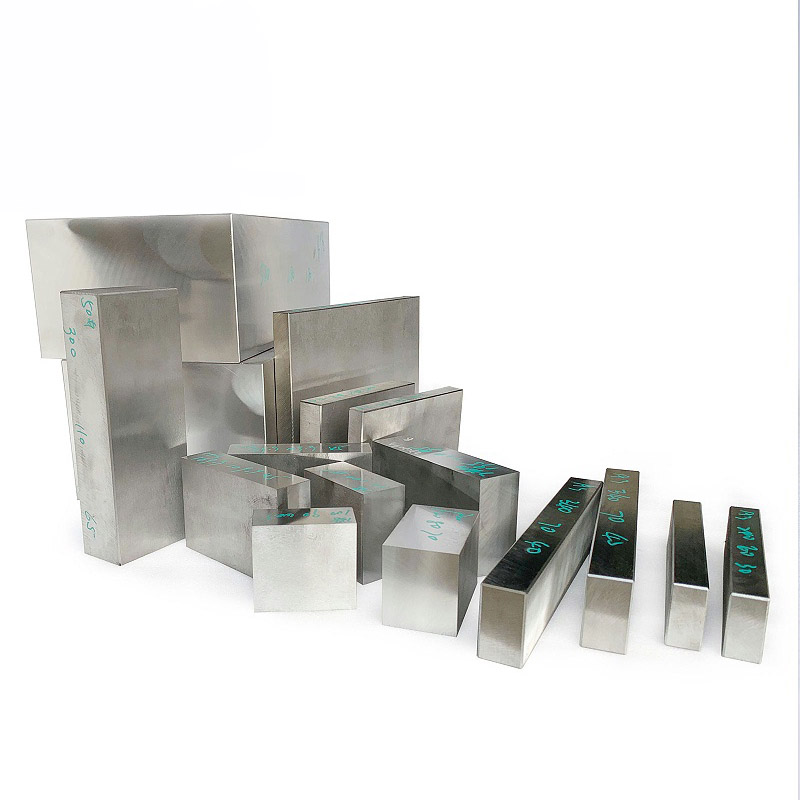
What is P20 (T51620) Mold Steel
P20 (ASTM standard number T51620) is one of the most widely used pre-hardened plastic mold steels in the global mold industry. It belongs to the medium carbon chromium-molybdenum alloy tool steel system. Delivered with a uniform hardness of HRC 28-32 without subsequent quenching treatment, it not only offers excellent machinability for smoothly processing complex cavities but also meets the strength requirements of batch plastic molds, such as household appliance shells and automotive interior parts. It is a cost-effective general-purpose steel that combines cost and usefulness.
Main Characteristics of P20 (T51620)
- Pre-hardened without quenching: Delivered in a pre-hardened state of HRC 28-32, eliminating the need for subsequent quenching treatments and greatly shortening mold delivery cycles.
- Easy to machine and form: Excellent cutting and electric discharge machining (EDM) performance, improving the efficiency of complex cavity and deep hole machining by more than 30%.
- Excellent welding repair performance: Low susceptibility to welding cracks, enabling quick welding repair of locally damaged molds and decreasing the risk of scrapping.
- High hardness uniformity: Section hardness difference ≤ HRC 1, guaranteeing balanced stress on large-area molds and avoiding excessive local wear.
- Wide polishing adaptability: Can be polished to Ra 0.2μm, meeting the requirements of general high-gloss plastic parts such as household appliance shells and automotive interiors.
P20 (T51620) Performance Parameter Table
1. P20 (T51620) Chemical Composition Table
| Element | Typical Content (wt%) | Standard Range (wt%) | Core Function |
|---|---|---|---|
| C | 0.34 | 0.28~0.40 | Improve hardness and strength, ensure wear resistance |
| Mn | 0.80 | 0.60~1.00 | Enhance hardenability, improve toughness and wear resistance |
| Si | 0.50 | 0.20~0.80 | Increase strength and oxidation resistance, stabilize tempering process |
| Cr | 1.70 | 1.40~2.00 | Strengthen hardenability and wear resistance, improve corrosion resistance |
| Mo | 0.42 | 0.30~0.55 | Enhance high-temperature strength and toughness, prevent temper brittleness |
| Cu | 0.25 | ≤0.25 | Improve atmospheric corrosion resistance |
| P | 0.02 | ≤0.030 | Impurity element, content should be strictly controlled |
| S | 0.02 | ≤0.030 | Impurity element, content should be strictly controlled |
2. P20 (T51620) Physical Performance Table (Innate Material Properties)
| Performance Index | Typical Value | Unit | Test Condition |
|---|---|---|---|
| Density | 7.85 | g/cm³ | Room Temperature |
| Coefficient of Thermal Expansion | 12.8×10⁻⁶ | /℃ | 20-425℃ |
| Thermal Conductivity | 42 | W/(m·K) | Room Temperature |
| Specific Heat Capacity | 460 | J/(kg·K) | Room Temperature |
| Elastic Modulus | 200 | GPa | Room Temperature |
| Poisson’s Ratio | 0.28 | – | Room Temperature |
3. P20 (T51620) Mechanical Performance Table (Stress Response Characteristics)
| Performance Index | Typical Value | Standard Range | Applicable State |
|---|---|---|---|
| Rockwell Hardness | 30 HRC | 28-32 HRC | Pre-hardened State |
| Tensile Strength | 900 MPa | 850-950 MPa | Pre-hardened State |
| Yield Strength | 700 MPa | 650-750 MPa | Pre-hardened State |
| Elongation After Fracture | 14% | 12-15% | Pre-hardened State |
| Impact Toughness (V-notch) | 30 J/cm² | 25-35 J/cm² | Room Temperature |
| Compressive Strength | 1200 MPa | 1100-1300 MPa | Pre-hardened State |
Typical Applications of P20 (T51620) Mold Steel
- Direct machining in pre-hardened state: No subsequent heat treatment required, direct machining and forming, greatly shortening manufacturing cycles.
- Medium batch adaptation: Balances cost and service life, perfectly corresponding to the 100,000-500,000 injection molding cycles.
- Mirror-level polishing: Can achieve SPI A-2 surface finish, meeting high appearance requirements.
- Long-term dimensional stability: Excellent mold precision retention, suitable for detailed structures and exact molding needs.
- Complex cavity machining: Excellent EDM performance for deep cavities, with convenient and efficient subsequent polishing.
- General plastic molding: Suitable for conventional thermoplastics such as ABS and PP, with balanced and excellent processing performance.
- Heat and corrosion resistance: Can withstand injection molding temperature fluctuations, suitable for uses needing frequent cleaning.
- Large mold manufacturing: Balanced and reliable mechanical properties, suitable for cavity plates and core plates of medium and large molds.
Non-recommended Application Scenarios for P20 (T51620)
- High-load cold working molds (e.g., stamping, shearing molds): Insufficient hardness, prone to chipping and wear.
- High-temperature hot working molds (e.g., die casting, high-temperature plastic molding molds): Poor heat resistance, prone to deformation and cracking.
- High-mirror precision molds: Insufficient purity, difficult to achieve a mirror polishing effect.
- Molds with ultra-precision dimensional requirements: Prone to aging deformation during long-term use, difficult to preserve precision.
- Molds in severe corrosive environments (e.g., PVC plastic molds): Poor corrosion resistance, prone to rust and corrosion.
- Large thick-walled heavy-duty molds: Limited hardenability, insufficient core hardness leading to deformation.
P20 (T51620) Mold Steel Selection Decision Comparison Table
| Category | Recommended Product Types | Non-recommended Product Types |
|---|---|---|
| General Plastic Molds | Household appliance shells (washing machines/air conditioners/refrigerators), automotive interior parts (instrument panels/door panels), daily necessities (water cups/storage boxes), electronic consumer product shells | High-abrasion reinforced plastics (containing 30%+ glass fiber), high-temperature engineering plastics (PEEK/PET), highly corrosive plastics (PVC) |
| Exactness and Appearance Molds | Medium-precision electronic components, cosmetic packaging, general medical device shells | Ultra-precision molds (tolerance within ±0.01mm), ultra-high mirror molds (optical lenses), high-cleanliness medical molds |
| Structural Part Molds | Cavity plates/core plates of large molds, complex cavity molds, rubber molds | Large thick-walled heavy-duty molds, thin-walled high-stress molds, cold/hot working molds |
| Batch Production Molds | Medium-batch (50,000-500,000 mold cycles) injection molds, export general molds | Ultra-large batch (≥500,000 mold cycles) molds, molds requiring frequent repair/EDM machining |
Recommended Cutting Tools for P20 (T51620) Machining
| Processing Stage | Recommended Tool Type | Coating Selection Priority | Key Parameter Recommendations | Recommended Brands |
|---|---|---|---|---|
| Rough Machining | Ultra-fine grain cemented carbide end mill (4 flutes, 35-40° helix angle) | TiAlN > TiCN > TiN | Cutting speed: 80-120m/min Feed rate: 0.1-0.3mm/r Depth of cut: 2-5mm | Sandvik GC4230/GC4240, Kennametal KCK20, Zhuzhou Diamond (China) YBC251 |
| Semi-finishing | Coated cemented carbide end mill (4-6 flutes, 45° helix angle) | TiAlN > AlTiN > TiCN | Cutting speed: 100-150m/min Feed rate: 0.1-0.2mm/r Depth of cut: 1-3mm | Sandvik GC4225, Kennametal KC7315, Sumitomo AC820P |
| Finishing | Ultra-fine grain coated cemented carbide end mill/ball end mill (6 flutes, 45° helix angle) | TiAlN > AlCrN > TiSiN | Cutting speed: 120-180m/min Feed rate: 0.05-0.15mm/r Depth of cut: 0.5-1.5mm | Sandvik R216, Walter F4031, Kyocera PR1535 |
| High-speed Machining | Ultra-fine grain cemented carbide end mill (4-6 flutes, large helix angle) | AlCrN > TiAlN > TiSiN | Cutting speed: 150-200m/min Feed rate: 0.15-0.25mm/r Depth of cut: 0.5-1mm | Iscar HELI3, Taegutec NS530, Kyocera PR1535 |
| Deep Cavity Machining | Solid carbide long-neck end mill (3-4 flutes, 30° helix angle, internal coolant hole) | TiAlN > AlTiN | Cutting speed: 60-100m/min Feed rate: 0.05-0.1mm/r Adopt peck feeding | OSG EXOCARB WXL, Kennametal KENNA740, Zhuzhou Diamond (China) YBG202 |
| Hole Machining | Coated cemented carbide drill bit/powder high-speed steel tap | TiAlN (drill bit)/TiN (tap) | Drill bit cutting speed: 60-100m/min Tap tapping speed: 100-150r/min | Sandvik CoroDrill 860, OSG EX-SUS, Kennametal KCS |
| Thread Machining | Coated powder high-speed steel tap (ASP-60 material) | TiN > TiCN | Tapping speed: 80-120r/min Increase bottom hole diameter by 0.1mm | OSG V-GOLD, Kennametal K-TAPS, Zhuzhou Diamond (China) YBG |
| Large Surface Machining | Indexable multi-tooth face mill (Wiper finishing insert) | TiAlN > AlTiN | Cutting speed: 150-200m/min Feed rate: 0.1-0.2mm/r | Seco CoroMill 390, Walter F2230, Kennametal KSEM |
P20 (T51620) Machining Parameter Choice Logic
| Core Dimension | Selection Logic | Practical Parameters |
|---|---|---|
| Cutting Speed | 1. Positively correlated with tool material: Cemented carbide tools > coated high-speed steel > ordinary high-speed steel 2. Negatively correlated with material hardness: For every 5HRC increase in hardness, reduce cutting speed by 10-15% 3. Related to processing stage: Finishing > semi-finishing > rough machining 4. Positively correlated with machine tool rigidity: Rigid machine tools can increase speed by 10-20% | Cemented carbide tools: Rough machining: 80-120m/min Semi-finishing: 120-150m/min Finishing: 150-180m/min High-speed steel tools: Rough machining: 20-30m/min Finishing: 30-40m/min High-speed machining: 200-250m/min |
| Feed Rate | 1. Positively correlated with the number of tool flutes: Multi-flute tools allow higher feed rates 2. Negatively correlated with the surface quality requirements: Higher surface quality requires lower feed rates 3. Positively correlated with depth of cut: Larger depth of cut requires lower feed rates 4. Reduce feed rate by 30% at corners to avoid tool impact | Rough machining: 0.15-0.3mm/r (or 1000-2000mm/min) Semi-finishing: 0.1-0.15mm/r (or 800-1200mm/min) Finishing: 0.05-0.1mm/r (or 500-800mm/min) Corners: Reduce feed rate by 30% |
| Depth of Cut | 1. Positively correlated with tool diameter: Depth of cut should not exceed 1/3 of tool diameter 2. Related to processing stage: Rough machining > semi-finishing > finishing 3. Positively correlated with machine tool power: High-power machine tools can adopt a larger depth of cut 4. Adopt layered cutting for deep cavity machining, with each layer depth not exceeding 1/5 of the tool diameter | Rough machining: 2-5mm (or 1/4-1/3 of tool diameter) Semi-finishing: 1-2mm Finishing: 0.3-1mm Deep cavity machining: 0.5-1mm per layer |
| Spindle Speed | 1. Calculated by cutting speed and tool diameter: S=(VC×1000)/(π×D) 2. Positively correlated with tool dynamic balance: Tools with good dynamic balance can increase speed 3. Increase speed and reduce feed rate during finishing to improve surface quality 4. Avoid machine tool resonance speed range | Cemented carbide tools: φ10mm: 3800-4800rpm φ12mm: 3200-4000rpm φ16mm: 2400-3000rpm High-speed steel tools: φ10mm: 600-1000rpm φ12mm: 500-800rpm |
| Cooling Method | 1. Related to machining method: High-pressure internal cooling for milling, internal cooling for drilling 2. Positively correlated with cutting speed: Oil mist or high-pressure cooling required for high-speed machining 3. Related to material characteristics: P20 steel is prone to built-up edge, requiring sufficient cooling 4. Control extreme pressure emulsion concentration at 8-12% | Conventional machining: Extreme pressure emulsion (8-10% concentration), flow rate 15-25L/min High-speed machining: Oil mist lubrication or high-pressure cooling (0.6-0.8MPa pressure) Deep cavity machining: High-pressure internal cooling (0.8-1MPa pressure) |
| Tool Path Strategy | 1. Adopt contour-parallel or trochoidal milling for rough machining to reduce tool wear 2. Adopt climb milling for finishing to improve surface quality 3. Adopt helical plunge milling for deep cavity machining to avoid vertical tool plunging 4. Adopt arc transition at corners to reduce sudden changes in cutting force | Rough machining: Trochoidal or contour-parallel milling, stepover 50-70% of tool diameter Finishing: Climb milling, stepover 10-20% of tool diameter Deep cavity machining: Helical plunge milling (30-45° helix angle) Corners: Arc transition (R≥tool radius) |
P20 (T51620) CNC Machining Special Precautions Checklist
- Pre-hardened direct use: Delivered with hardness of 30-36HRC, can be directly machined without quenching; for high hardness requirements, nitriding treatment is preferred (surface layer 650-700HV).
- Must temper after electric machining: For workpieces with a size >300mm, perform 200℃ tempering for 2 hours immediately after EDM/wire cutting to relieve stress.
- Control work hardening: Use passivated ultra-fine grain cemented carbide tools with a cutting speed of 80-150m/min to avoid a high-temperature hardened layer.
- Special welding consumables for repair: Use P20 series welding wire for cracks; preheat to 250℃ before welding, and temper at 300℃ after welding.
- Step-by-step machining for large workpieces: Perform 650℃ stress relief annealing after rough machining; divide finishing into two steps (leave 0.3mm allowance for the first time, then finish machining after 24 hours of placement).
- Control nitriding process: Temper to 30-36HRC before nitriding, control layer thickness at 0.1-0.15mm to improve demolding performance and corrosion resistance.
- Aging before polishing: Perform natural aging for 72 hours after semi-finishing milling, then use a TiAlN-coated ball end mill for climb milling to prevent polishing cracking.
Typical Problems and Solutions of P20 (T51620) Steel Molds
Severe deformation after P20 (T51620) steel mold quenching, how to control it accurately?
It is recommended to adopt the combined process of stepwise heating + precision quenching + timely tempering: Hold at 600℃ for 2 hours, then heat up to 850℃ and hold for 3 hours with heating rate controlled within 5℃/min; use water-soluble quenching fluid with 20% concentration; perform 200℃×2h low-temperature tempering immediately after quenching, which can stabilize the deformation within 0.05mm.
Insufficient or uneven hardness of P20 (T51620) steel mold, how to solve it quickly?
Solve from two aspects:
- Heat treatment rework: Re-process according to the parameters of quenching at 840-860℃ for 2.5 hours and tempering at 580℃ for 2 hours;
- Source control: Prioritize purchasing materials from Fushun Special Steel (China), ASSAB 718 and other brands; clearly require hardness tolerance ≤ HRC 2, and incoming inspection ratio not less than 30%.
Rapid tool wear during P20 (T51620) steel machining, how to extend tool life?
It is recommended to adjust from three dimensions: tool selection, parameter refinement, and cooling upgrade:
- Tool selection: Use GC4225 cemented carbide tools for rough machining and TiAlN coated tools for finishing;
- Cutting parameters: Set speed at 120-150m/min and feed rate at 0.1-0.15mm/r;
- Cooling upgrade: Adopt 5-8bar high-pressure internal cooling cutting fluid for directional cooling, which can increase tool life from 2 hours to more than 8 hours.
Difficult demolding of P20 (T51620) steel mold leading to product deformation, what are the immediate solutions?
Try the following optimization schemes:
- Surface treatment: Polish the cavity to below Ra 0.2μm;
- Structural adjustment: Increase draft angle from 0.3° to 0.5°, and increase the number of ejector pins to ensure uniform ejection force;
- Process assistance: Stabilize mold temperature at 80℃, and use high heat-resistant mold release agent; this can increase trial mold qualification rate from 60% to more than 98%.
P20 (T51620) steel mold service life is far lower than expected. How to effectively improve it?
It is recommended to improve through triple measures: surface strengthening, production control, and material upgrading:
- Surface nitriding treatment: Make surface hardness reach HV 800-1000, and control nitriding layer depth at 0.1-0.15mm;
- Production control: Keep mold temperature stable at 80℃ to avoid rapid cooling and heating of melt;
- Material upgrading: Select high-purity materials with sulfur content < 0.03%, which can increase mold service life from 50,000 mold cycles to more than 120,000 mold cycles.
P20 (T51620) steel mold is prone to cracking after welding repair. What is the standard repair process?
It is recommended to follow the process of matching welding wire + preheating + low-current welding + post-weld annealing:
- Select ER80S-G low-alloy steel welding wire corresponding to the composition of P20;
- Preheat the mold to 300-350℃ and hold for 1 hour before welding;
- Adopt 80-100A low-current short-arc welding;
- Perform 550℃×2h stress relief annealing immediately after welding, which can effectively avoid welding cracks.
Download P20 (T51620) Detailed Performance Parameters PDF
| Item | Details |
|---|---|
| File | P20 (T51620) Detailed Performance Parameters |
| Type | |
| Size | 1 MB |
| Link | https://moldsteells.com/wp-content/uploads/2026/02/P20-Mold-Steel-T51620-Detailed-Analysis-Properties-Machining-Guidelines-and-Precautions.pdf |