What Is CR12 Steel?
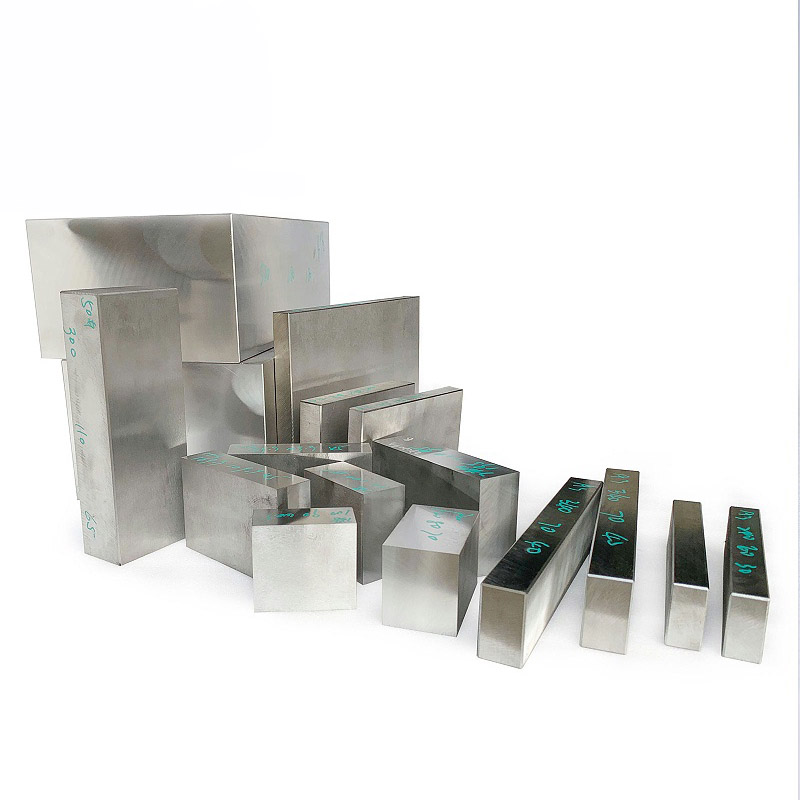
CR12 is a high-carbon, high-chromium cold work tool steel with a carbon content of 2.0–2.3% and a chromium content of 11.5–13%. After quenching, its hardness can reach HRC 60–62. It features excellent wear resistance, good hardenability, and high cost-effectiveness.
CR12 is widely used in cold stamping dies, cold extrusion dies, wire drawing dies, and thread rolling dies that require high wear resistance. However, its toughness is relatively low, making it unsuitable for applications with heavy impact loads.
Main Characteristics of CR12 Steel
- High Hardness and Wear Resistance: Quenched hardness of HRC 60–62. Chromium content of 11.5–13% forms abundant carbides. Tool life is 3–5 times longer than T10 steel.
- Cost-Effectiveness: 20–30% cheaper than Cr12MoV and SKD11 while meeting most cold work tooling requirements.
- Good Hardenability: Sections below 100 mm can be fully hardened, with low quenching deformation and good dimensional stability.
- Mature Processing Technology: Long application history, stable heat treatment process, and consistent quality.
1. Chemical Composition of CR12
| Element | Typical Content (%) | Standard Range (%) | Main Function |
|---|
| C | 2.15 | 2.00–2.30 | Forms eutectic carbides, provides high hardness and wear resistance |
| Cr | 12.25 | 11.50–13.00 | Improves hardenability, forms chromium carbides, enhances corrosion resistance |
| Si | 0.25 | ≤0.40 | Improves strength and tempering stability |
| Mn | 0.25 | ≤0.40 | Improves hardenability and hot workability |
| P | ≤0.030 | ≤0.030 | Impurity element, reduces toughness |
| S | ≤0.030 | ≤0.030 | Impurity element, reduces toughness |
2. Physical Properties of CR12
| Property | Range | Unit | Remarks |
|---|
| Density | 7.70–7.80 | g/cm³ | Room temperature |
| Elastic Modulus | 190–210 | GPa | Room temperature |
| Poisson’s Ratio | 0.27–0.30 | – | Room temperature |
| Thermal Expansion | 10.5–11.5 | ×10⁻⁶/°C | 20–200°C |
| Thermal Conductivity | 25–30 | W/(m·K) | Room temperature |
| Specific Heat | 460–500 | J/(kg·K) | Room temperature |
| Resistivity | 0.55–0.65 | μΩ·m | Room temperature |
| Melting Point | 1370–1400 | °C | – |
| Magnetism | Ferromagnetic | – | – |
3. Mechanical Properties of CR12
| Property | Range | Unit | Remarks |
|---|
| Hardness (Quenched) | 60–64 | HRC | Oil quench 950–1000°C + tempering |
| Hardness (Annealed) | 217–269 | HB | 830–870°C annealing |
| Compressive Strength | 2800–3000 | MPa | Quenched and tempered |
| Bending Strength | 2500–2600 | MPa | Quenched and tempered |
| Tensile Strength | 1800–2200 | MPa | Quenched and tempered |
| Yield Strength | 1500–1800 | MPa | Quenched and tempered |
| Impact Toughness | 20–30 | J/cm² | No notch |
| Elongation | 1.5–2.5 | % | Brittle material |
| Fracture Toughness | 18–22 | MPa·m½ | – |
| Application Field | Typical Uses | Working Temperature | Remarks |
|---|
| Cold Stamping Dies | Gasket dies, motor laminations, auto parts dies | Room temperature | Main application, 100k–1M cycles |
| Shearing Tools | Steel sheet cutters, slitting blades | Room temperature | High wear resistance |
| Cold Extrusion Dies | Aluminum and copper extrusion dies | Room temperature | Low deformation resistance |
| Cold Heading Dies | Bolt and nut forming dies | Room temperature | Small to medium batches |
| Wire Drawing Dies | Low-carbon steel and copper wire dies | Room temperature | ≤5 mm diameter |
| Powder Metallurgy Dies | Iron and copper powder molds | Room temperature | 450–550 MPa pressure |
| Measuring Tools | Plug gauges, precision gauges | Room temperature | High accuracy |
| Threading Tools | Thread rolling dies | Room temperature | Thread forming |
| Bending Dies | V-type and U-type bending dies | Room temperature | Simple forming |
Non-Recommended Applications for CR12
| Application | Condition | Reason | Recommended Alternative |
|---|
| Large Dies | Size > 400 mm | Insufficient core hardness | Cr12MoV, SKD11, D2 |
| Thick Plate Dies | >3 mm plates | High impact, edge chipping | Cr12MoV, DC53 |
| High Impact Dies | Heavy load | Low toughness | Cr12MoV, DC53 |
| Hot Work Dies | >250°C | Poor heat resistance | H13, 3Cr2W8V |
| Plastic Molds | Injection molds | Poor polishability | P20, 718H, S136 |
| Precision Dies | High accuracy | Large deformation | DC53, SKD11 |
| Dimension | Selection Principle | Rough Machining | Finish Machining |
|---|
| Tool Type | Select by hardness | Coated Carbide | CBN Tools |
| Cutting Speed | Higher hardness, lower speed | 100–150 m/min | 60–100 m/min |
| Feed Rate | Large for roughing, small for finishing | 0.2–0.3 mm/r | 0.05–0.1 mm/r |
| Cutting Depth | Large for roughing | 1–2 mm | 0.1–0.3 mm |
| Cooling Method | Full cooling required | Emulsion | High-pressure cooling |
CR12 Machining Parameter Selection Logic
| Dimension | Selection Logic | Rough Machining | Finish Machining |
|---|
| Cutting Speed | Depends on tool and hardness | 80–120 m/min | 40–80 m/min |
| Feed Rate | Higher for roughing | 600–1500 mm/min | 200–800 mm/min |
| Depth of Cut | ≤1/3 tool diameter | 1–5 mm | 0.1–0.5 mm |
| Spindle Speed | S=1000V/(πD) | 2000–3500 rpm | 3000–5000 rpm |
| Tool Path | Optimize cutting force | Trochoidal milling | Contour milling |
1. Tool Wear Is Too Fast After Quenching (HRC 58–62)
- Use CBN or TiAlN-coated carbide tools
- Speed: 100–300 m/min, Feed: 0.05–0.2 mm/r
- Use oil mist or high-pressure cooling
- Complete roughing before heat treatment
2. Severe Deformation After Heat Treatment
- Forging ratio ≥4–5
- Step heating: 600→800→980°C
- Isothermal quenching at 200–250°C
- Temper 2–3 times at 180–220°C
3. Cracking and Edge Chipping in Service
- Select high-quality steel (carbide grade ≤3)
- Quench at 950–1000°C, temper twice
- Edge radius R0.3–0.5 mm
- Use Cr12MoV or DC53 for high impact
4. Grinding Cracks After Quenching
- Use white corundum wheels (46–80 grit)
- Wheel speed: 15–20 m/s
- Use sufficient cooling
- Apply intermittent grinding
5. Drill and Tap Breakage at HRC >55
- Use EDM drilling first
- Carbide drills: 300–400 rpm
- Carbide taps with TiAlN coating
- Pre-drill before heat treatment
6. Large Differences in Tool Life
- Use high-quality steel
- Hardness: HRC 58–60
- PVD or TD coating
- Cryogenic treatment: -80 to -120°C
- Regular maintenance