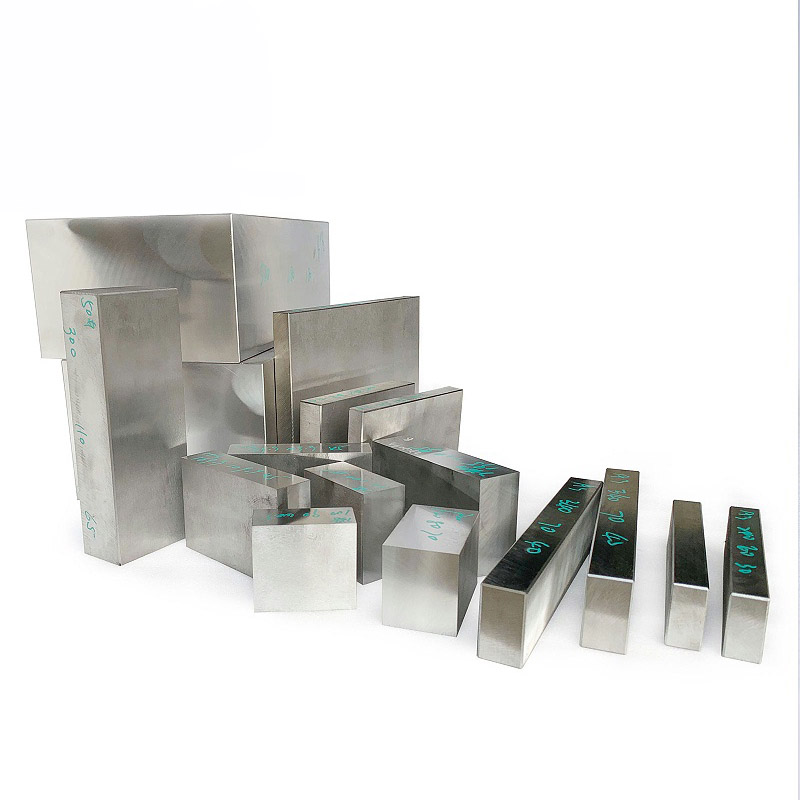
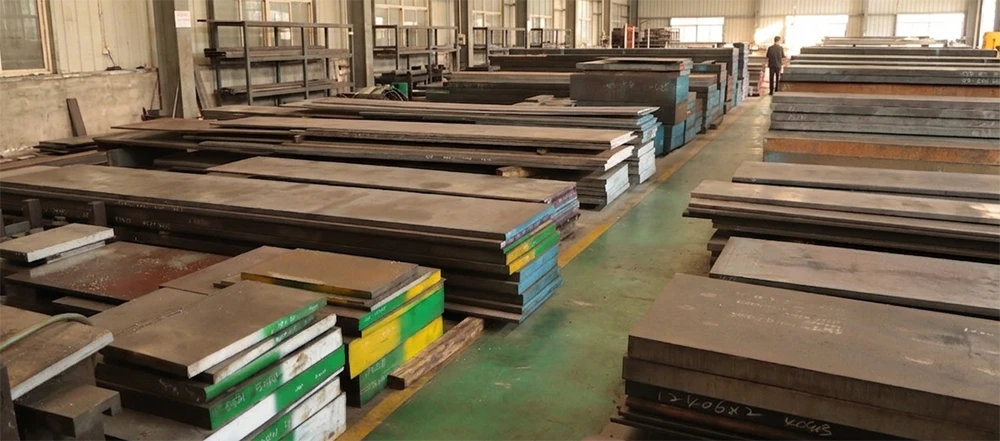
What is 1.2510 Mold Steel?
1.2510 Mold Steel is a high-carbon, low-alloy cold work mold steel under the German DIN standard, corresponding to the Chinese grade CrWMn. It is renowned for its excellent hardenability, minimal quenching deformation, and outstanding wear resistance and is widely used in precision cold stamping, shearing, and forming molds.
Key Properties of 1.2510 Steel
- Minimal deformation (core advantage): The size remains almost unchanged after quenching, making it especially suitable for molds requiring high precision.
- Moderate toughness: More impact-resistant than Cr12 series steels, difficult to chip under medium and small impacts, but not suitable for stamping thick plates.
- Medium wear resistance: Much more wear-resistant than carbon steel but inferior to “wear-resistant kings” like Cr12MoV, suitable for small and medium batch production.
- Exceptional machinability: Smooth processing in turning, milling, and grinding; no excessive tool wear.
- Good hardenability: Can be hardened by oil quenching; heat treatment is easy to operate; hardness can reach HRC 58-62.
- High cost-effectiveness: Balanced performance, more affordable than high-alloy steels, it is a cost-effective choice for small and medium-sized precision cold molds.
1.2510 Steel Performance Parameter Tables
1. Chemical Composition of 1.2510
| Element | Standard Range (wt.%) | Typical Content (wt.%) | Core Function |
|---|---|---|---|
| C | 0.90-1.05 | 0.95 | Improve hardness and wear resistance |
| Si | 0.15-0.35 | 0.25 | Deoxidize, enhance strength |
| Mn | 1.00-1.20 | 1.10 | Improve hardenability and wear resistance |
| P | ≤0.035 | ≤0.035 | Impurity-controlled content improves machinability |
| S | ≤0.035 | ≤0.035 | Impurity improves cutting machinability |
| Cr | 0.50-0.70 | 0.60 | Improve wear resistance and corrosion resistance |
| V | 0.05-0.15 | 0.10 | Refine grains, enhance toughness, and wear resistance |
| W | 0.50-0.70 | 0.60 | Improve red hardness and high-temperature strength |
2. Physical Properties of 1.2510 (Inherent Material Properties)
| Performance Index | Numerical Range | Unit | Remarks |
|---|---|---|---|
| Density | 7.85 | g/cm³ | At room temperature (approx. 20 °C) |
| Elastic Modulus | 193 | GPa | Quenched and tempered to 62 HRC at room temperature |
| Thermal Conductivity | 30.0 | W/(m·K) | At room temperature (approx. 20°C) |
| Specific Heat Capacity (approximate) | 41 | J/(kg·K) | Typical value near room temperature (reference to similar tool steels) |
| Resistivity | Approx. 0.31 0.35 | µΩ·m | At room temperature (approx. 20°C), soft annealed state |
| Average Linear Expansion Coefficient | 12.1 | 10⁻⁶ /°C | Temperature range: 20 100°C |
| 12.9 | 10⁻⁶ /°C | Temperature range: 20 200°C | |
| 13.3 | 10⁻⁶ /°C | Temperature range: 20 300°C | |
| 14.0 | 10⁻⁶ /°C | Temperature range: 20 400°C | |
| 14.4 | 10⁻⁶ /°C | Temperature range: 20 500 °C | |
| 14.8 | 10⁻⁶ /°C | Temperature range: 20 600 °C | |
| 14.9 | 10⁻⁶ /°C | Temperature range: 20–700 NAK80-SK > °C |
3. Mechanical Properties of 1.2510 (Force Response Characteristics)
| Performance Index | Numerical Range | Unit | Remarks |
|---|---|---|---|
| Brinell Hardness | ≤ 190 – 230 | HB | Soft annealed state (delivery condition), after annealing at 740-770°C and furnace cooling |
| Rockwell C Hardness | 34.0 – 64.0 | HRC | Quenched and tempered state, specific hardness depends on tempering temperature (150-650°C) |
| Working Hardness | 58 – 62 | HRC | Recommended working hardness, obtained after quenching and tempering at appropriate temperature |
| Elastic Modulus | 210 | GPa | Typical value at room temperature after quenching to 62 HRC |
| Compressive Yield Strength (0.2%) | 1350 100°C2200 | MPa | Quenched and tempered state, tested at room temperature, value increases with hardness (50-62 HRC) |
| Tensile Strength (Rm) | ≥ 880 | MPa | Typical minimum value after quenching and tempering |
| Yield Strength (Rp0.2) | ≥ 680 | MPa | Typical minimum value after quenching and tempering |
| Elongation (A) | ≥ 21 | % | Typical minimum value after quenching and tempering |
| Impact Energy (KV) | ≥ 21 | J | Typical minimum value after quenching and tempering, indicating moderate toughness |
| Density | 7.85 | g/cm³ | Typical value at room temperature (20°C) |
| Thermal Conductivity (20°C) | 30 | W/(m·K) | Typical value at room temperature |
| Linear Expansion Coefficient (20 mm powder, -1≤10 mm steel00–100°Cpowderparts, low- small low-temperature small 20mm low-temperature small-powder°C–100-100 °C) | 12.1 | 10⁻⁶ /°C | Average expansion coefficient in the range of room temperature to 100°C |
Typical Applications of 1.2510 Mold Steel
The following table directly lists the application scenarios, fields, uses, and key remarks of 1.2510 mold steel to help you quickly match your needs:
| Application Field | Specific Use | Remarks |
|---|---|---|
| Cold stamping molds | Blanking dies, punching dies, trimming dies | Cold stamping of thin plate (≤3 mm) low carbon steel, copper, and aluminum, such as small parts processing |
| Shearing molds | Scissor dies, trimming dies, cold shear blapartsshearingdes, bar shearing cutters | Shearing plate ≤5 mm or profile ≤10steel mm ≤2 mm, requiring wear and impact resistance |
| Drawing molds | Small and medium-sized drawing dies, draw at 200°C wing punch, blank holder | Drawing of thin-walled parts (≤2 mm) or staimm ≤ 50nless ste aluminum parts, requiring crack and wear resistance |
| Bending molds | V-type bending dies, U-type bending dies, continuous bending dies, thin shrapnel bending dies | Bending of plate ≤4 mm≤50 cm³ or continuous bending of thin plates, requiring chipping resistance and small deformation |
| Cold extrusion molds | Small cold extrusion die, copper and aluminum soft metal cold extrusion die | Cold extrusion of copper and aluminum ≤4 mm, requiring uniform hardness and small deformation |
| Thread-forming molds | Thread rolling dies, thread rolling cutters | Thread rolling of carbon steel and colored parts ≤12 mm, requiring easy processing and wear resistance |
| Precision electronic molds | Terminal stamping dies, connector forming dies, precision progressive die inserts, electronic connector continuodies, stamping dies | High-precision stamping of small electronic parts, requiring high precision and small deformation |
| Measuring tools and precision parts | Gauges, block gauges, micrometer measuring rods, dial gauge probes, watch part forming molds | Precision measuring tools and small part forming, requiring dimensional stability and minimal deformation |
| Tool molds | Hand tool forming molds (screwdriver bits, utility knife blades), hardware tool edge forming molds | Cold forming of hand tools, excluding high temperature, mm ≤ 2mm ≤ 2 balanced wear resistance and toughness |
| Other cold work molds | Cold heading dies (small fasteners), embossing dies, wire drawing dies, shearing cutters, textile machinery wear-resistant part molds | Cold heading, embossing, and wire drawing of small fasteners, requiring good toughness and dimensional stability |
| Low—cost/requires batch molds | Zinc alloy die casting mold small inserts, small pomm °C–100–10020 mm powder metallurgy pressing molds, rubber mold cavities, furniture t2 mmoy hardware mo8407,DC53—aslds | Low-temperature, low-hedies, high-temperature powder mall,hedies, arequirements.small-powder, cost high-temperature powder mall, and medium-batch production requirements. Worthe—and KingAlternative Material suggests such as zinchigh-temperature powder all, alloy, small-hedies, metallurgy psmall-powder and heat resistance requirements. |
Not Recommended Application Scenarios for 1.2510
Based on its performance characteristics, 1.2510 cannot meet the requirements of harsh working conditions such as high temperature and high impact. The following table lists the scenarios where more specialishearingzed materials are recommended:
| Not Re at 200°C commended Field | Specific Situation | Worthe—andking Condition | AlternativeMaterial Suggesas those in thetion |
|---|---|---|---|
| Hot work mdiesolds | Die casting molds, hot forging dies, hot extrusion dies, hot shearing dies, ho8407,t heading dies and all high tecoiperature working molds | Working temperature exceeds 200°C (or 300°C), repeated heating and cooling, alternating cold and hot working conditions | H13 (SK > 300 mmD61), 8407, and other hot work mold steels |
| Large/large section cold work molds | Large cold blanking dies (such as automobile panel blanking dies), large drawing dies (diameter > 300 mm), large cold bending dies, large cold heading dies, thick wall forming molds | Section thickness >20 mm50 mm (or ;20 mmm), insufficient hardenability leads to low core hardness, requiring uniform overall hardness | Cr12MoV, DC53—as those in the and, and DC53 and other cold work mold steels with better hardenability |
| High wear resistance molds | Precision progressive dies (such as those in the electronic industry), cemented carbide forming dies, coin stamping dies, tile molds, and automobile panel drawing dies | Extremely high wear resistance requirements, high wear environment, long-term dimensional accuracy retention | Cr12 series (such as Cr12MoV), SKH-9 high-speed tool steel |
| High-impact load molds | Thick plate blanking dies, thick steel plate longitudinal shear blades, hiCr5Mo1V,-gh strength bolt cold heading dies, impact forming dies, cold heading molds | Subject to repeated strong impact loads, high deformation resistance, large impact force | 6CrW2Si, Cr5Mo1V and other high-toughness mold steels |
| High-precision molds | Precision electronic connector molds, precision gea–r forming molds, hi01 mmgh precisin cold-heading dies, precision continuous stamping dies | Dimensional tolerance ≤0.01 mm, requiring high dimensional stability, long-term use accuracy requirements | CrWMn, DC53, and other mold steels with excellent dimensional stability |
| High–polishing plastic molds | Transparent plastic injection molds, home appliance high-gloss shell molds, optical part forming molds, precision high-gloss plastic molds | Require mirror polishing effect, high surface quality requirements, no pitting and scratches | S136, N20 mmAK80≤10 mm steelstainless steel or high-precision and other high-purity mold steels |
| Corrosive environment molds | Acid plastic injection molds, outdoor use molds, and forming molds contacting corrosive metal powder | Contact with corrosive media (such as acidic substances, salt spray), requiring corrosion resistance | 4Cr13, S136H, and other corrosion-resistant mold steels |
| Large plastic molds | Large automobile interior injection molds, large home appliance shell injection molds | Single mold weight >500 kg, large plastic parts, requiring uniform overall hardness | P20, 718H, and other pre-hardened mold steels |
| High deformation resistance cold extrusion molds | Cold extrusion forming molds for stainless steel, high-strength steel and other materials | High pressure, high deformation resistance, cold extrusion working conditions | Cr12MoV, DC53 |
| Special working condition molds | Spring-forming molds, cemented carbide inlaid matrix molds, glass-forming molds, and molds requiring high-frequency quenching | Repeated alternating loads, high-temperature glass forming, high-frequency quenching requirements and other special working conditions | Select according to specific scenarios, such as SKH-9 high-speed steel, heat-resistant steel, etc. (refer to industry standards) |
Key Performance Reference (Why it is not suitable?)
| Performance Index | Typical Value | Brief Interpretation |
|---|---|---|
| Working Hardness | 58-62 HRC | Hard enough, but will soften at high temperature |
| Thermal Conductivity | 30 W/(m·K) | Slow heat dissipation, prone to thermal fatigue |
| Impact Energy | ≥21 J | Average toughness, not resistant to strong impact |
| Linear Expansion Coefficient (20-100°C) | 12.1 ×10⁻⁶/°C | Thermal expansion and contraction is relatively obvious |
Recommended Cutting Tools for 1.2510 Processing
| Processing Stage | Coating Selection Priority | Key Tool Parameters | Recommended Brands |
|---|---|---|---|
| Annealed state (soft material) rough machining | TiN, TiCN coating | Cemented carbide end mill (such as 4-flute), high feed efficient cutting | Zhuzhou Diamond (YG8N), Sandvik, Mitsubishi, Zigong Great Wall (cost-effective) |
| Annealed state (soft material) finishing | TiAlN coating | Integral cemented carbide end mill or ball end mill, ensuring surface finish | Walter, Zhuzhou Diamond (YBM253), Sandvik |
| Tempered state (pre-hardened, HRC20-30) rough machining | TiCN coating (suppress built-up edge) | High-toughness cemented carbide tool (such as WC-Co type), good impact resistance | Zhuzhou Diamond (YC30S, YBG202), Walter (F4040 series) |
| Tempered state (pre-hardened, HRC20-30) finishing | TiAlN coating | Coated cemented carbide tool, high-temperature wear resistance requirements | Hitachi (TiCN coating), Walter (TiAlN coating), Mitsubishi (VP15TF) |
| Quenched state (hard material, HRC55-62) finishing | CBN (cubic boron nitride) or ceramic tools | PCBN insert/integral end mill, low cutting speed, chipping prevention design | Sandvik (CBN200), Element Six, Kyocera, Kennametal (KBN100), Yellow River Cyclone, Zhengzhou Xinya |
1.2510 CNC Machining Parameter Selection Logic
Please adjust according to the actual condition of your machine tool and tool before use.
| Core Dimension | Selection Logic | Practical Parameters (specific numerical range by scenario) |
|---|---|---|
| Cutting Speed (Vc) | The harder the material, the slower the speed should be, otherwise the tool is easy to burn. A good coating (TiAlN) or superhard tool (CBN/PCD) can be used at higher speed. Rough machining can use medium and high speed for efficiency, finishing uses moderate speed for stability. | · Annealed state rough machining: 110 – 160 m/min · Annealed state finishing: 130 – 170 m/min · Pre-hardened state rough machining: 90 – 130 m/min · Quenched state finishing: 80 – 200 m/min (CBN/PCD tools) |
| Feed Rate (F) | Deep cut, more teeth, low surface requirements, can use higher feed rate. For finishing hard material or long tool overhang, slow down to prevent vibration or chipping. | · Annealed state rough machining: 150 – 300 mm/min · Annealed state finishing: 50 – 150 mm/min · Pre-hardened state semi-finishing: 150 – 220 mm/min · Quenched state finishing: 60 – 120 mm/min |
| Cutting Depth (ap) | Hard material should not be cut too thick at one time; otherwise, the tool will be damaged. Rough machining can use deeper cuts to improve efficiency; finishing must use very thin cuts to ensure finish and accuracy. | · Annealed state rough machining: 2.0 – 4.0 mm · Annealed state finishing: 0.2 – 0.5 mm · Pre-hardened state rough machining: 1.0 – 2.5 mm · Quenched state finishing: 0.05 – 0.3 mm |
| Spindle Speed (S) | Calculated according to the above cutting speed and your tool diameter, not filled randomly. If the machine tool or tool bar has poor rigidity, the speed should be appropriately reduced. | · Annealed state rough machining (Φ12-16 tool): 2190 – 4248 rpm · Annealed state finishing (Φ6-10 tool): 4139 – 9020 rpm · Pre-hardened state rough machining (Φ12 coated tool): 2389 – 3450 rpm · Quenched state finishing (Φ4-6 CBN tool): 4246 – 15915 rpm |
| Cooling Method | Rough machining uses low-cost emulsion for cooling and chip flushing; for finishing, especially quenched steel, pure cutting oil or oil mist is preferred for good temperature control, and the workpiece is difficult to deform. Remember to turn on the spindle center water outlet for high-speed machining. | · Annealed/pre-hardened state rough machining: High-pressure emulsion or water-soluble coolant · Annealed/pre-hardened state finishing: Cutting oil or oil mist cooling · All quenched state processing: Pure cutting oil or oil cooling (priority) · High-speed finishing: Spindle internal cooling (oil or emulsion) |
| Tool Path Strategy | Proper tool path selection prolongs tool life and improves workpiece quality. Conventional milling uses climb milling as much as possible; do not plunge vertically when opening deep grooves, use helical interpolation; for complex surface finishing, use small step sizes to polish layer by layer or circle by circle. | · Plane/contour rough and finishing: Climb Milling · Deep cavity/cavity roughing: Helical Interpolation or Z-Level Roughing · Surface finishing: Z-level finish or parallel finish, step size 0.1-0.3 mm · High-precision finishing: Enable high-speed high-precision instruction (such as G05.1 Q1), and use arc transition tool path. |
FAQs about 1.2510 Mold Steel
1. What should I do if the 1.2510 mold is easy to chip during blanking?
This is like a glass with cracks, which breaks when touched. It is mainly caused by high thermal stress during heat treatment or stress concentration at the too-sharp cutting edge of the mold. Solutions: Preheat before quenching, make a small rounded corner (R0.1-R0.3 mm) on the cutting edge, and temper immediately after quenching to release internal stress.
2. What should I do if the 1.2510 mold wears too fast and is not durable?
It is like wearing ordinary shoes on a gravel road; the sole wears out quickly. Because the hardness of 1.2510 is insufficient for high-strength plates. Solutions: Add a hard layer on the surface by nitriding treatment, or adjust the overall hardness to HRC60-62, and use good lubricating oil.
3. How to control excessive deformation of the 1.2510 mold after quenching?
This is like a metal bar that is heated unevenly and bends after cooling. Traditional oil quenching has large deformation. Solutions: Use isothermal quenching, or perform deep cooling treatment after quenching to control deformation.
4. What should I do if the 1.2510 drawing mold always sticks to the material and scratches the product?
It is like a non-stick pan with a damaged coating; eggs will definitely stick when frying. 1.2510 itself is not very anti-sticking. Solutions: Coat the mold cavity with TD treatment or chrome plating, polish the surface as smooth as a mirror, and use special drawing oil.
5. Why can’t the hardness of 1.2510 mold meet the requirements after tempering?
It is likely that the tempering temperature is too high or the furnace temperature is inaccurate. Solutions: First check whether the tempering furnace temperature is accurate, then lower the tempering temperature (such as 180-200°C), temper twice, and ensure each tempering time is sufficient.
6. How to prevent 1.2510 mold from cracking during quenching?
This is like pouring ice water into a hot glass; the temperature difference is too large, and it directly explodes. Especially sharp corners and edges on the mold are most prone to cracking. Solutions: Grind all sharp corners (make chamfers) during rough machining; do not immerse in oil immediately after quenching heating; let it cool in air for a few seconds first.
1.2510 Steel Detailed Performance Parameter PDF Download
| Item | Details |
|---|---|
| File | 1-2510-mold-steel-a-complete-guide-to-properties-processing-tips-and-precautions.pdf |
| Type | application/pdf |
| Size | 185 KB |
| Link | https://moldsteells.com/wp-content/uploads/2026/03/1-2510-mold-steel-a-complete-guide-to-properties-processing-tips-and-precautions.pdf |