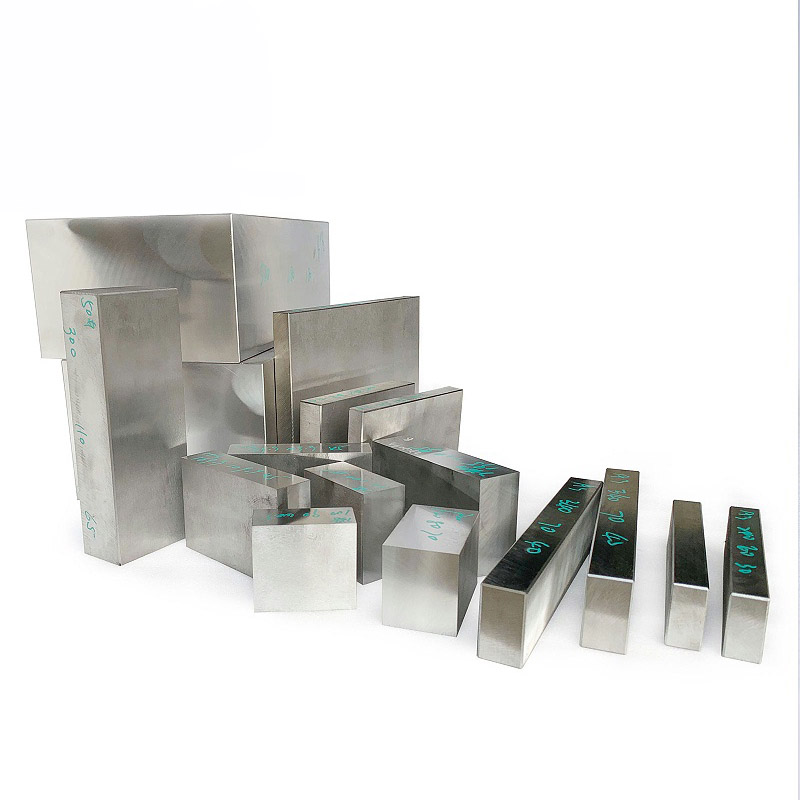
Many buyers default to imported big-name Mold Steel. Once names like ASSAB and Daido come up, they feel reassured. In numerous instances, that reassurance comes at an unnecessary premium.
Take a home appliance housing mold with a production target of 50,000 cycles. If you use ASSAB 718H or Fushun 718H, the difference in mold life is usually challenging to see. The price, however, can be two to three times higher. On the other hand, if you are making an optical mirror-finish mold such as a mobile phone light guide plate mold and choose a Chinese S136 substitute just to cut costs, pitting may show up halfway through polishing. The whole block can end up scrapped, and the money saved on steel won’t cover the loss.
Brand tiers in mold steel are real. But the point is not to recognize the tier. The point is to match it. Match it to the mold type, the output target, and the budget. This article puts ASSAB, Daido, Baowu, Fushun, and Great Wall side by side and shows where each one stands and what kind of job each brand fits.
Five Major Brands at a Glance
Start with the overview, then break them down one by one. Mold steel brands generally fall into three tiers:
| Tier | Brand | Representative Grades | Positioning | Price Level vs. Chinese Steel |
|---|---|---|---|---|
| Top-tier imported | ASSAB (Sweden) | 618 / 718H / S136 / 8407 / 8418 | Benchmark for cleanliness; the yardstick many mold shops use | 2–3x |
| Top-tier imported | Daido (Japan) | DC53 / NAK80 / NAK55 | Leader in mirror-finish steel and cold work steel | 1.5–2x |
| Leading Chinese | Baowu Special Metallurgy (Baosteel) | H13 / P20 / Cr12MoV | Largest market share in China; supplier to the C919 program | Baseline |
| Leading Chinese | Fushun Special Steel | FS413 (H13) / FS353 (718) | High-end Chinese producer; contributor to the new national standard | Slightly above baseline |
| Specialized Chinese | Great Wall Special Steel (Pangang) | Cr12 / Cr12MoV / H13 | Cost-effective for heavy-duty, defense-related, and trial molds | Slightly below baseline |
The price multiples above reflect general industry quotations for 2025–2026. Actual pricing varies by grade, size, and order volume.
There is one clear pattern in this table: the higher you go, the less you are paying for steel alone and the more you are paying for consistency. With the same grade designation, imported steel tends to show almost no variation from batch to batch. Chinese steel can still require more careful selection. Whether that consistency is worth the premium depends on the application. The following sections break that down by tier.
The Two Imported Leaders: What Makes ASSAB and Daido Strong
ASSAB has become a benchmark in China’s mold industry. Behind it stands Uddeholm of Sweden. Its range covers general-purpose pre-hardened 618, premium pre-hardened 718H, corrosion-resistant mirror-grade S136, hot work die casting grades 8407 and 8418, and DIEVAR for large die casting molds. Many Chinese steelmakers use ASSAB grades as reference points when developing equivalents.
Its real strength is cleanliness. High-end grades commonly use ESR refining—electroslag remelting—for secondary refining of the molten steel. That pushes sulfides, oxides, and other inclusions down to very low levels. Cleanliness directly affects two things: how bright a mirror finish can be polished and whether the mold will crack early. ASSAB S136 rarely shows pitting during mirror polishing. ASSAB 8407 and 8418 also still hold an edge over Chinese H13 in high-life die casting molds. The tradeoff is price: S136 is about $19.26/kg, and 8407 is about $20.00/kg based on 2025 industry pricing. That is roughly two to three times the price of comparable Chinese grades.
Daido is Japanese steel, and its strongest areas are mirror-finish steel and cold work steel. DC53 is a standout in cold work applications. It offers noticeably better toughness than the older SKD11 and is widely used in blanking dies and cold extrusion dies. NAK80 and NAK55 are pre-hardened Plastic Mold Steel grades with built-in mirror-polish capability. For appearance-part molds, they can reduce polishing work significantly. DC53 is about $10.22/kg, well above the average price of Chinese Cr12-series steel. NAK80 is about $12.59–14.07/kg. It is slightly less expensive than ASSAB, but buyers are still paying for the same imported reliability.
Leading Chinese Makers: Baowu and Fushun Are Competitive Now
Chinese steel has not stood still in recent years. Baowu and Fushun can now compete solidly in the mid-range and, in some cases, in the upper end as well.
Baowu Special Metallurgy, also known as Baosteel Special Steel, is the flagship among Chinese special steel producers. It has the largest market share and offers full lines in H13, P20, and Cr12MoV. It also supplies steel to COMAC’s C919 program, which shows the strength of its manufacturing base. H13 runs about $3.70–4.44/kg, and P20 about $2.22–2.67/kg. That is a fraction of imported pricing. Baowu’s H13 series has improved clearly in recent years. It can fully handle standard and medium-to-high-volume die-casting molds. Its weak point remains top-end mirror-finish steel, where it still trails imported material by a generation.
Fushun Special Steel is a high-end Chinese producer with an aerospace background. FS413 corresponds to H13, and FS353 corresponds to 718. It also offers a Chinese version of NAK80. More importantly, Fushun is one of the drafting units behind the new national standard GB/T 1299-2025, Tool and Die Steel, which formally took effect in May 2026. Fushun’s overall capability is now close to imported material. Its 718H is about $3.26–3.70/kg. One thing to watch is that batch consistency can still fluctuate from time to time. For large-section blocks, center segregation should be checked carefully. It is best to ask the supplier to provide an ultrasonic inspection report with the order.
Where Great Wall and Other Chinese Steels Fit
Great Wall Special Steel is part of Pangang Group. Its roots are in heavy-duty and defense-related applications, and its common grades include Cr12, Cr12MoV, and H13. Its positioning is clear: cost performance. For trial molds, prototype molds, and low-volume production molds, Great Wall’s Cr12 series is a practical choice. Cr12MoV is about $2.67–3.26/kg. One point to watch is carbide uniformity in lower-end batches, so material selection deserves a closer look.
It is also worth mentioning Tiangong International. This company focuses on tool and die steel, covering high-speed steel as well as cold work and hot work grades, and it exports in large volume. It is also one of the drafting units for the new national standard. It is not in the first tier overall, but it holds a solid position in certain specialty grades.
The logic of this tier is the reverse of the imported tier. You are not paying more for consistency. You are saving money for material that is good enough. If the mold does not demand long service life, there is no reason to pay imported prices for cleanliness that will sit unused.
Why Imported Steel Costs 2–3 Times More
If you break down the price gap, imported steel is not expensive because of the name alone. It is expensive for three concrete reasons.
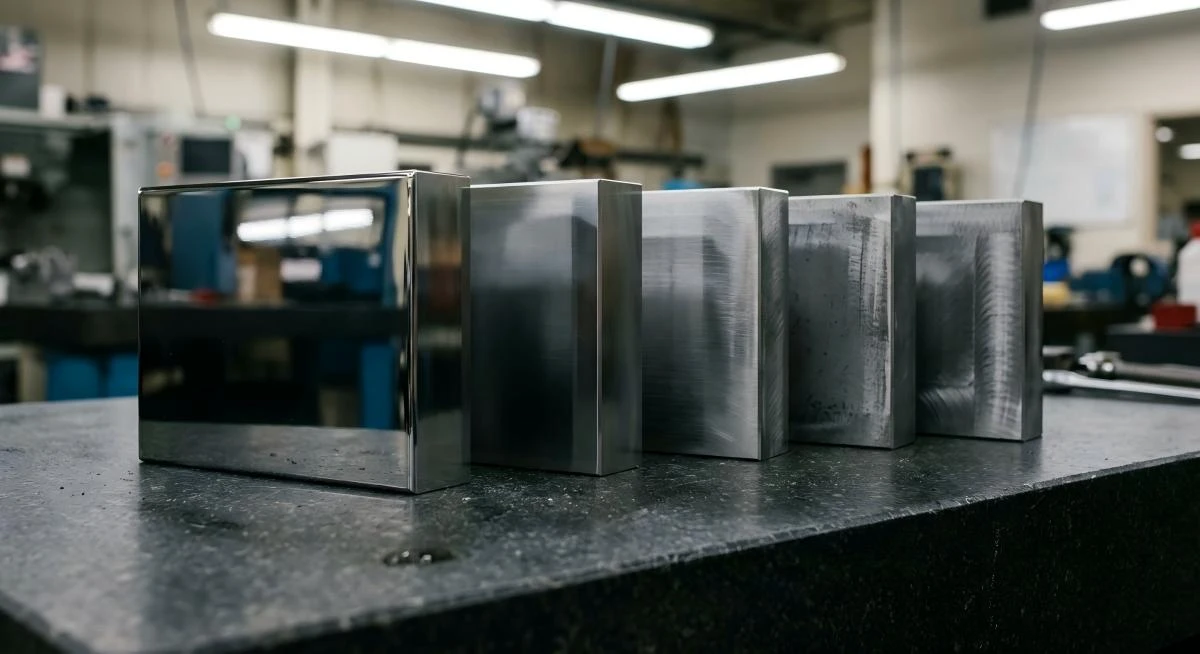
First is cleanliness. High-end imported steel widely uses ESR refining to control inclusions at very low levels. You do not see that in a normal inspection. It shows up the moment you polish for a mirror finish. If inclusions are only slightly higher, pitting can start to appear by #8000 polish. If cleanliness is high enough, the surface can still hold a mirror finish above #10000. That is based on industry experience. Optical molds and medical molds have zero tolerance for this issue.
Second is batch consistency. One piece of imported S136 and the next one will perform almost the same. With high-end Chinese grades, buyers still sometimes need to screen batches. For customers that depend on repeat orders and require mold-to-mold consistency, not having to take that risk has real value.
Third is process tolerance. Imported steel tends to offer a wider Heat Treatment window. If the tempering temperature is off by a dozen degrees Celsius, performance usually does not collapse. When Chinese material “fails,” the root cause often turns out not to be the steel itself but inadequate heat treatment—poor furnace temperature control or too few tempering cycles. In effect, imported material absorbs part of that process risk.
Claims that imported steel lasts several times longer than Chinese steel are not baseless, especially in long-life die casting molds. But the exact multiple depends on the heat treatment and the mold design. There is no fixed ratio that applies in every case, so it should not be used as a purchasing rule.
Match the Steel to the Mold
Once the brand tiers are clear, the next step is application matching:
- Optical mirror-finish molds such as mobile phone lenses and light guide plates: choose ASSAB S136 or Daido NAK80. If the budget is tight, Fushun FS136 can be considered, but the batch must be checked carefully. Polishing consistency is where Chinese S136 substitutes fail most often.
- High-volume die casting molds with more than 100,000 cycles: ASSAB 8418 or DIEVAR is a practical requirement. Baowu H13 is the lower-cost fallback, but only if it is paired with a reliable heat treatment supplier. Do not save money on steel and then lose it in processing.
- Standard plastic housing molds with production up to 500,000 cycles: Fushun 718H and Baowu P20 are fully adequate. Do not step up to imported steel. This is one of the most common cases of overspending.
- Cold blanking and cold extrusion dies: Daido DC53 is the safest option. On the Chinese side, Fushun Cr12Mo1V1 is the usual route, but many Chinese DC53 copies still fall short on toughness.
- Trial molds, prototype molds, and low-volume molds: Great Wall Cr12-series steel offers the best cost performance. There is no need to chase a brand name.
There are two common pitfalls when buying steel. First, counterfeit ASSAB material is not rare in the market. Buy through authorized channels and do not chase suspiciously low pricing from unknown traders. Second, some smaller mills pass off standard P20 as NAK80. You cannot tell from appearance alone. The problem shows up only after polishing. For materials that require a high mirror finish, it is best to ask the supplier for a material certificate.
Anyone who actually builds molds knows that one mold rarely uses a single brand from start to finish. Use S136 for mirror-finish cavities, use P20 for the mold base, and switch to DC53 for impact-loaded inserts. Matching steel by component and operating condition is the real way to control cost without giving up quality.
This is also what MoldSteelLS has been doing: keeping multi-brand stock of imported and Chinese steel, then matching material to the mold grade and budget instead of pushing one brand for margin. If you need a specific grade or want to confirm the right level, just send the drawing for review through Contact Us.
Mold steel brand tiers should be matched to the mold, not to appearances. Spending where the mold actually takes load will save far more than blindly trusting imported big names.