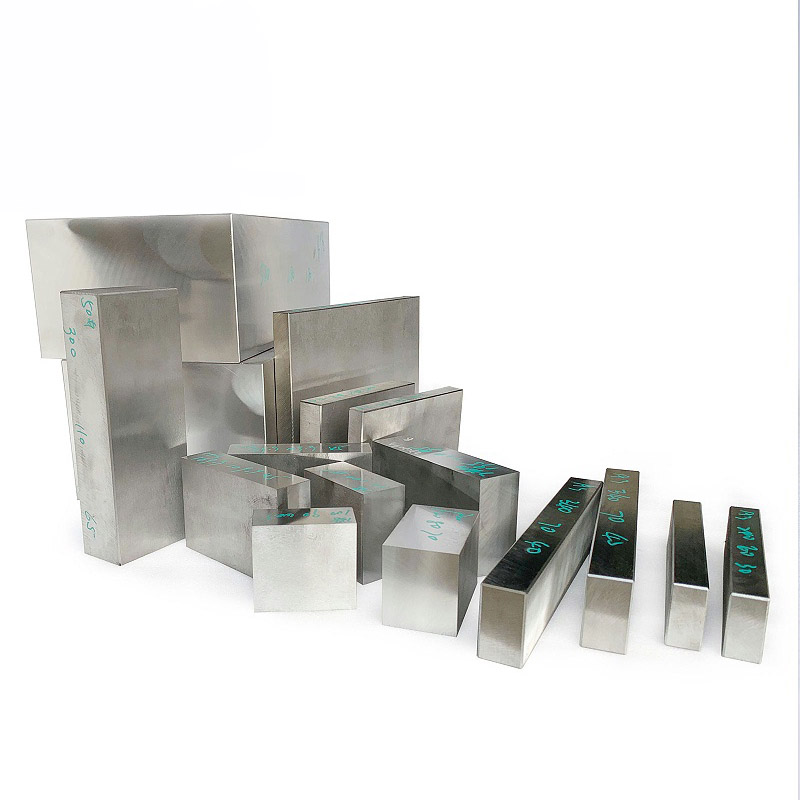
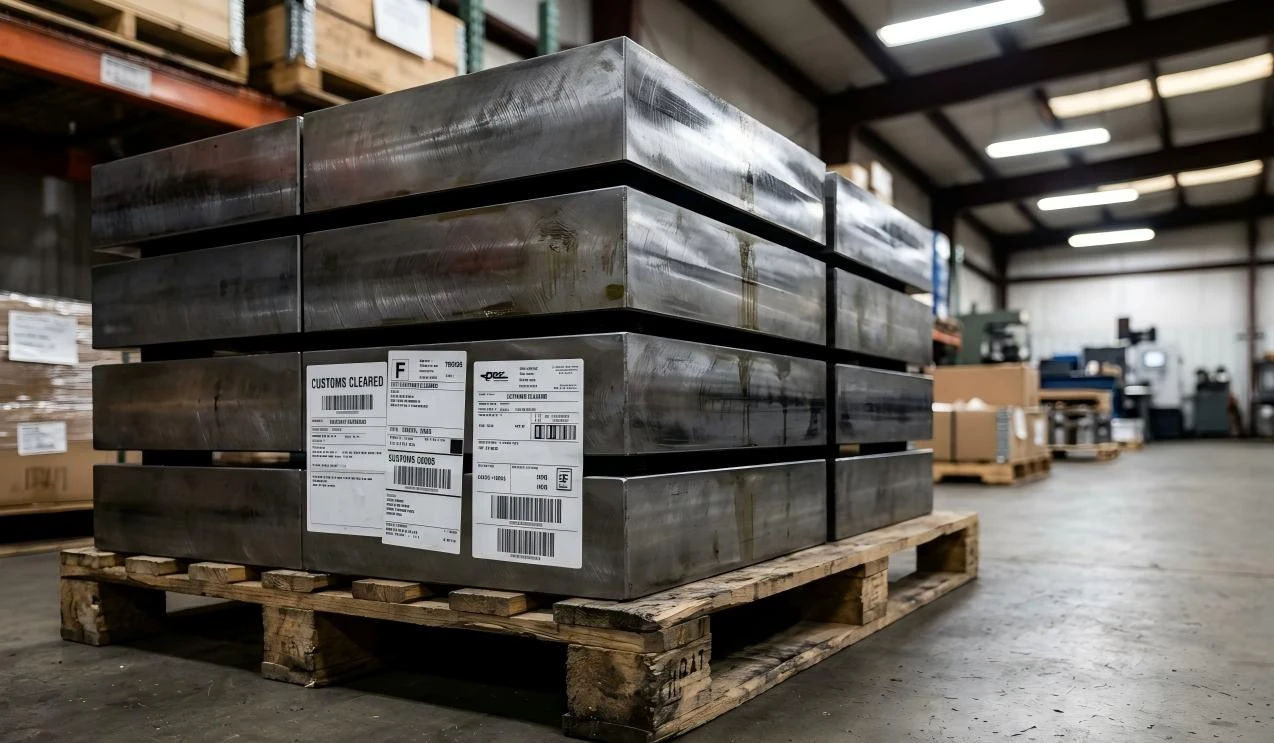
Six months ago, a customer in the Middle East emailed to say the container had been held. The reason came down to one line: no SCoC certificate. A full 20 metric tons of H13 ESR Mold Steel sat at Dammam Port under the sun for three weeks. The customer sent messages every day asking for updates, while the shipping line’s demurrage charges kept climbing. By the time the SABER Shipment Certificate was issued and the cargo was released, demurrage had already exceeded $4,000.
This is not an isolated case. In the export orders we handle, shipments have been stopped by customs in the United States, the European Union, Southeast Asia, and the Middle East because certificates were incomplete or HS codes were misclassified. Each region has its own rules, but the failure pattern is almost always the same: before shipment, no one confirmed exactly what the destination customs authority required.
This article lays out the import requirements for four target markets in one place. The information comes from our internal research and publicly available customs regulations in each market. Use it as a quick reference.
United States: 50% Tariff Is the Starting Point, and Antidumping History Is the Hidden Risk
Since Section 232 took effect in 2018, the United States has imposed an additional tariff on imported steel, and the measures have only become more aggressive. Starting in March 2025, the Trump administration removed all exemptions and quotas and applied a flat 25% ad valorem tariff. In June of the same year, that rate doubled to 50%. Follow-up revisions in 2026, including Proclamation 11021 and related adjustments, kept the 50% rate on steel products unchanged. China is not on any exemption list. In plain terms, Mold Steel shipped to the United States now faces an additional tariff equal to 50% of the cargo value. That is no longer just a baseline charge. It is the main tariff burden.
Mold steel falls under HS code 7228, which covers other alloy steel bars and rods, and it is within the scope of Section 232 steel measures. One distinction matters here: the 50% rate applies to steel products themselves, and mold steel is in that category. It is not treated like steel-derived finished goods such as machinery or parts, which may fall under 25% or lower rates. Do not expect to use the lower tariff treatment for derivatives. Mold steel is assessed at the 50% rate for the steel product itself. The applicable HTS 9903 additional tariff subheading should be confirmed against the current version in force. The tariff schedule changed several times between 2025 and 2026, so the customs broker should verify the latest subheading and rate before shipment. Another point that importers often miss is the Melt and Pour declaration. U.S. Customs requires the importer to report the country where the steel was originally melted and poured, using the ISO country code. It does not mean the processing country. It means where the molten steel was first produced and cast. If the product was melted and poured in China, declare CN.
Antidumping requires separate attention. Historically, the United States has imposed antidumping and countervailing duties on Chinese hot-rolled steel, cold-rolled steel, and other bulk products. Mold steel, meaning alloy tool steel, is not currently on the antidumping list. But customs classification is handled through automated systems. If your HS code is entered under a tariff line that is covered by an antidumping order, the system will automatically trigger the additional duty. Accurate classification is the minimum requirement. If there is any concern about misclassification, ask the U.S. customs broker to conduct a pre-entry classification review before shipment. Spending a few hundred dollars there can prevent losses in the tens of thousands.
For material certificates, the United States accepts ASTM standards. Typical equivalents for mold steel are ASTM A681 P20 for P20 and ASTM A681 H13 for H13. That part is straightforward as long as the grade is clearly stated in the material report. There is no mandatory third-party certification threshold, but one point matters in practice: U.S. importers commonly require the Mill Test Report to come from an ISO 17025-accredited laboratory. A report issued casually by the steel mill itself usually does not pass review.
European Union: Safeguard Quotas Fill Fast, and CE Depends on End Use
Among these four markets, the European Union has the most complex system. Start with the tariff framework: the current steel safeguard measures cover 26 product categories and operate through a tariff-rate quota system. Goods within quota pay the normal duty. Once the quota is exhausted, an additional 25% duty applies. This system has been in place for eight years and is scheduled to expire on June 30, 2026. But in October 2025, the European Commission released a new proposal to tighten quotas even further, raise the over-quota tariff from 25% to 50%, and add melt-and-pour traceability requirements.
Mold steel under HS 7228 falls within the safeguard scope, so two checks are necessary before shipment. First, confirm how much quota remains for the current quarter. The European Commission publishes real-time balances on its website. Second, confirm whether your HS code is included in one of the 26 covered categories. Quotas are allocated by quarter and by country of origin. Chinese quota volumes usually move quickly, so it is better to avoid the rush of concentrated shipments at the start of a quarter.
On certification, mold steel itself is not a finished consumer product, so it does not directly trigger CE marking. But if the steel block is supplied to an EU mold base manufacturer, and that mold base is then used in a product that must comply with Construction Products Regulation (CPR) 305/2011, traceability can run back to the raw material. The simplest approach is to include an EN 10204 Type 3.1 inspection certificate with the shipment. EU customers ask for this document in almost every case. REACH Regulation (EC 1907/2006) mainly focuses on substances of very high concern such as lead, cadmium, and hexavalent chromium in steel products. If the content exceeds the threshold, notification is required. In practice, mold steel alloy compositions do not normally contain these high-risk elements, so the REACH compliance threshold is much lower than it is for consumer goods.
One real case illustrates the point. A customer shipped one container of 718H to Germany. After arrival, the buyer’s customs authority requested an EN 10204 3.1 certificate. The steel mill had only provided a Chinese quality certificate with an English translation. It did not carry an authorized third-party signature and stamp, so it was treated as non-compliant with the EN 10204 format. In the end, SGS had to sample the material locally and issue a new report. That cost EUR 1,200 and delayed clearance by nine days. The lesson is simple: for mold steel going to the EU, prepare the EN 10204 Type 3.1 certificate before shipment. Do not wait until the cargo arrives.
Southeast Asia: The Code Is Unified, but Each Country Sets Its Own Rules
The ten ASEAN member states unified their tariff coding system in 2002 under the AHTN, or ASEAN Harmonized Tariff Nomenclature. The 2022 edition is the current version in use. The first eight digits of the HS code are identical across all member states, and mold steel is uniformly classified under heading 7228. That helps. If you export to Thailand, Vietnam, Indonesia, or Malaysia, at least you do not need to recheck the code structure from the start every time.
Below the code level, however, the rules split quickly. Each country has its import certification requirements.
Thailand: imported mold steel falls under the TISI voluntary standard system, so it is not mandatory. But the Ministry of Industry has additional registration requirements for the dimensions and chemical composition of steel used in molds for automotive parts. If your customer is a Tier 1 automotive supplier, confirm this in advance.
Vietnam: this is the market that requires the most attention. Vietnam Customs applies a separate regulatory regime to imported alloy steel under Circular 13/2018/TT-BCT. This involves quality inspection under QCVN standards and import registration. In recent years, Vietnam has also tightened scrutiny of transshipment trade, especially cases where goods move through Vietnam and are relabeled as Vietnam-made to avoid U.S. tariffs. Mold steel is not the main target category, but the certificate of origin must still be genuine and accurate.
Indonesia: SNI certification is mandatory for many bulk steel products, but mold steel is not currently on the mandatory SNI list. That said, Indonesian customs applies an importer identification number system, known as API, together with quota controls for imported steel. Your Indonesian customer must hold either API-U, for general importers, or API-P, for producer importers. Without that qualification, customs will not clear the goods. This is technically the buyer’s issue, but you still need to confirm the customer’s import qualification before shipment. Otherwise, the cargo can arrive and remain stuck because the buyer cannot take delivery.
Malaysia: SIRIM standards apply, but not on a mandatory basis for mold steel. However, Malaysia has separate import permit requirements for stainless mold steel under HS 7228, such as S136 and 420 grades. Standard carbon or alloy mold steel grades such as P20, H13, and DC53 are not restricted.
Under the China-ASEAN Free Trade Area, mold steel can qualify for preferential treatment through the Form E certificate of origin under ACFTA. Most ASEAN countries apply a base tariff rate of 0% to 5% on Chinese mold steel, and with Form E, the rate can often be reduced to zero. The tariff itself is not high, but Form E must be prepared correctly. The HS code must match the first eight digits of the destination country’s AHTN exactly. If even one digit is wrong, the preferential treatment can be denied.
Middle East: Saudi Arabia’s SABER System Is the First Hard Barrier
Among these four markets, Saudi Arabia has the highest clearance threshold for documentation. Since July 1, 2020, the SABER system has been mandatory for all imported products. For mold steel exported to Saudi Arabia, the process has two steps.
Step one: PCoC, or Product Certificate of Conformity. This is registered at the product level and issued after review by a SASO-recognized conformity assessment body such as SGS, TUV, Intertek, or QIMA. A PCoC is valid for one year and can cover multiple shipments of the same product. The application requires product technical documents, a chemical composition report, and third-party test reports such as hardness, UT inspection, and spectrometer analysis.
Step two: SCoC, or Shipment Certificate of Conformity. This must be applied for separately for every shipment and is generated based on a valid PCoC together with the invoice and packing list. Without an SCoC, the goods cannot clear customs after arrival. The shipment may be returned or even destroyed.
PCoC review usually takes one to two weeks. SCoC is faster and typically takes two to three working days. If you have never shipped to Saudi Arabia before, starting the PCoC process three to four weeks in advance is the safer approach. On the first round, technical documents are very likely to be sent back for supplementation.
UAE and the broader Emirates market: under the unified GCC customs law, the base tariff rate for mold steel is 5%. The UAE, including Dubai and Abu Dhabi, is relatively more flexible and does not operate a mandatory third-party certification system like Saudi Arabia’s SABER for this product category. Dubai does have ECAS and EQM certification systems, but they mainly target construction steel. If the end use of the mold steel is related to the construction sector, such as molds for aluminum alloy doors and windows, additional testing may be required. Standard industrial-use mold steel is generally not restricted.
One point often causes trouble: Middle Eastern countries commonly require all import documents, including the invoice, packing list, certificate of origin, and bill of lading, to be certified by CCPIT and then legalized by the Saudi or UAE embassy. This process takes five to ten working days. Many new exporters forget to complete consular legalization before shipment, and the documents then fail at the destination port.
Quick Comparison of Customs Clearance Requirements in Four Markets
| Category | United States | European Union | Southeast Asia (ASEAN) | Middle East (led by Saudi Arabia) |
|---|---|---|---|---|
| HS code | HTS 7228 | CN 7228 | AHTN 7228 (first 8 digits unified) | HS 7228 (under GCC extensions) |
| Base tariff | 50% (Section 232; steel products doubled from June 2025) | Normal duty within quota / +25% once quota is exhausted (October 2025 proposal would tighten quotas and raise the rate to 50%) | 0% to 5% (can be reduced to 0 with ACFTA Form E) | 5% (unified GCC tariff) |
| Additional duties | Antidumping / countervailing duties on some bulk products such as hot-rolled steel; none currently on mold steel | None | VAT and withholding tax vary by country | VAT (Saudi Arabia 15% / UAE 5%) |
| Mandatory certification | No mandatory product certification; MTR typically requires ISO 17025 | EN 10204 3.1 certificate plus REACH compliance | Varies by country (Thailand TISI voluntary / Indonesia SNI not currently mandatory for mold steel) | Saudi SABER PCoC plus SCoC mandatory |
| Material standards | ASTM A681 | EN ISO 4957 | Mixed use of JIS, ASTM, and ISO depending on country | ASTM or EN accepted |
| Origin requirements | Melt and Pour declaration (ISO code) | Non-preferential origin rules | Form E for ACFTA preferences / Form D for intra-ASEAN trade | CCPIT plus embassy legalization |
| Document legalization | No special requirement | EN 10204 requires a third-party signature and stamp | No special rule in general, though some countries require embassy legalization | Dual legalization by chamber of commerce and embassy (5 to 10 working days) |
| Key risk | Misclassification can trigger antidumping duties | Quota exhaustion triggers an extra 25% tariff | Customer import qualification, such as Indonesia API | Missing SCoC can lead to return shipment |
Table data sources: U.S. Section 232 proclamations and related notices, including the 25% rate from February 2025, the increase to 50% in June 2025, and the continued 50% rate on steel products under 2026 Proclamation 11021; EU Regulation 2025/612 and the October 2025 proposal; SASO SABER platform rules; and the 2022 edition of ASEAN AHTN. Tariff rates should be confirmed against the current implementation rules of each customs authority as of June 2026. Before shipment, confirm again with the local customs broker.
How to Avoid These Problems When Exporting Mold Steel
After more than a decade in mold steel exports, we use an internal four-question check before every shipment. If any item is missing, the cargo does not ship.
First, the code: is the HS code correct? Does the destination country apply any special classification rule? The same product may be declared in China under 7228.1000, but in the United States it may fall under a different 10-digit HTS line because of alloy content. If there is any uncertainty, pay for a pre-classification review from a customs broker in the destination market. Compared with a held container, demurrage, or return shipment, the cost is negligible.
Second, the certificates: what documents does the destination country require? Material report, certificate of origin, certificate of conformity, EN 10204, SABER PCoC. Put them on a checklist and verify them one by one. Pay special attention to whether the material report was issued by an ISO 17025-accredited laboratory, whether a Chinese report includes an English translation, and whether the signatures and stamps are from the original scanned document.
Third, the customer’s qualifications: does the buyer hold the required import credentials? Indonesia API and a Saudi SABER account are the customer’s responsibility, but confirming them before shipment avoids the situation where the cargo arrives and the buyer then says it cannot legally import.
Fourth, quotas and timing: how much EU quota is left? How many working days are needed for embassy legalization? How long will the SABER PCoC review take? Work these lead times backward into the shipping schedule.
For every shipment of Mold Steel exported by MoldSteelLS, from P20 saw-cut plates to H13 ESR precision plates, the standard document package includes a bilingual material report issued by an ISO 17025-accredited laboratory, a certificate of origin, a commercial invoice and packing list, an EN 10204 3.1 certificate for EU-bound shipments, and supporting files for Saudi SABER applications. After more than a decade of export work, we have learned the hard way which market requires which paperwork and how to avoid the common failures.
The key point is simple: certificates are not something to think about after the cargo reaches port. The checklist should be matched against destination-country requirements when the order is placed. One extra document can prevent a one-month delay.