When making silicone products, many customers run into the same dilemma: “For silicone parts, do we really need to use premium mold steel?” At the same time, they also ask: “For silicone vulcanization (compression molding) tooling, which steel is the most cost-effective?” Choosing expensive steel may feel like wasted budget, but choosing cheap steel raises concerns about short mold life and unstable product quality.
This “expensive feels wasteful, cheap feels risky” conflict is the real pain point for many companies when they start a new mold. This guide is compiled from Moldsteells’ practical experience in mold steel selection projects, to help your early-stage decision-making.
The Key to Choosing the Right Steel: Don’t Only Look at “Unit Price”—Calculate “Total Cost” First
Many people focus only on the steel’s unit price, but the actual driver of cost-effectiveness is the mold’s total cost. In simple terms:
Total Cost ≈ (Initial Purchase Cost + Maintenance/Replacement Cost) ÷ Total Shots
For example, if an S50C mold has an initial cost of USD 142.86, and during use requires USD 28.57 in maintenance due to minor wear, with a total life of 5,000 shots, then the cost per shot is about USD 0.034. If a 718H mold has an initial cost of USD 428.57, plus USD 71.43 maintenance, with a life of 50,000 shots, then the cost per shot is only about USD 0.010.
This shows why looking only at the initial price can cause you to miss the option that is cheaper in the long run.
4 Common Steels Cost Battle: Which One Is the “Best Value”?
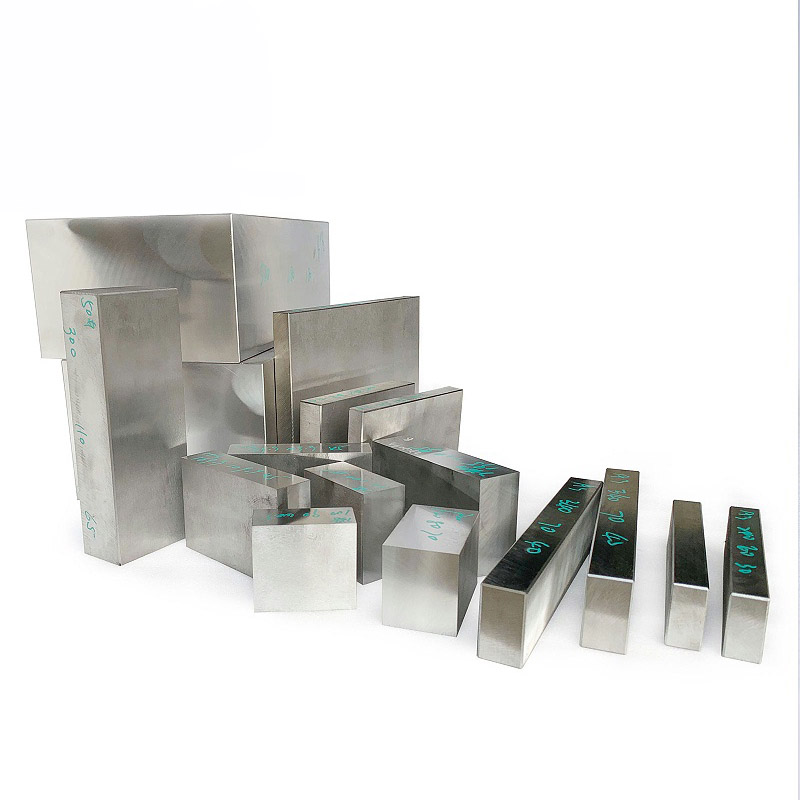
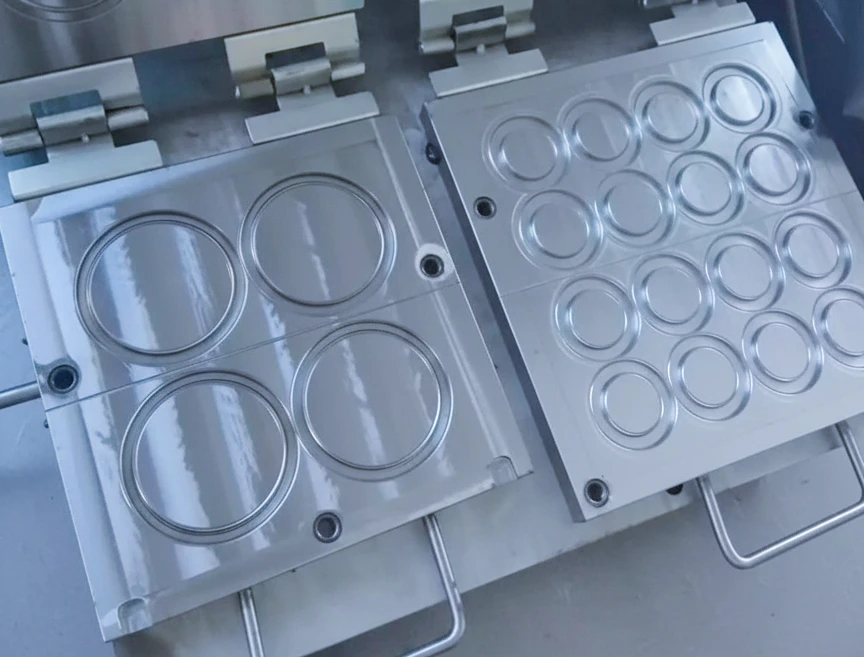
For silicone compression & vulcanization molds, the most common steel choices include 45# steel, S50C, P20, and 718H. Each has a different balance of initial cost, service life, and recommended application. Here is a direct comparison:
| Steel Type | Initial Cost (USD/kg, reference market range) | Typical Mold Life (Shots, for low-to-mid complexity parts) | Main Pros & Cons |
|---|---|---|---|
| 45# Steel | 1.43–2.57 | 100–500 shots (simple parts; strongly affected by corrosive environment) | Mid-level price, but weak corrosion resistance; may cause texture/detail to blur and demolding to become difficult; short mold life. Suitable for short-term trials (e.g., small-lot structure validation; actual shots depend heavily on the working environment). |
| S50C | 1.43–2.14 | 3,000–5,000 shots (low-to-mid complexity parts) | Lowest initial cost; suitable for small-batch production (hundreds to a few thousand shots). For long-term mass production, a limited life may lead to frequent mold replacement and higher hidden costs. |
| P20 (China) | 5.00–6.43 (e.g., Fushun Special Steel, Daye Special Steel) | 10,000–20,000 shots (mid-to-high complexity parts) | Good surface finish and smooth demolding. China-made materials are often ~40% cheaper than some imported brands, making them suitable for stable, mid-volume production (e.g., silicone sleeves for electronic accessories). |
| 718H | 7.14–8.57 (includes high-end China grades and some imported products) | 30,000–50,000 shots (mid-to-high complexity parts) | Higher initial cost, but better hardness and wear resistance; long service life. Suitable for mid- to high-volume production (e.g., automotive silicone seals). Usually, the lowest long-term amortized cost. |
Choose Steel by Production Scenario: How to Select for Trial Runs, Small Batches, and Mid Batches
Different production volumes and product requirements call for different steel choices. Practical recommendations:
1) Small batch / Trial run
If production volume is small (e.g., within 500 shots) or you are at the trial stage, you can choose S50C or 45#. In real projects, some companies choose 45# to save cost during trial runs, but after 50–100 shots, rust and texture/detail blurring can occur (especially under peroxide/curing-agent-related conditions), forcing a new mold and adding an extra mold cost of about USD 714.29.
By contrast, companies using S50C can often continue trial production to around 800 shots with the mold still working normally, keeping the cost more controllable.
2) Medium batch
When production reaches 10,000 shots or more, P20 or 718H is recommended. For example, some companies use China-made P20 to produce mid-complexity silicone keypads; after 8,000 shots, the mold surface can remain smooth, and demolding is stable.
While 718H may require about 30% higher initial investment, its service life can be 2–3× that of P20, making it more suitable for long-term stable production scenarios (e.g., annual production demand above 100,000 shots).
3) Special requirements
If the product requires high precision (e.g., medical-grade silicone parts) or the process environment is more corrosive (e.g., higher levels of curing agents or harsher chemical conditions), you should choose higher-performance mold steel such as pre-hardened 718H, to avoid early mold failure caused by insufficient corrosion resistance.
Conclusion
There is no “absolutely cheapest” steel—only the choice that is most suitable for your scenario. When selecting mold steel, combine production volume, part complexity, and long-term cost (using the total cost formula) to avoid blindly chasing either low price or high specs.
- Before trial production, confirm your estimated volume. For small batches (< 5,000 shots), prioritize S50C to avoid the “short-term savings but long-term rework” risk of 45#.
- For mid-to-high volume (> 10,000 shots), evaluate 718H directly. Even if it costs ~30% more upfront, the service life can double, making it cheaper long term.
- For high-precision parts (e.g., dimensional tolerance within ±0.05 mm), even at low volume, consider P20 or above to reduce the risk of mold deformation affecting part accuracy.
In short: choose based on real demand, and you can control cost while protecting quality.