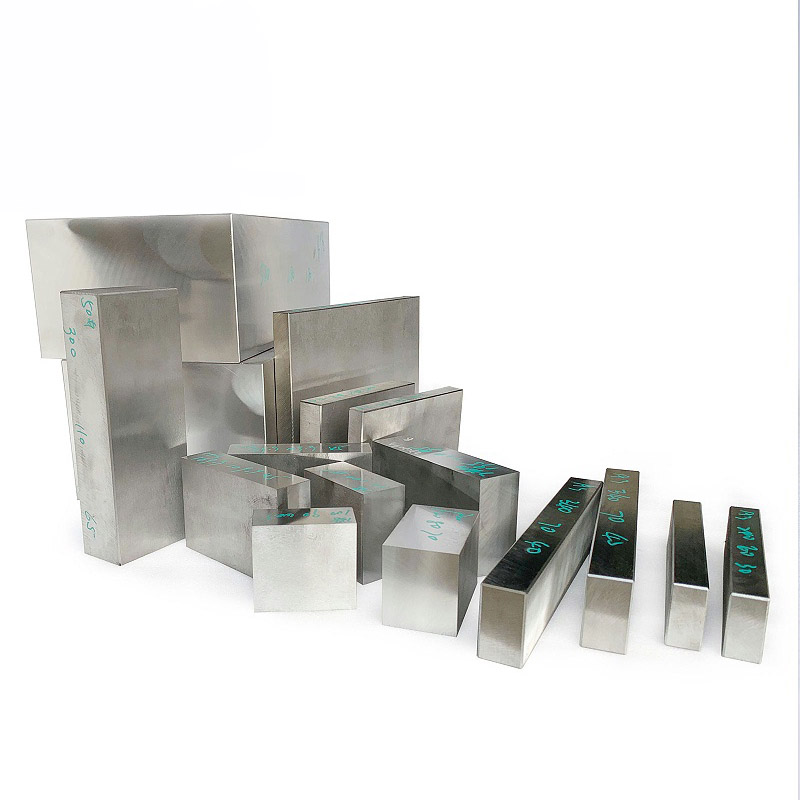
In material selection for medical-grade transparent plastic part molds (such as syringe barrels and IV set components), manufacturers often face a choice between S136 and NAK80. The core questions focus on whether NAK80 provides sufficient corrosion resistance for medical environments and on how the two grades compare in actual production, including mold life and maintenance costs. This content is compiled from our practical experience in material selection projects for medical molds and is provided as a reference for the industry.
Basic Property Comparison: S136 vs NAK80
From the perspective of actual performance in production, the two grades differ significantly in cost, impact toughness, and polishing performance.
Cost: The typical market price of NAK80 is about $6.5/kg, while S136 is around $9.3/kg, giving NAK80 a clear cost advantage.
Impact toughness: NAK80 has an impact energy of approximately 45 J, higher than S136 at around 30 J. This means NAK80 is less prone to cracking under impact during mold assembly or in use.
Polishing performance: Polishing performance directly affects the transparency of molded parts. S136 can reach mirror-finish polishing (surface roughness Ra ≤ 0.02 μm). At the same time, NAK80 is typically limited to Ra < 0.05 μm, making it slightly less suitable for parts with very high transparency requirements.
Corrosion Resistance in Medical Environments: Case Analysis
Medical molds must withstand long-term contact with drugs and repeated high-temperature sterilization, so corrosion resistance is critical.
Data from several projects we participated in show the following:
In a comparative test conducted by a syringe mold manufacturer, two material samples (surface roughness Ra 0.02 μm, mirror-polished) were immersed in 75% ethanol (room temperature, no agitation) for 30 days. After exposure, the S136 surface showed no rust, while NAK80 exhibited dot-like rust spots on approximately 5% of the edge area.
In another test under 134 °C autoclave steam sterilization (3 cycles per day, 20 minutes per cycle, for 30 consecutive days, initial hardness 50 HRC), S136 retained about 95% of its hardness, whereas NAK80 dropped to around 88%, with a more noticeable decline in surface gloss.
In a separate case involving contact with a chlorine-containing disinfectant (0.5% sodium hypochlorite solution, daily exposure of 2 hours at room temperature), S136 molds could operate stably for about 6 months without rust, while NAK80 molds developed localized corrosion after roughly 2 months.
Service Life and Maintenance Cost: Case Comparison
Mold service life is directly related to wear rate and the ability to maintain polished surface quality.
Feedback from one medical plastic factory showed that under its specific conditions (production of standard transparent syringes, plastic material PP, molding temperature 190 °C, 3 sterilization cycles per day, monthly output of 500,000 pieces):
- The S136 mold required its first polishing and refurbishment after 8 months of continuous production, with a cumulative output of about 12 million pieces.
- The NAK80 mold required refurbishment after about 5 months due to a decline in surface gloss (the plastic parts began to show a matte appearance), with a cumulative output of around 7.5 million pieces.
In practice, actual mold life must be adjusted based on factors such as plastic material (e.g., PC, PMMA, etc.), molding process parameters (temperature and pressure), and daily maintenance quality (cleaning frequency and storage environment).
In terms of maintenance cost, a single mirror-polishing operation for S136 is typically about $115 (requiring professional high-gloss polishing), whereas NAK80 polishing is about $86 (standard polishing is sufficient). However, under the specific operating conditions described above, the annual maintenance frequency of NAK80 is about 60% higher than that of S136, resulting in an overall annual maintenance cost that is approximately 20% higher despite the lower cost per polishing cycle.
Performance in Extreme Conditions: Engineering-Based Inference
Combining material characteristics with real-world cases, we can infer performance under more extreme conditions:
- If the mold is exposed to strongly corrosive drugs (such as acidic solutions with pH < 3) or to very high sterilization frequency (more than 10 cycles per day), the high chromium content of S136 can form a stable passive film, making its corrosion resistance more reliable.
- Thanks to its superior impact toughness, NAK80 performs better in scenarios involving complex mold structures (such as multi-cavity molds with sensitive gate areas) or frequent manual handling, where resistance to impact-induced cracking is critical. However, the maintenance interval must be shortened to ensure consistent plastic part quality.
Conclusion
The application scenarios of S136 and NAK80 in medical-grade transparent plastic molds are relatively clear:
- For applications requiring high corrosion resistance and long service life – such as syringe molds and components that frequently contact alcohol or chlorine-containing disinfectants, or parts subject to repeated high-temperature sterilization – S136 should be the preferred choice.
- For cost-sensitive scenarios involving non-corrosive fluids (such as saline solution) and molds whose structures are more prone to impact during handling (for example, small molds loaded and unloaded manually), NAK80 can be considered. However, users must be prepared for higher maintenance frequency to maintain part transparency and surface quality.